

 Back to Blogs
Why We Apologise for Buying Things We Genuinely Like
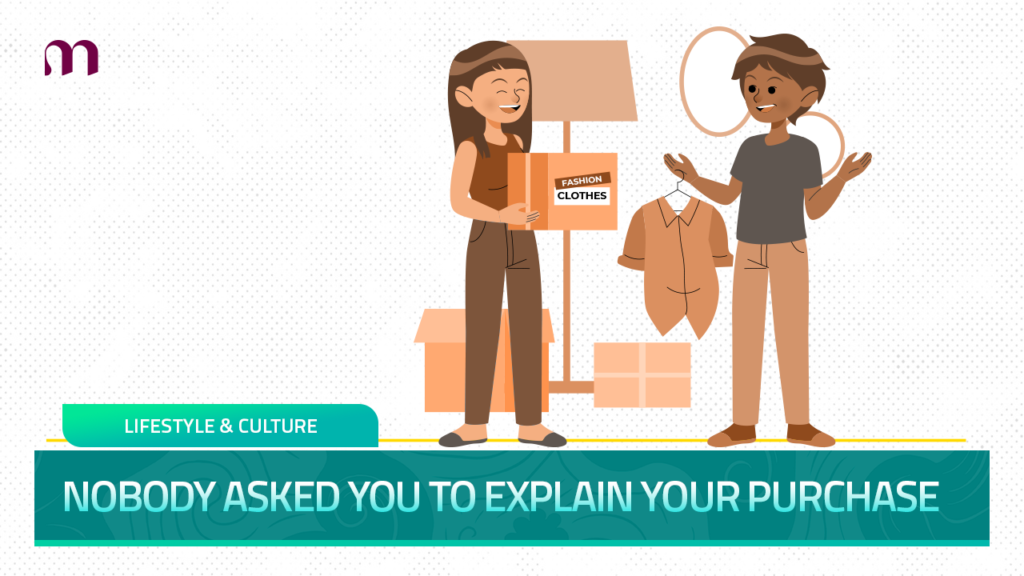
A friend buys new shoes. You ask her about them.
She immediately launches into a small defensive monologue.
“Oh, I needed them. My old ones were falling apart. They were on sale. I’ve been saving up. Honestly, I shouldn’t have, but…“
She likes the shoes. She wanted the shoes. She bought them with her own money.
And yet, somewhere between the purchase and the conversation, she developed an entire legal case justifying the existence of the shoes which she now delivers, unprompted, to anyone who notices them on her feet. 👟
We’ve all done it.
- 👜 The new bag, defended before anyone asks.
- ☕ The expensive coffee machine, justified as a long-term investment.
- 🧴 The skincare set, qualified with “It was a treat for myself.”
- 📱 The therapy app, mentioned almost like a small embarrassment.
We apologise for things we genuinely like, often before anyone gives us a reason to.
Why?

The honest answer, what we don’t say out loud, is that most of us grew up inside a money story that doesn’t quite match the money story we now live inside.
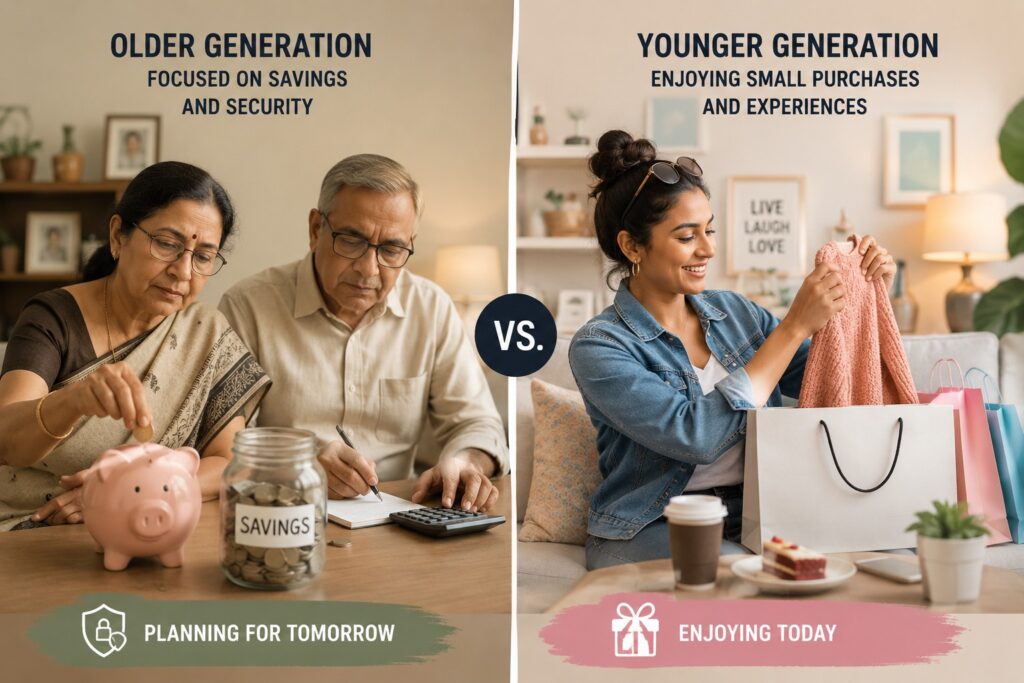
Our parents and grandparents, across India, and most of the world, were raised to believe that money was for:
- Security
- Family
- Necessities
- Weddings
- Property
- Education
Money was not for joy. Joy was something you found in things that didn’t cost money. Anything that cost money and produced only joy was, by definition, slightly suspicious.
Then we grew up. We started earning. We discovered that money is also, sometimes, for joy. ✨
- A good moisturiser feels lovely.
- A nice candle changes a room.
- The expensive jeans actually do fit better.
- The therapy is genuinely helping.
- The astrology app is, against all reasonable expectations, making a hard week easier to navigate.
Both money stories are now sitting inside the same adult.
The security-first story we inherited.
The joy-also-counts story we’re trying to live by.
And every time we make a small purchase that the older story would disapprove of, the older story shows up uninvited and demands a justification.
That’s where the apology comes from. We’re not apologising to the friend who noticed the shoes. We’re apologising to a version of our parents, our grandparents, our childhood selves, that still lives inside our head and still believes money is for serious things.
Once you see this pattern, you start noticing it everywhere. 👀
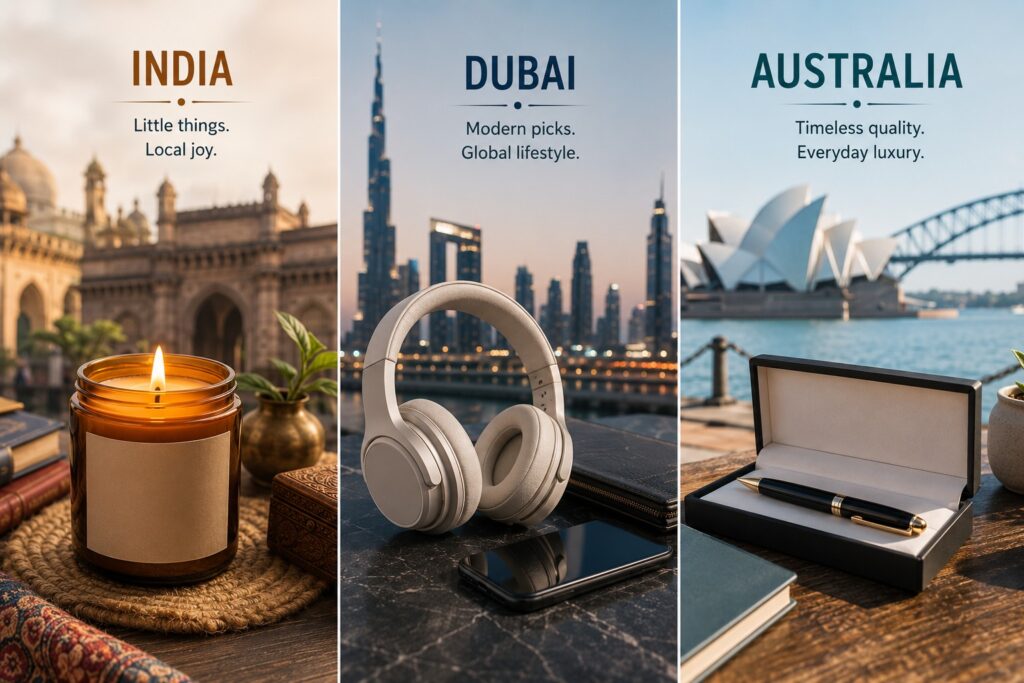
The 30-something Bangalorean explaining to her parents that the 1,200-rupee candle is actually really economical because it lasts three months. 🕯️
The Dubai-based architect explaining to a colleague that the 600-dirham headphones are necessary for work calls. 🎧
The Sydney-based writer explaining to her partner that the 280-dollar pen is a tool, not a luxury. 🖊️
In each case, the person:
- Likes the thing.
- Paid for the thing.
- Is happy with the thing.
The apology is for an audience that isn’t even in the room.
There’s a small cultural texture worth noticing across regions. 🌍
- 🇮🇳 In India, the apology often takes the shape of a maths problem. “This works out to only 40 rupees per use.“
- 🌍 In the Middle East, it tends to lean on quality and longevity. “It’s expensive but it will last ten years.“
- 🇦🇺 In Australia, the apology is often self-deprecating. “I know, I’m being ridiculous, but it makes me happy.”
The mechanism is the same everywhere. Same internalised guilt. Different cultural language for the apology.
The interesting question is whether we should keep apologising. 🤷
There’s a school of thought that says no. The money is ours. The choice is ours. The joy is ours. The apology serves no one except the older story, which has already had a full lifetime of getting its way.
There’s also a softer truth. The apology is a small ritual of remembering where we came from. It connects us, in a quiet daily way, to the people who taught us to be careful with money.
The apology says:
“I haven’t forgotten. I know this would have seemed extravagant to my grandmother. I still bought it. Both things are true.“
Maybe the answer is to keep the awareness and drop the guilt. ✨
To know that the older money story is still in the room without giving it veto power over the new one.
To buy the shoes, mention them when asked, and skip the legal defence.
To say, simply:
“I like them.” ❤️
And let that be enough.
Marketing has a small role in this too
The brands that understand this dynamic build differently.
They give the customer permission to enjoy the purchase without packaging the joy as guilt.
They speak to the buyer’s conflicted feelings with gentleness.
They make the customer feel okay about wanting something nice, without making them feel watched.
The buyer who feels permission becomes:
- The buyer who comes back.
- And eventually, the buyer who stops apologising at all.
We are allowed to like the things we like. ❤️
👟 The shoes are nice.
🕯️ The candle smells good.
☕ The coffee machine was worth it.
The two money stories can live inside the same adult without one of them having to win.
We can just buy the thing, and let it be a thing we wanted.