Back to Blogs
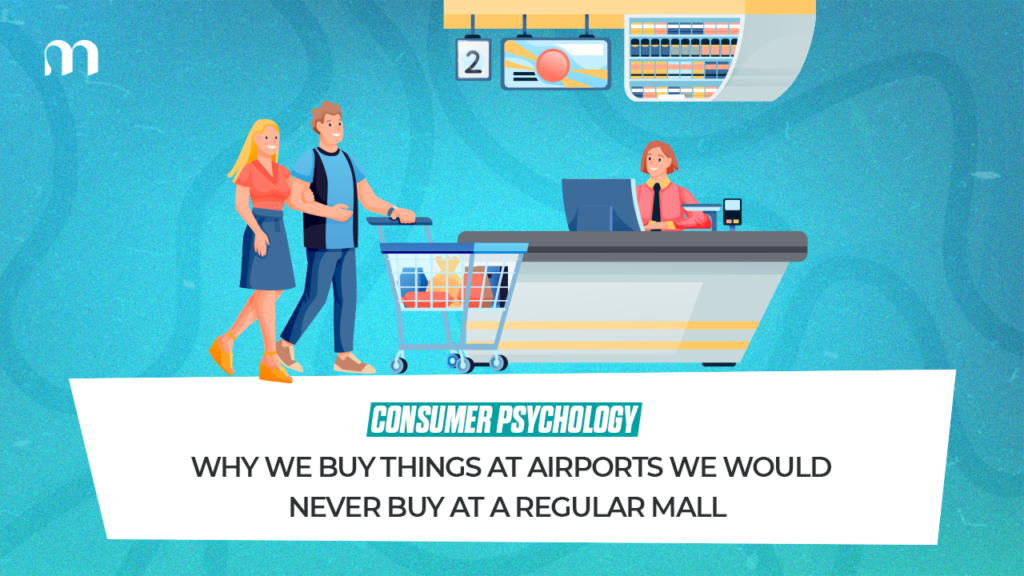
Why We Buy Things at Airports We Would Never Buy at a Regular Mall
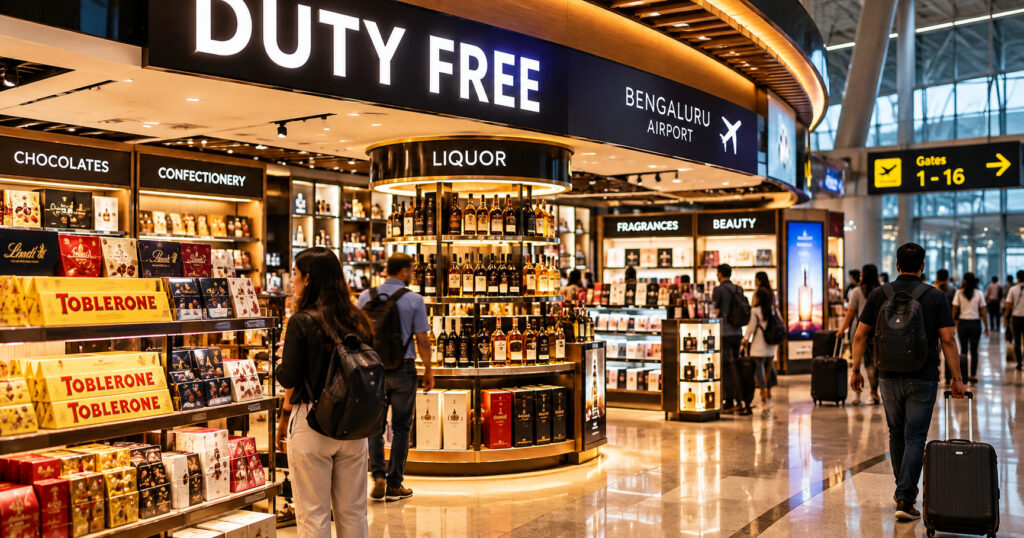
It’s 4am at Bengaluru airport.
Your flight is in 90 minutes.
You’ve checked in.
You’ve cleared security.
You’re wandering duty-free, and you find yourself buying a 3,200-rupee bottle of Baileys you have never considered buying at a regular liquor store. Fifteen minutes later, you’re eyeing a Toblerone the size of a small child, which you will not eat, and which costs eight hundred rupees more than at a Nature’s Basket in Koramangala. Near the exit, you buy a novel you will not read on the flight.
By the time you board, you’ve spent about 6,000 rupees on things you did not need, from categories you would not normally shop in, at prices you would normally reject.
Every airport in the world runs on this exact behaviour. It is not a coincidence. It is a specific, engineered psychological state that airports and airlines have perfected over decades. And once you understand it, you also start understanding a specific type of customer psychology that most Indian D2C brands could learn a huge amount from.
Here’s the opinion most brands don’t want to hear. Airport buying behaviour is not a special case. It is a preview of what happens when you remove the specific mental defences customers normally deploy against advertising. And if you can recreate any small piece of that state in your regular retail experience, you can produce airport-level willingness to spend from otherwise price-sensitive customers.
Let’s break down what’s actually happening in the airport, psychologically. 👇
1. Decision Fatigue
The first thing is decision fatigue. By the time you reach duty-free, you’ve made 40 small decisions in two hours.
- Packing.
- Check-in.
- Seat selection.
- Where to eat.
- Removing your laptop and belt at security.
- Which queue is faster.
- Whether the water bottle is worth 200 rupees.
The prefrontal cortex is exhausted. Its ability to say no is temporarily impaired.
This is the same psychological state as choosing a takeaway at 11pm after a 14-hour workday. Or buying the extended warranty at the phone counter after picking a phone for an hour. Or accepting the 25% off cross-sell during a wedding shopping session. Airports engineer decision fatigue deliberately.
2. The Window of Unaccountability
The second thing is the window of unaccountability. The customer is between two social contexts. They’ve left home. They haven’t arrived at the destination. Nobody’s watching what they buy in this 90-minute liminal window. The purchase feels invisible to the household budget, invisible to the partner, invisible to the money-conscious version of themselves. So the purchase happens, and it gets rationalised as a travel expense later.
3. Anchoring
The third thing is anchoring. Airport prices are visibly higher than street prices. Normally this should scare customers away. It does the opposite. The higher prices reset the internal reference point.
An 800-rupee Toblerone at Nature’s Basket looks expensive. An 800-rupee Toblerone at duty-free, where the Toblerone next to it is 1,200 and the imported chocolate spread is 2,400, looks like a bargain. The brain re-anchors to the airport pricing environment.
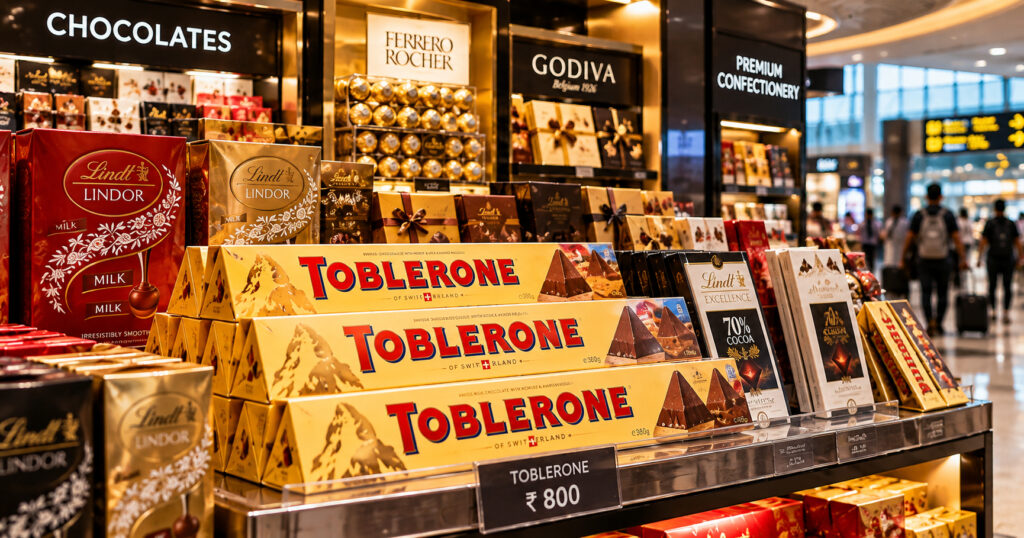
Now think about what this means for regular retail.
The brands that outperform their competitors have often figured out how to create small pockets of the airport state inside their normal retail experience. Not by manipulating customers. By reducing the cognitive load, the accountability, and the reference-point resistance around the purchase.
The Zomato at 11pm feels like a small airport moment. The customer is decision-fatigued. There is nobody watching. The internal reference is not “how much would this cost at the restaurant” but “how much does not eating cost me right now.” The purchase happens.
What can Indian brands actually do with this insight?
1. First, know when your customer is in an airport-like state, and design for that specific moment.
Late-night, in-transit, post-work exhaustion, weekend indulgence windows. These are your highest-conversion opportunities. Design specifically for them.
2. Second, reduce reference-point resistance at the point of sale.
Show what similar products cost in the same environment, not what your product costs versus street prices. Anchoring inside your environment beats anchoring against the outside world.
3. Third, respect the permission window.
If your customer is in a moment of self-indulgence, don’t shove functional messaging in front of them. Meet them in the emotional state they’re already in.
We tell our D2C clients that airports have engineered the highest-conversion consumer environment on earth, and there’s a lot to learn from them without being manipulative. The customer spends more when friction is reduced, nobody is watching, and the reference point is set by the brand. Every Indian D2C brand can create small pockets of this. Almost none do.
You will never buy anything at an airport that you needed. Which is exactly why airports keep making so much money.