


The Language of Trust: Why the Words on Your Website Matter More Than the Design
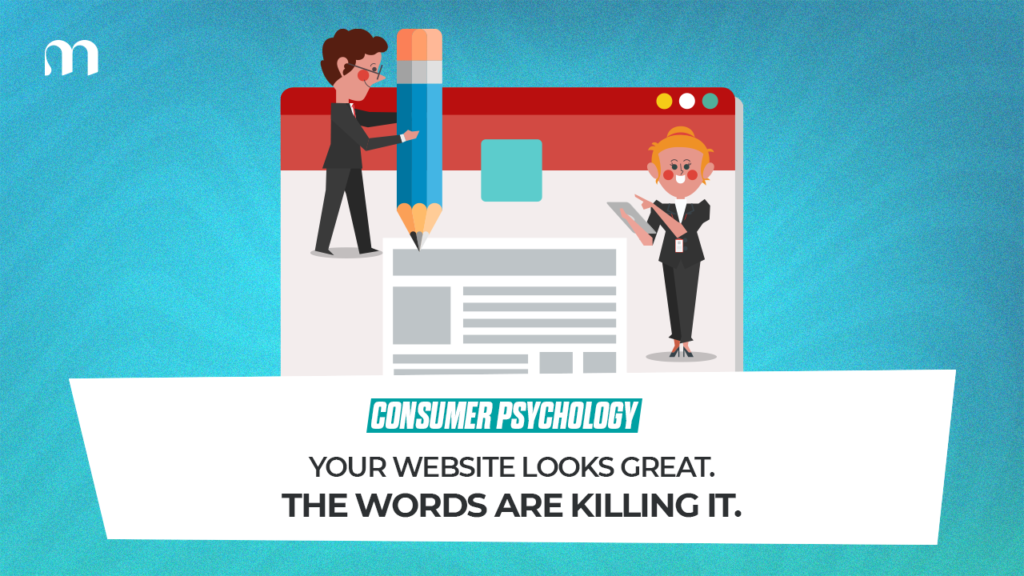
A lot of money goes into website design. Custom illustrations, fancy fonts, micro-animations, hover states, a homepage video that took two months and three agencies to make. Then a visitor lands on the site, reads the first three lines of copy, and bounces. The design did its job. The words didn’t, and now the design is decoration on a building nobody walked into. This is the part most brands underestimate. When the copy collapses, the design is just expensive wallpaper. The language of trust on a website is built through specific choices, and most websites are getting them wrong in predictable ways. Start with the obvious problem. These phrases appear on roughly half of all business websites in India and they do less than nothing. They actively damage credibility because they say everything and prove nothing. A claim like “trusted by hundreds of clients” without naming a single client, sharing a single testimonial with a real photo, or pointing to a case study, is a sentence pretending to be evidence. Readers can tell. They’ve seen this language a thousand times before. Trust is built in specifics. The first one can be checked. The second one can’t be anything other than a slogan. Then there’s the jargon problem. A staggering number of websites read like they were written by someone afraid to sound human. These words exist for one reason, which is to make a small idea sound bigger than it is. The reader on the other end is looking for something that makes sense, and instead gets a paragraph that sounds impressive and means nothing. After three sentences of this, they leave. The fix is plain language. If a teenager couldn’t understand the homepage, the copy is too dressed up. Plain language sounds less prestigious in the writer’s head and reads as more credible on the page. A growing problem on top of all this is AI-written copy that hasn’t been edited. Readers can feel it within a few seconds even when they can’t say why. The brand ends up sounding like every other brand using the same tools. AI is fine as a starting point. Publishing it as the final draft is what’s killing a lot of websites right now. Smaller things add up too. Pricing pages that hide the actual price behind “contact us for a custom quote.” Each is a small trust leak. A few of them together and the visitor decides the site isn’t to be taken seriously. ⇥ Here’s what works instead, drawn from how high-trust websites actually behave. Be specific. “Founded in 2018, 12-person team based in Bengaluru, working with B2B SaaS companies on content and SEO” tells the reader who they’re dealing with. Vague does the opposite. Sound like a human wrote it. If the copy can be read out loud in a normal voice without sounding like a press release, it’s probably working. If it sounds like an annual report being narrated by a robot, it isn’t. Acknowledge limits. “We don’t do enterprise accounts under 50 employees” or “we don’t offer same-day delivery in tier-3 cities” builds more trust than “we serve everyone everywhere” ever could. Readers respect a brand that knows what it isn’t. Lose the jargon. If a word would feel weird in a real conversation, it shouldn’t be on the website. Show real proof. If proof can’t be shown, don’t make the claim. An unsupported claim is worse than no claim at all. Design will get someone to your site. Words decide whether they stay and whether they trust you enough to do anything once they’re there. Spending lakhs on the first and underinvesting in the second is the most common, most expensive marketing mistake a small brand can make.
Why Indian Consumers Haggle Online (Even When They Don’t Realise They’re Doing It)
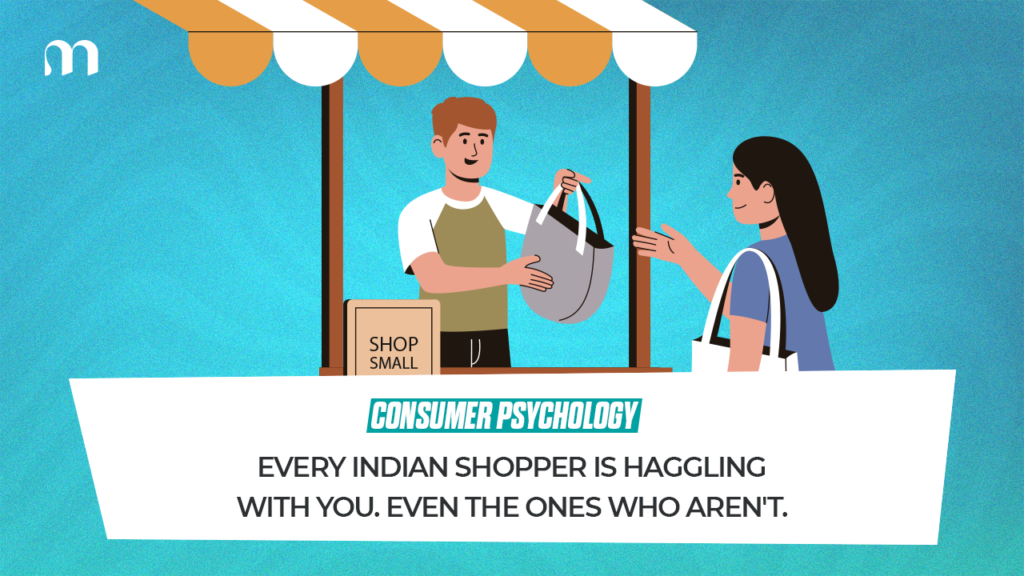
There’s a lazy assumption in Indian ecommerce that the bargaining culture died when fixed prices took over. It didn’t. It moved online, took on new shapes, and is now built into almost every shopping decision an Indian consumer makes, often without the consumer realising they’re doing it. 📱 ⇥ The haggle is alive. It just looks different now. Walk into any household in India and ask someone how they bought their last big purchase. The story will include several steps. 📌 They opened four to five tabs to compare prices across Amazon, Flipkart, the brand’s site, and a comparison engine. 📌 They probably abandoned the cart for two days waiting for a discount email. They hunted for a coupon code. 📌 They asked a friend if they had a referral link. 📌 They checked for bank cashback. 📌 They may have added one extra item to cross the free shipping threshold. 📌 They paid, eventually, at a price they felt good about, and they will tell anyone who asks that they got it for a great deal. That entire sequence is haggling. It just doesn’t get called that because nobody is in a shop arguing with a shopkeeper about it. ⇥ The cultural roots are obvious once you start looking. Indian consumers grew up watching their mothers negotiate at: 🧺 Vegetable markets 🧵 Fabric shops 💍 Jewellery stores 🛍️ Roadside stalls The bargaining wasn’t only about saving money. It was about: That instinct didn’t go anywhere when shopping went digital. Look at cart abandonment. 🛒 A significant chunk of Indian shoppers abandon carts as a strategy, knowing the brand will send a discount email within 48 hours. Brands like Zouk and several others have trained their audience that abandoning works, and the audience has learned the lesson well. The abandonment is a negotiation move. The shopper is essentially saying “make me a better offer,” without having to type a word. Look at coupon hunting. 🎟️ The seconds before checkout where a shopper opens a new tab, types the brand name plus “coupon code 2026,” and scrolls through a dodgy aggregator site looking for any working percentage off. This is the digital equivalent of asking a shopkeeper “final price kya hai?” which essentially means “what’s the final price?” before paying. A full cart is no signal that the negotiation is over. The shopper is still trying to win. Look at the WhatsApp DM negotiations on small D2C brands. 💬”Can you do 1500 instead of 1800?” “Any discount if I order two?” 💬 Founders running their own DMs will tell you this is extremely common, especially in It’s the offline bargain conversation, ported directly to Instagram. And look at the in-store version that still happens. A customer does 5000 rupees of shopping at a store and casually says at the counter, “so much shopping I’ve done, no discount?” 😄 Sometimes it works. Often it does. The store had no plan to give a discount until that sentence was spoken, and now there’s 500 off for asking. The shopping bag and the question are doing the bargaining without anyone calling it that. The uglier side of the haggle 🚫📦 There are uglier versions too. ❌ COD refusal-at-the-door tactics❌ Buyers negotiating with delivery personnel❌ Customers refusing packages entirely Brands lose lakhs every month because of this. That’s negotiation through pure attrition. Less charming, same cultural root. ⇥ So why does this matter for brands? Brands that ignore the haggling instinct are leaving conversion and loyalty on the table. The instinct is not going away. It’s older than ecommerce and stronger than any pricing strategy that tries to bypass it. The brands that win in this market work with the dance instead of trying to shut it down. This is why coupon codes still convert, even though every brand has them. The trick is to design the haggle in. A shopper who walks away from a purchase feeling like they won a small game is a shopper who comes back, tells a friend, and writes the brand into their next story about getting a great price online.
Why Indian Consumers Trust Brands Their Friends Already Use (Social Proof in 2026)
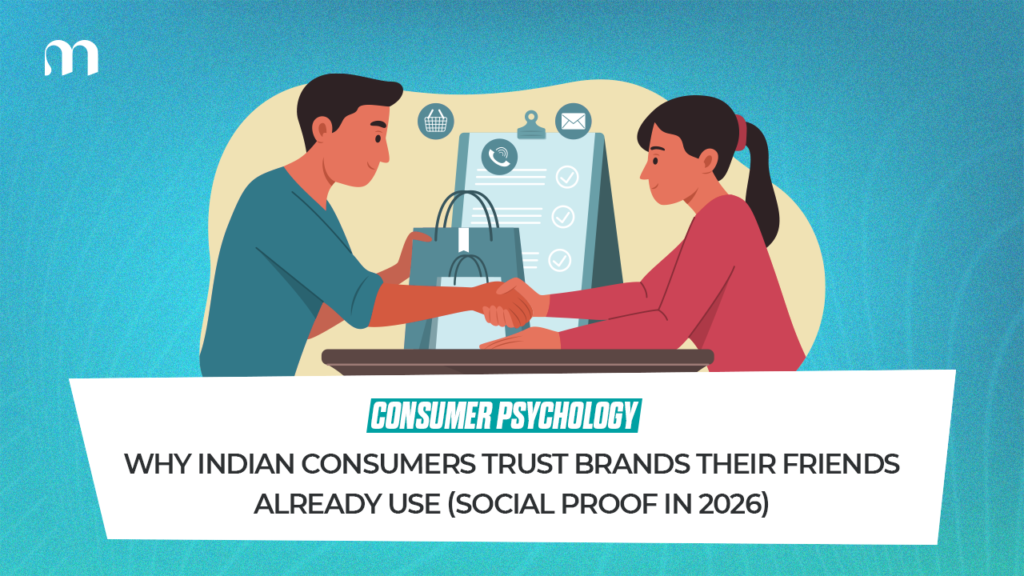
A brand can run the cleanest campaign in the world, with good photography, smart copy, the right platform, and the right spend, and someone will still scroll past it, see it, and forget it within the hour.📱 Two weeks later the same person’s friend uses the product and mentions that it’s genuinely good, and suddenly that brand has a customer for life. This is social proof in action, and in India it quietly does a disproportionate amount of the heavy lifting for most brands, whether they realise it or not. Social proof isn’t new, and Indian consumers have always bought this way. What’s new is how many more layers brands have to cut through now, and how much of that layer is getting filtered out by the same instinct that’s been running in this market for generations. If your cousin Maya says a serum works, her word easily beats fourteen The interesting question is why this continues to hold so much weight, especially in 2026 when consumers have more access to information than at any point in history. Part of the answer is cultural. Indian consumers remain community-first in a way that still genuinely surprises global brands entering the market. Buying decisions tend to move through : 📌 WhatsApp groups, 📲 📌 family chats, 👨👩👧👦 📌 office lunch tables, 🍱 📌 and neighbourhood conversations, 🏘️ rather than happening in isolation. A product recommendation in India is rarely a quiet one-on-one exchange, it’s more like a small broadcast inside a trusted circle, and once a product lands inside that circle, it spreads in ways that no paid campaign can replicate no matter how well funded it is. Another part of it comes down to sheer market fatigue. There are simply too many brands launching at once, with four new skincare labels this week, three new protein powders the next, two new meal services, and a dozen new D2C brands nobody had heard of last Tuesday. The average consumer has stopped trying to evaluate every new launch on its own merit because the mental load is exhausting, and a friend’s recommendation becomes a useful shortcut. The brain loves shortcuts, especially when the alternative is reading thirty product pages on a Sunday evening. The third piece is more pointed and worth taking seriously. Consumers have simply gotten sharper over the last few years. They know a sponsored post when they see one, they can tell when five reviews on a product page use the same three phrases, and they’ve watched the same influencer swear by four competing skincare brands in a single financial quarter and drawn their own conclusions about what that means. This is where the 2026 version of social proof starts getting complicated for brands that haven’t updated their thinking. Influencer marketing still works, but it doesn’t work the way it used to, and the shift has been quiet but significant. Audiences have started unconsciously sorting creators into two buckets, with the first being the ones who seem to have a genuine relationship with a product and keep using it beyond the campaign window, and the second being the ones clearly cycling through whichever brand booked them that month. Trust follows the first group almost instinctively, while the second group gets watched, sometimes enjoyed for entertainment, and rarely believed when it comes to actual purchase decisions. Reviews have a similar problem playing out at scale. When every product on every platform seems to have a suspiciously similar set of five-star reviews written in suspiciously similar voices, consumers stop reading them altogether and scroll straight to the three-star and two-star reviews instead, looking for something that feels like it was written by a real human being. This shift has been slow and mostly invisible, but it matters more than brands realise, because a thousand polished reviews can carry less weight than one uncomfortable honest review that mentions a specific flaw and then explains how the brand handled it gracefully. AI-generated content has only accelerated this recalibration. The average shopper can’t always consciously identify what’s AI-written versus what isn’t, but they can feel when something is off, because it’s too clean, too even, or too many products are being described in the exact same cadence across different sites. The result is a quiet, almost unconscious rethinking of where trust is actually allowed to come from. Which brings the whole conversation back to the friend, the colleague, the aunt, and the person in the WhatsApp group who isn’t selling anything and has no financial reason to lie about a product. For brands trying to build for this market in 2026, a few things follow from all of this. Community is not a growth hack, and treating it like one tends to backfire quickly. Real customers talking to real customers, unprompted and without incentive, is the most valuable form of marketing a brand can have access to, and it only happens when the product actually works and the experience around it is genuinely worth mentioning to someone. Referral programmes can help, but only if the product is already worth referring in the first place, otherwise all a referral programme does is expose the weakness faster. Micro-voices matter more than mega-voices, and the gap is widening. A next-door-neighbour creator with 8,000 engaged followers who genuinely uses a product will often out-convert a celebrity with two million disengaged followers doing a paid campaign for the same brand. The mega-reach days aren’t over yet, but the premium on authenticity is climbing steadily, and brands still chasing pure follower counts are going to find themselves paying more for less. Honest reviews are an asset rather than a liability. Curating only five-star testimonials tends to make a brand look insecure and oddly defensive, while showing a mix of responses, including what didn’t work for everyone and how the brand responded to genuine complaints, builds more real trust than any hero banner ever will. Consumers in 2026 are not looking for perfect brands, they’re looking for ones that feel real and accountable. And perhaps the most underrated point, brands need to stop underestimating word of mouth simply because it’s harder to measure than click-through rate. It’s doing a lot more work than any dashboard can actually show. When a customer finishes her cup of chai and casually tells her sister about a product she’s been loving, that moment isn’t showing up in anyone’s analytics, but it’s quietly
Understanding the Emotional Drivers Behind Brand Loyalty
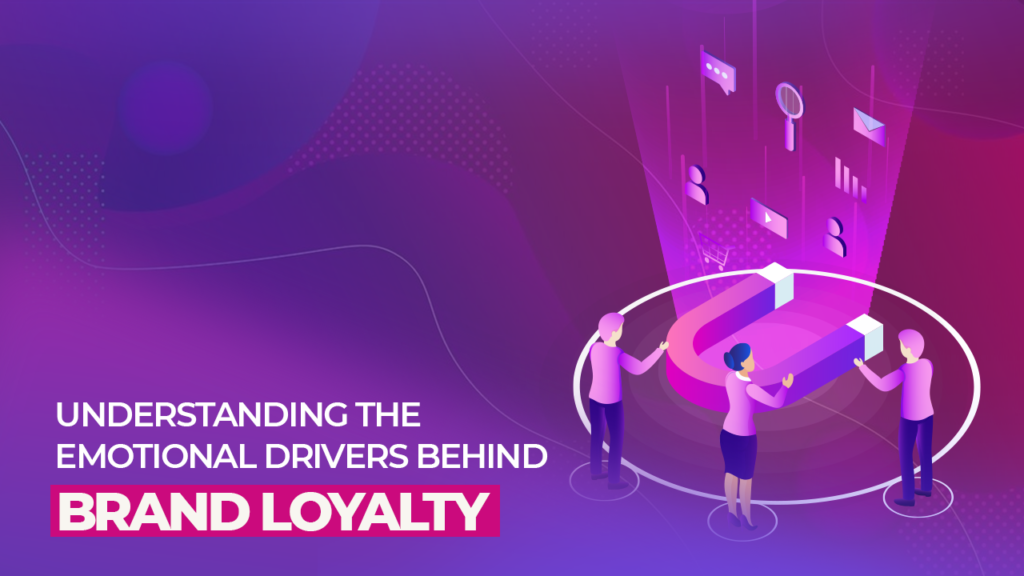
Most brands assume loyalty is a result of satisfaction. If the product works well, the service is reliable, and the pricing feels fair, customers will come back. But that doesn’t fully explain loyalty. Because in most categories today, multiple brands offer similar quality, similar pricing, and similar convenience. Yet some brands are chosen repeatedly, almost instinctively, while others remain easily replaceable. The difference isn’t always functional. It’s emotional. ⇥ Loyalty goes beyond what a brand offers If features alone determined loyalty, there would be very little variation in consumer behaviour. The “best” product would consistently win. But in reality, people often stick with brands that aren’t objectively superior. What they’re responding to is the emotional connection with brands, a sense of familiarity, comfort, or even alignment with personal identity. Over time, this connection becomes a reason to return, even when alternatives exist. This is where brand loyalty psychology becomes important. Decisions are rarely made in isolation. They are shaped by past experiences, expectations, and how a brand fits into a person’s routine or self-perception. ⇥ Trust is what makes loyalty sustainable At the core of most long-term brand relationships is trust. Not in the sense of blind belief, but in predictability. Consumers tend to return to brands that feel consistent; brands that deliver what they promise without requiring constant evaluation. This is where brand trust and customer loyalty are closely linked. When a brand reduces uncertainty, it becomes easier to choose again without overthinking. In a market where options are endless, this kind of reassurance is often more valuable than persuasion. ⇥ Emotional branding is often subtle There’s a tendency to associate emotional branding strategy with large campaigns or dramatic storytelling. In practice, it’s much softer than that. Emotion is built through repeated, everyday interactions. The tone of communication, the ease of navigating a website, the way a brand responds to a problem…these details shape how people feel about a brand far more than a one-time campaign. Over time, these small moments accumulate into a clear perception. And that perception is what drives loyalty. ⇥ Storytelling creates meaning-but only when it’s consistent Storytelling in branding plays a role in building emotional connection, but only when it aligns with actual experience. A brand that clearly communicates why it exists, what it stands for, and how it approaches its work gives people something to relate to. It adds depth beyond the product itself. However, if that story isn’t reflected in how the brand behaves, across customer interactions, product quality, or service, the connection weakens quickly. Consistency is what turns a story into something believable. ⇥ Experience is where loyalty is formed While marketing often focuses on acquisition, loyalty is shaped through experience. Every interaction a customer has with a brand contributes to how they perceive it. A smooth onboarding process, responsive support, and a seamless purchase journey all play a role in reinforcing positive associations. This is where customer experience marketing becomes critical. Even the strongest emotional positioning will struggle to hold if the experience doesn’t support it. Many customer retention strategies focus on incentives such as discounts, rewards, or reminders. While these can drive repeat purchases, they don’t necessarily build loyalty. True loyalty comes from preference. Customers return because the brand feels familiar, reliable, and aligned with their expectations, not just because it offers a temporary benefit. In that sense, retention is often the result of emotional consistency rather than tactical effort. What this means for brands? If loyalty is driven by emotion, then building it requires more than effective campaigns. It requires alignment between what a brand communicates and what it delivers. This is where emotional marketing strategies become relevant, not as isolated initiatives, but as a consistent approach across touch points. The goal isn’t just to attract attention, but to create an experience that people are willing to return to. Increasingly, this is also what brands expect from brand strategy services and digital branding services. Not just visibility, but a deeper, more cohesive connection with their audience. Instead of asking how to make customers more loyal, it may be more useful to ask what they consistently associate with your brand, and whether that association is something they want to come back to. Because loyalty isn’t built in a single moment. It develops gradually, through repeated experiences that feel dependable, relevant, and worth choosing again. At Mirra Digital, a lot of our work revolves around this idea. Building brands that people notice and return to. That means thinking beyond visibility and focusing on how every interaction feels, from first impression to repeat experience. Because that’s where loyalty actually takes shape.
How Visual Motion and Cinematic Techniques Influence Product Perception
Your product hasn’t changed. The camera angle did. That’s why it looks different. Watch two videos of the same product: same packaging, same price, same everything. In one, it’s shot flat on a white background with even lighting. In the other, it’s filmed with a slow push-in, soft shadows, and a warm grade. You already know which one feels more premium. You probably couldn’t explain why, but you’d pay more for the second one. That’s visual marketing psychology at work, and it’s more deliberate than most people realise. The way a product moves on screen, or the way the camera moves around it, fundamentally shapes how people feel about it before they’ve read a single word of copy. This isn’t a creative indulgence. It’s a mechanism. And brands that understand it are using cinematic marketing techniques to do something most advertising tries to do with words alone: make people feel something first, then think second. Slow motion is a good example of how loaded these choices are. When a skincare brand films a serum drop falling in slow motion, they’re not just showing you the product. They’re communicating precision, purity, and intentionality. The physics of the shot are doing brand work. A fast cut would say something entirely different: urgency, energy, volume. Neither is wrong. But they’re not interchangeable, and treating them as such is where a lot of brand video goes sideways. Motion design in advertising works on a similar principle. The way elements enter a frame, the easing on an animation, whether a transition is a hard cut or a dissolve all of it creates a cumulative emotional texture. A fintech brand that uses sharp, geometric transitions is telling you something about its personality. A wellness brand with soft, organic movement is telling you something else. When those choices are consistent across every touchpoint, they stop feeling like stylistic decisions and start feeling like identity. This is where product perception psychology gets interesting. Research consistently shows that people form quality judgments within the first few seconds of watching a video, often before the product is even fully in frame. Pacing, colour temperature, depth of field, camera movement: these are signals. And our brains are very good at reading them, even if we don’t consciously know we’re doing it. A shallow depth of field, for instance, is so strongly associated with high-end photography and film that it transfers its associations to whatever sits in focus. Put your product there, and some of that equity rubs off. Visual storytelling in marketing isn’t just about narrative. It’s about choreography. A well-executed product video doesn’t just show the object; it controls where your eye goes, how long it lingers, and what feeling settles in by the end. Think about how car brands film a vehicle rounding a mountain bend at golden hour. No one is consciously thinking “this represents freedom and aspiration.” But they’re feeling it. That’s advertising cinematography doing what copy rarely can: bypassing the rational brain entirely. Here’s where this becomes practical for brands that aren’t running Super Bowl budgets. The principles scale down. A video marketing strategy built around intentional visual choices (consistent colour grading, considered framing, deliberate pacing) will outperform higher-budget content that hasn’t thought any of this through. The gap between a good brand video and a forgettable one is usually not money. It’s intention. What most brands get wrong isn’t the production value. It’s treating product video marketing as documentation rather than persuasion. Showing the product isn’t the job. Making the viewer feel something about the product is the job. Those are different briefs, and they produce very different results. The brands winning on video right now aren’t necessarily the ones with the biggest crews or the fanciest equipment. They’re the ones who’ve figured out that every frame is a choice, and every choice is a message. When those choices are made deliberately and consistently, the cumulative effect is a brand that feels considered and considered brands, almost without exception, command more trust and more margin. At Mirra Digital, this is the kind of thinking we bring to creative work, because the difference between content that performs and content that just exists is usually found in the details most people scroll past without knowing why they stopped.
The Impact of Sensory Marketing on Customer Experience
You think you’re making rational decisions. Your senses disagree. Walk into a Lush store and you smell it before you see it. Step into an Apple Store and something about the air, the surfaces, the quiet hum of the space makes you feel like everything inside is worth more than it probably is. Neither of those experiences happened just like that. Both are the result of a sensory marketing strategy so well executed that it doesn’t feel like strategy at all, it just feels like the brand. That’s the thing about sensory experience. When it works, it’s invisible. When it doesn’t, something just feels off, and customers can’t always tell you why they left without buying. Most brands, if they’re being honest, are only marketing to one sense. They’ve thought hard about what they look like. The visual identity is polished, the ads are well-designed, and they’ve stopped there. But human experience doesn’t stop at the eyes. We process the world through smell, sound, touch, and taste too, and each of those channels is an open line to emotion and memory that most brands are leaving completely unused. That’s not just a missed opportunity. In competitive categories, it’s a real disadvantage. Multisensory marketing closes that gap. And the science behind why it works isn’t particularly mysterious. Smell, for instance, is the only sense that bypasses the thalamus and connects directly to the brain’s limbic system the part responsible for emotion and memory. Which is why smell marketing in retail is so disproportionately powerful. A signature scent doesn’t just make a space pleasant; it encodes the brand into memory in a way that a logo simply cannot. Singapore Airlines has had a patented cabin scent since the 1990s. Abercrombie & Fitch built an entire era of brand identity around a fragrance pumped through their ventilation systems. You might not have loved the smell, but you remembered it, and you knew exactly where you were. Touch works similarly. The weight of a product in your hand, the texture of packaging, the resistance of a button, all of it feeds into quality perception before the rational brain has a chance to weigh in. Neuromarketing strategies built around haptic experience have shown repeatedly that heavier packaging is perceived as more premium, that smooth surfaces feel more trustworthy, that rough textures can communicate craft and authenticity. Apple understood this when they designed the unboxing experience for the iPhone: the slow, deliberate resistance of the lid coming off a box is engineered. It’s not packaging. It’s theatre. Sensory branding examples like these tend to come from large companies, which leads a lot of smaller brands to assume this kind of thinking is out of reach. It isn’t. The principles scale. A boutique hotel that chooses its lobby playlist carefully, uses a consistent linen scent, and trains staff to offer a warm drink on arrival is doing multisensory work on a modest budget. A skincare brand that obsesses over the tactile experience of its pump dispenser is doing it too. The investment isn’t always financial, it’s attentional. It requires someone in the room asking: what does this brand feel like? Not look like. Feel like. Customer experience marketing that accounts for all of this tends to produce something that’s genuinely hard to replicate: a feeling that customers associate specifically with you. Not your product category, not your price point…you. That distinctiveness is what turns a transaction into a preference, and a preference into loyalty. It’s also what makes your brand resilient to competition on price, because you’re no longer just selling a product. You’re selling an experience that only exists in one place. Experiential marketing at its best is really just sensory marketing done with intention and consistency. The brands that get remembered aren’t always the loudest or the most visible. They’re often the ones that made you feel something (in a shop, at an event, through a piece of packaging) that you didn’t expect and couldn’t quite shake afterwards. At Mirra Digital, we think about brand experience as something that lives beyond the screen. If you’re building something worth experiencing, it’s worth thinking about how every sense plays a role, and we’re the kind of team that actually enjoys having that conversation.
Digital Nostalgia Marketing: Why Brands Are Bringing Back Retro Experiences Online
Nobody Is Actually Living in the Past. They Just Feel Better When Brands Remind Them of It. In 2019, Nike re-released the Air Max 90 in its original colourways with almost no modifications. No modern update, no reimagined silhouette, no “inspired by the classic” caveat. Just the shoe, as it was, because the shoe as it was is exactly what people wanted. It sold out. Of course it did. Because nostalgia marketing strategy, when it’s executed well, doesn’t need to try very hard. The feeling does the work. Nostalgia is having a sustained moment in marketing right now, but understanding why it works requires going a level deeper than “people like things from their childhood”. The psychology is more specific than that, and more useful. Nostalgic consumer psychology is rooted in something researchers call “temporal self-appraisal.” When people look back at the past, they tend to remember the emotional highlights, the summers that felt endless, the products that felt exciting, the cultural moments that felt shared. They’re not remembering the full picture. They’re remembering a feeling. And that feeling, crucially, is one of warmth, safety, and belonging. Brands that can credibly attach themselves to that feeling inherit some of it. That’s not manipulation, it’s just an understanding of how memory and emotion interact. Coca-Cola has built an entire secondary brand identity around this principle. Their holiday campaigns consistently return to imagery and iconography from the 1930s and 40s, the contour bottle, the particular shade of red, the hand-illustrated style. None of it is accidental. It’s a vintage branding strategy designed to trigger associations with comfort and familiarity in people who weren’t even alive when those ads first ran. The feeling transfers across generations because the visual language of “classic” carries its own emotional weight. ⇥ What’s changed recently is that nostalgia in advertising has found a particularly powerful home online, and the generations doing the most spending right now are the ones with the most potent digital nostalgia to mine. ⇥ Millennials and Gen Z grew up with early internet culture, Y2K aesthetics, pixel graphics, flip phones, and the particular visual texture of life before HD. ⇥ Brands paying attention to this have leaned in hard. ⇥ Pepsi’s retro logo revival, Polaroid’s sustained comeback, the wave of brands re-adopting chunky typography and washed-out colour palettes, all of it is retro digital marketing speaking directly to an audience that associates those aesthetics with a simpler, more optimistic moment in time. The execution that tends to work best isn’t pure reproduction, it’s recontextualisation. Stranger Things is a useful case study here, even outside of brand partnerships. The show understood that nostalgia isn’t about recreating the past accurately; it’s about recreating how the past felt. The 80s in Stranger Things is warmer, more saturated, more cinematic than the real 80s ever was. That’s the version people wanted, and that’s the version that generated one of the most effective waves of throwback marketing campaigns in recent memory, every brand that partnered with it got to borrow that feeling for their own product. The other risk is over-indexing on the past at the expense of relevance. Nostalgia should be a bridge, not a destination. The most durable version of this strategy uses a retro reference point to establish emotional connection, then walks the audience forward into something current. It says: we know where you came from, and we’re still here with you. That’s a very different message from: we have nothing new to offer, so here’s something old. At Mirra Digital, we think the best creative branding services don’t just follow cultural moments, they help brands find their own authentic place within them. Nostalgia is a powerful tool, but like most powerful tools, the results depend entirely on who’s handling it and whether they actually know what they’re building.
The Role of Social Validation in Modern Consumer Decision-Making
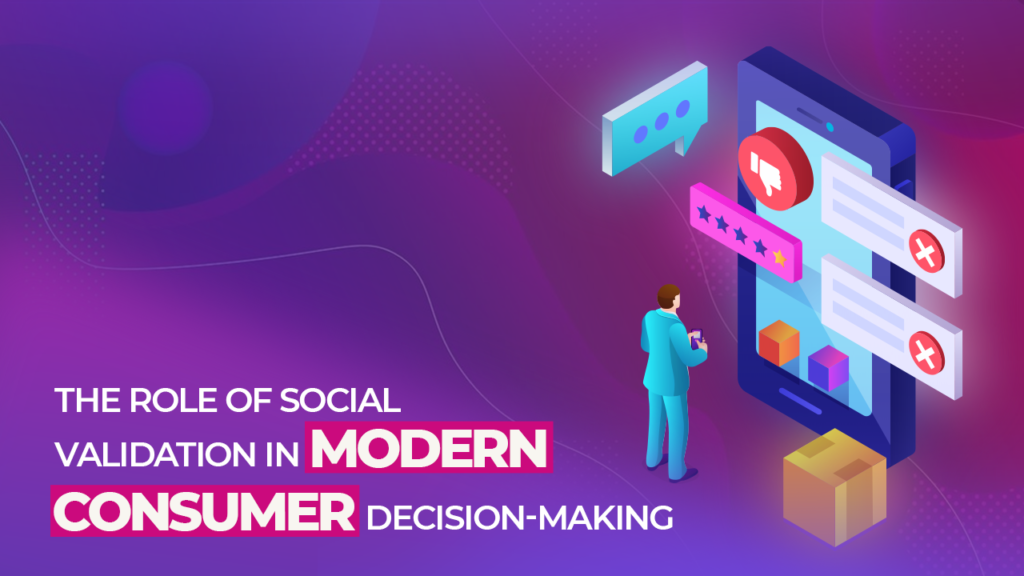
We like to believe we make independent decisions. That when we choose a product, trust a brand, or finally click “buy now,” it comes from careful evaluation. Features, pricing, maybe even a bit of brand loyalty. But if we’re being honest, most decisions today don’t start there. They start with one simple question: “What are other people saying?” Scroll through any product page and you’ll notice a pattern. The description exists, the visuals are polished, the messaging is clear, but the real attention goes elsewhere. Reviews. Ratings. Comments. Someone else’s experience. That shift is what defines social validation in marketing today. It’s no longer an add-on to the buying process. It is the process. There was a time when brands were the primary source of information. If a brand said something worked, people were more likely to believe it. That dynamic has changed. Today, social proof in consumer behaviour is driven less by what brands claim and more by what other consumers confirm. People trust people, especially those who seem to have no incentive to sell. A well-written product description might create interest. But a set of honest, detailed reviews often determines the outcome. At its core, consumer decision making psychology hasn’t changed as much as we think. People are still trying to reduce uncertainty. The difference is how they do it. Earlier, decisions were shaped by limited inputs: ads, word-of-mouth, maybe a store visit. Today, the same decision is backed by dozens, sometimes hundreds, of micro-signals. Ratings, testimonials, influencer opinions, user content. Each of these signals answers a very basic question: “Is this a safe choice” And in most cases, that’s all a consumer is looking for. ⇥ Why reviews now carry disproportionate weight? Online reviews have quietly become one of the strongest drivers of conversion. Not because they are always positive, but because they are perceived as real. Interestingly, a mix of reviews often performs better than a perfect score. A few critical opinions make the overall narrative more believable. This is where the ratings and testimonials impact on sales becomes clear. They don’t just support the decision, they often replace the need for deeper research altogether. Influence itself has also shifted. Large-scale celebrity endorsements still exist, but influencer marketing and consumer trust today are increasingly tied to relatability. Smaller creators, niche voices, and even everyday users often have more persuasive power than high-reach personalities. The reason is simple: familiarity builds trust faster than visibility. This is also why user generated content marketing has become so effective. It doesn’t look like marketing. It feels like participation. A customer sharing a product experience, a quick review video, or even a casual mention carries a different kind of weight. It’s not designed to convince, it simply shows. And that subtle difference matters. ⇥ The role of peer influence in e-commerce In digital environments, decisions are rarely made in isolation. Whether it’s a review section, a comment thread, or a tagged post, peer influence in ecommerce is constantly shaping perception. Sometimes it’s direct (“this worked for me”), sometimes it’s indirect (“so many people are buying this”). Either way, it creates momentum. And once that momentum builds, it becomes easier for the next person to follow. For brands, this changes the role of marketing. It’s no longer just about building awareness or communicating benefits. It’s about enabling and amplifying the right kind of validation. A strong campaign might get attention. But what sustains conversions is what people find after that initial interest, reviews, conversations, shared experiences. In other words, brands don’t fully control the narrative anymore. They contribute to it. Here’s a more honest way to look at it. Social validation isn’t a new concept. People have always relied on recommendations, from friends, family, and peers. The difference today is scale and visibility. What used to be a private conversation is now public, searchable, and persistent. And that makes it far more influential.
How to Elicit an Emotional Response from Your Brand

Because logic makes people think. But emotion? That makes them act. Ever wonder why you still remember that Natraj pencil ad where the kid proudly sharpens his new pencil before an exam? Or why Thai Life Insurance ads make you cry over people you’ve never met? That’s emotional branding at its finest. In a sea of scrolls, likes and passive impressions, the brands that get remembered are the ones that make you feel something. Not because they said, “We’re the best.” But because they showed you why they matter. Because they made you feel seen. ⇥ Emotions are the shortcut to decision-making. So if your brand doesn’t stir anything in your audience, no curiosity, no delight, no “this feels like me”…you’re not leaving a mark. Let’s fix that. Here’s how to create emotional brand engagement that actually works. 1. START WITH THE HUMAN, NOT THE PRODUCT Too many brands lead with features. But people don’t connect with specs, they connect with stories. Instead of this: “Our platform uses AI-powered analytics to deliver insights.” Try this: “Struggling with data overwhelm? We help you find the ‘aha’ moments faster.” Empathy is the bridge. Walk it first. 2. DEFINE YOUR BRAND’S EMOTIONAL CORE Every brand has a heartbeat. What’s yours? Use this quick consumer psychology in branding framework: Brand Type Core Emotion to Elicit Wellness Calm, trust, empowerment Tech Excitement, control, wonder Luxury Desire, exclusivity, pride Education Hope, ambition, confidence 3. USE RELATABLE LANGUAGE (DITCH THE JARGON) Nobody’s moved by: “End-to-end digital transformation solutions.” But say: “We help you stop drowning in manual work and start scaling smarter.” Emotional branding = clarity + relatability. Sound like a human, not a brochure. Tips: As a digital branding agency, we’ve seen how the right words open the right doors. 4. TELL STORIES, NOT JUST SUCCESS METRICS Facts tell. Stories sell. If you want people to feel, share narratives they can see themselves in. These could be: Key ingredients of a great brand story: ✔ A relatable character (even if it’s your user) ✔ A struggle/problem ✔ A turning point ✔ An emotional payoff Don’t be afraid to be vulnerable. That’s where trust lives. 5. USE VISUALS THAT STIR SOMETHING Your design choices matter; colour, imagery, typography: they all influence perception and emotion. For example: Use imagery that mirrors your audience’s life, aspirations, or problems. Avoid sterile stock photos. Use real faces, genuine moments and micro-emotions. At Mirra, we help brands grow emotion through thoughtful brand identity design, not just aesthetics. 6. TAP INTO EMOTIONAL TRIGGERS IN YOUR MESSAGING These emotional cues form the backbone of strong emotional branding strategies: You don’t have to manipulate, just understand what moves your audience and meet them there. 7. CREATE EXPERIENCES, NOT JUST CAMPAIGNS You can’t build emotion through a single post. You build it through consistency, across every touchpoint. Ask: Every interaction = an opportunity to deepen the emotional connection. 8. USE UGC AND TESTIMONIALS THAT SOUND REAL Emotion often comes from someone else’s voice. Use: Avoid: “We loved working with XYZ Agency. 10/10!” Instead: “They just got what we were trying to say, even when we didn’t know how to say it ourselves.” That’s what resonates. YOUR BRAND IS A FEELING People may forget your tagline. They may forget what you sell. But they’ll remember how you made them feel. So ask yourself: 👉 Is your brand emotionally forgettable? Or unforgettable? The difference isn’t louder marketing. It’s more human marketing. At Mirra Digital, that’s what we do. We’re a branding agency in Bangalore that helps brands build emotional resonance through tailored brand strategy services, thoughtful storytelling and powerful design. Let’s make your audience feel something
Why A Little Humour Goes A Long Way In Marketing

Ever noticed how some ads or posts just stick with you? The ones that make you chuckle, grin, or even snort unexpectedly in public? That’s the beauty of humour in digital marketing. It’s not about cracking jokes, it’s about making your brand memorable, relatable and frankly, one that people actually enjoy seeing in their feed. Let’s break down why humour works and how you can use it without trying too hard (or worse, flopping spectacularly). WHY IT WORKS? Humour isn’t just for entertainment, it helps brands connect with people. Here’s why it matters: ⇥ People Engage More with Funny ContentThink about the last time you shared an ad or a post or even a reel. It was probably either really emotional or really funny. And let’s be honest, funny is more fun. Humour sparks likes, shares and comments because people enjoy spreading laughter. Viral memes, witty one-liners and clever ads? Instant engagement. ⇥ Funny SticksWe remember things that make us laugh. If your campaign gets a chuckle, it also gets a place in someone’s memory. Brands like Zomato nail this with their quirky push notifications, people actually look forward to them because they’re clever, not just promotional. ⇥ It Gives Your Brand a PersonalityNo one likes a robotic brand. A bit of humour adds personality, making you more relatable. It’s the difference between being “just another company” and being a brand people genuinely enjoy interacting with. ⇥ It Builds TrustWhen people associate your brand with a positive emotion, like laughter, they’re more likely to trust you. It’s a simple way to build a connection and make your brand feel more approachable. ⇥ It Creates a Positive Experience (and perhaps even boosts sales)People in a good mood are more likely to engage, whether that’s clicking ‘Buy Now’ or reaching out for a consultation. For service-based businesses like Mirra Digital, humour isn’t about the engagement alone; it’s about making collaboration smoother and more enjoyable. It makes working together feel easy and enjoyable, like brainstorming over coffee instead of sitting through yet another Teams call. No one wants to sit through dull, overly corporate meetings when they could partner with a team that brings creativity, energy and a bit of personality to the table (like us)😉 So, how do we use humour (without trying too hard?) 🤔 Humour is great, until it isn’t. Bad jokes, forced puns, or outdated memes? Not so much. Here’s how to keep it fresh and natural: ➾ Know Your Audience Humour is subjective. Millennials love memes. Gen Z thrives on absurdity. Corporate audiences? Keep it witty but professional. Understand who you’re talking to and tailor your humour accordingly. Tip: If your audience loves pop culture references, go for it. If they prefer professional insights, keep it clever but subtle. ➾ Don’t Force It A bad joke is worse than no joke. Humour should feel natural, not like you’re trying too hard. If it doesn’t fit your brand or message, leave it out. Tip: Instead of adding a random joke, use playful wording, unexpected analogies, or a clever twist on a common phrase. ➾ Keep It Authentic People can tell when a brand is forcing humour. If it doesn’t come naturally, that’s okay. Stick to what fits your brand’s voice rather than trying to be something you’re not. ➾ Stay on Top of Trends, But Don’t Overdo It Trends are great, if you catch them at the right time. Jump on a meme too late, and you risk looking out of touch. Tip: If you’re going to use a meme or trend, make sure you’re on the pulse of it and not catching it after it’s already been done to death. Humour makes your brand more memorable. When something makes people laugh, they’re more likely to recall it later. It humanizes your brand and makes your content more enjoyable. And let’s be real, people would rather engage with a brand that feels fun and approachable than one that’s all business, all the time. So, the next time you’re planning a campaign or a post, ask yourself: can we make this a little more fun? If the answer is yes, go for it. Just keep it natural, know your audience, and don’t try too hard. The best humour feels effortless. Now go make ‘em laugh. 😆