

 Back to Blogs
The Impact of Sensory Marketing on Customer Experience
You think you’re making rational decisions. Your senses disagree.
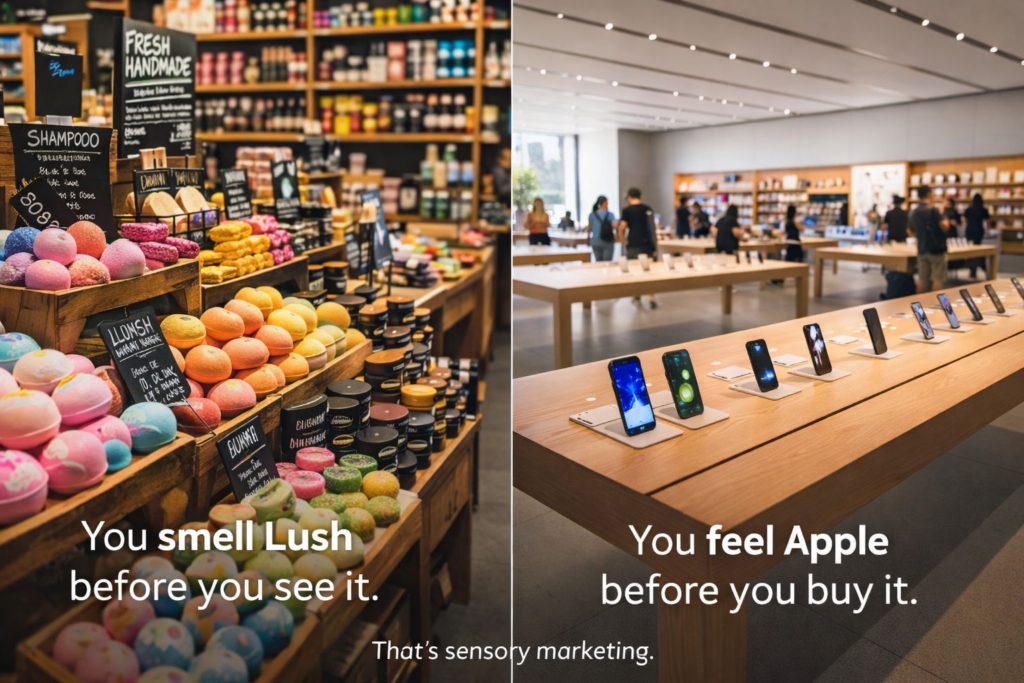
Walk into a Lush store and you smell it before you see it. Step into an Apple Store and something about the air, the surfaces, the quiet hum of the space makes you feel like everything inside is worth more than it probably is. Neither of those experiences happened just like that. Both are the result of a sensory marketing strategy so well executed that it doesn’t feel like strategy at all, it just feels like the brand.
That’s the thing about sensory experience. When it works, it’s invisible. When it doesn’t, something just feels off, and customers can’t always tell you why they left without buying.
Most brands, if they’re being honest, are only marketing to one sense. They’ve thought hard about what they look like – the visual identity is polished, the ads are well-designed – and they’ve stopped there. But human experience doesn’t stop at the eyes. We process the world through smell, sound, touch, and taste too, and each of those channels is an open line to emotion and memory that most brands are leaving completely unused. That’s not just a missed opportunity. In competitive categories, it’s a real disadvantage.
Multisensory marketing closes that gap. And the science behind why it works isn’t particularly mysterious. Smell, for instance, is the only sense that bypasses the thalamus and connects directly to the brain’s limbic system the part responsible for emotion and memory. Which is why smell marketing in retail is so disproportionately powerful. A signature scent doesn’t just make a space pleasant; it encodes the brand into memory in a way that a logo simply cannot.
Singapore Airlines has had a patented cabin scent since the 1990s. Abercrombie & Fitch built an entire era of brand identity around a fragrance pumped through their ventilation systems. You might not have loved the smell, but you remembered it, and you knew exactly where you were.
Touch works similarly. The weight of a product in your hand, the texture of packaging, the resistance of a button, all of it feeds into quality perception before the rational brain has a chance to weigh in. Neuromarketing strategies built around haptic experience have shown repeatedly that heavier packaging is perceived as more premium, that smooth surfaces feel more trustworthy, that rough textures can communicate craft and authenticity. Apple understood this when they designed the unboxing experience for the iPhone – the slow, deliberate resistance of the lid coming off a box is engineered. It’s not packaging. It’s theatre.
Sensory branding examples like these tend to come from large companies, which leads a lot of smaller brands to assume this kind of thinking is out of reach. It isn’t. The principles scale. A boutique hotel that chooses its lobby playlist carefully, uses a consistent linen scent, and trains staff to offer a warm drink on arrival is doing multisensory work on a modest budget. A skincare brand that obsesses over the tactile experience of its pump dispenser is doing it too. The investment isn’t always financial, it’s attentional. It requires someone in the room asking: what does this brand feel like? Not look like. Feel like.
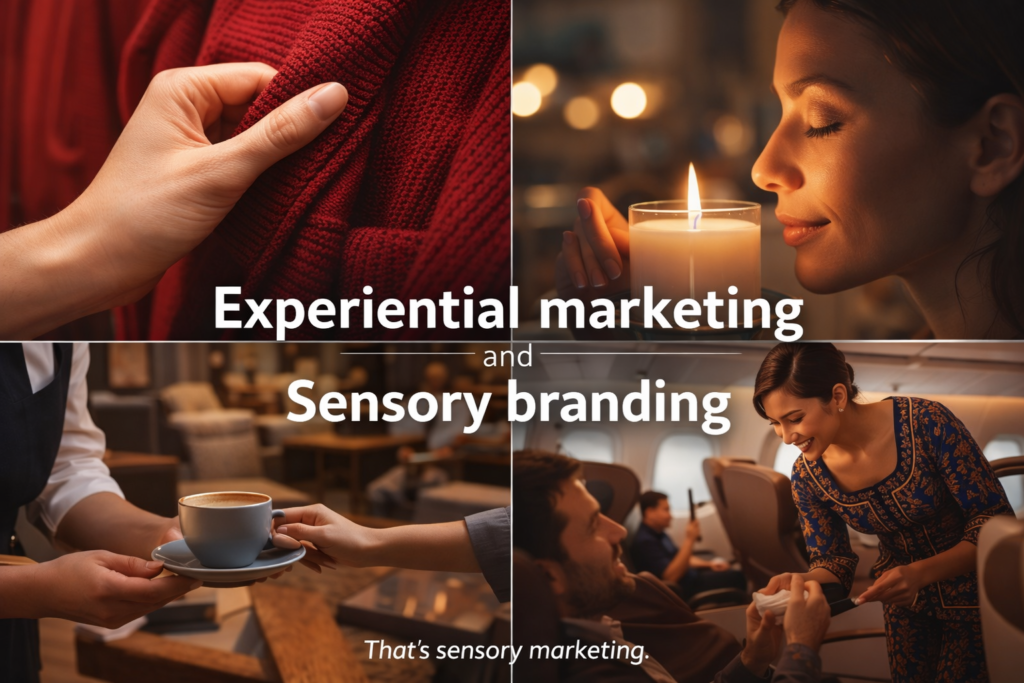
Customer experience marketing that accounts for all of this tends to produce something that’s genuinely hard to replicate: a feeling that customers associate specifically with you. Not your product category, not your price point…you. That distinctiveness is what turns a transaction into a preference, and a preference into loyalty. It’s also what makes your brand resilient to competition on price, because you’re no longer just selling a product. You’re selling an experience that only exists in one place.
Experiential marketing at its best is really just sensory marketing done with intention and consistency. The brands that get remembered aren’t always the loudest or the most visible. They’re often the ones that made you feel something – in a shop, at an event, through a piece of packaging- that you didn’t expect and couldn’t quite shake afterwards.
At Mirra Digital, we think about brand experience as something that lives beyond the screen. If you’re building something worth experiencing, it’s worth thinking about how every sense plays a role, and we’re the kind of team that actually enjoys having that conversation.