Back to Blogs
The Wedding Economy: India’s Biggest Influencer Marketing Machine
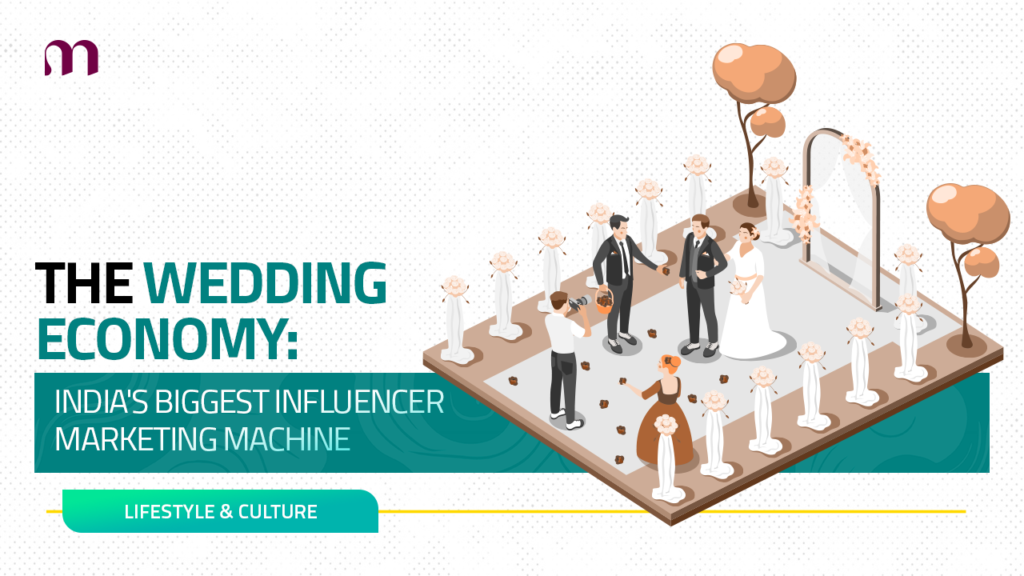
Walk into any Indian wedding of 500 people. Sixty-percent of the guests are silently running product reviews you have no idea are happening.
- The jewellery vendor is being evaluated by every aunty in a 30-foot radius.
- The catering is being ranked against three other weddings from the last quarter.
- The photographer’s setup is being noticed by two families with their own weddings coming up.
- The bride’s outfit is being cross-referenced against six Instagram accounts.
- The makeup artist’s contact has already been requested.
- The decor has been compared to last month’s Malhotra reception.
The Indian wedding is not a celebration. It is a live-audit environment where roughly 30 brands, sometimes more, are being publicly judged, ranked, saved, and either recommended or warned against. And most of the brands being audited have no idea it’s happening.
Here’s the opinion most Indian D2C brands don’t want to hear. The Indian wedding is the single most powerful influencer marketing platform in the country. It is also the single most ignored one. Brands spend crores chasing Instagram influencers with 200K followers when the aunty at the second table on the left is about to determine whether her entire extended family, roughly 40 households, will buy their next diamond set from you or from your competitor.
Let’s break down what’s being evaluated at any Indian wedding.
What’s Being Evaluated at Every Indian Wedding?
💎The jewellery. Being evaluated for design, weight, verification stamps, and whether it looks real from three feet away. Vendors that pass this test at one wedding get called into six more within the following year.
👗 The lehenga and outfits. Being cross-referenced against every designer the aunties have followed on Instagram over the last six months. Brands like Sabyasachi built empires almost entirely on this circuit before Instagram existed. The circuit still matters more than Instagram does today.
🍽️ The catering. Being ranked against every wedding the same guests have attended in the last two years. The paneer dish alone is a marketing exercise. The dessert counter is a launch event.
📸 The photography. Being noticed by every couple in the audience currently planning their own wedding. A photographer who does one great wedding gets booked for the next twelve.
🌸 The decor. Being evaluated for scale, colour palette, and how it will photograph. Decor vendors who understand this are booked out a year in advance. The ones who don’t understand it are ranking on Google ads and losing anyway.
💌 The invite. Being photographed before the wedding even begins. The invite is often the first brand touchpoint of the entire event, and it sets the tone for how every subsequent brand at the wedding is judged.
💄 The makeup artist. Being messaged by four bridesmaids within 48 hours of the ceremony. The good ones don’t run ads. They don’t need to.
🤵 The wedding planner. Being evaluated silently for months afterward, as every guest slowly discovers whether their referral held up in practice.
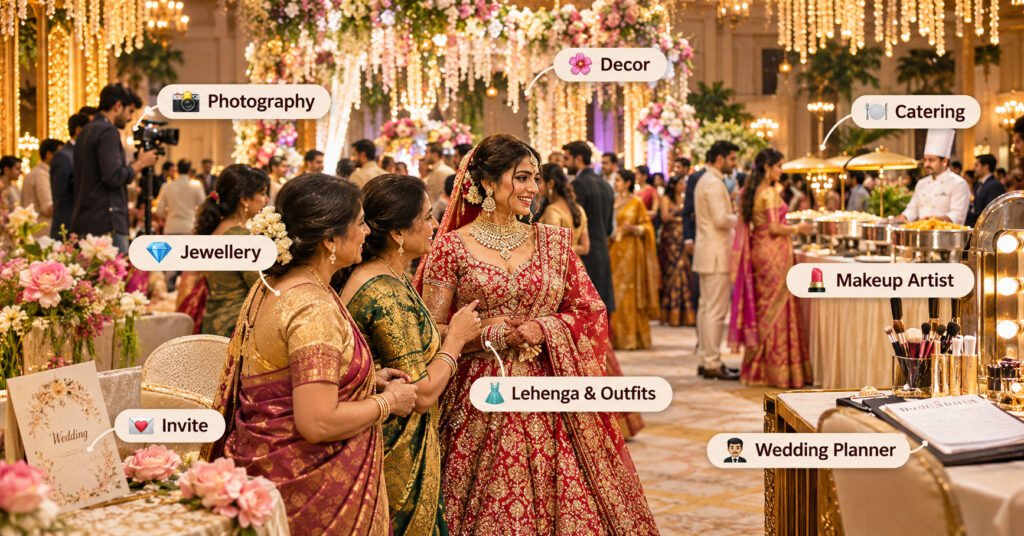
This is influencer marketing on a scale no digital campaign in India can match. The audience is captive, emotionally primed, and spending 48 hours with 30 brand impressions from every direction. Unlike an Instagram feed, they are not scrolling. They are looking, comparing, discussing, photographing, saving contacts.
A specific type of Indian brand has figured this out. The jewellery brand that pays for placement in a specific circuit of Delhi weddings. The catering brand focused on the top 40 wedding planners in Mumbai. The bridalwear designer that treats every wedding as a live campaign. These brands compound over years and become close to unkillable by competitors who don’t understand the circuit.
The brands losing this game share one common trait. They treat the wedding as a moment for a discount campaign around the season. Instagram carousels about “wedding-ready looks.” Google ads targeting “best photographer near me.” Reels featuring brides they’ve never actually dressed. All of it optimised for a digital funnel that doesn’t touch the actual audit environment where their brand is being judged.
What Should Indian Brands Actually Do?
1. First, understand which weddings your brand is being evaluated at.
If you’re a jewellery brand, get a list of the top 100 weddings in your city this quarter. Find a way to be present at three of them. Even if you’re not paid for it. The compounding is worth more than the invoice.
2. Second, build relationships with wedding planners, decorators, and photographers who work the circuit you want to be in.
The path to a bride’s jewellery choice runs through her planner’s WhatsApp group, not through her Google search.
3. Third, treat every wedding your brand touches as a live media event.
Photograph it. Document it. Share it. The people who care about your category will notice.
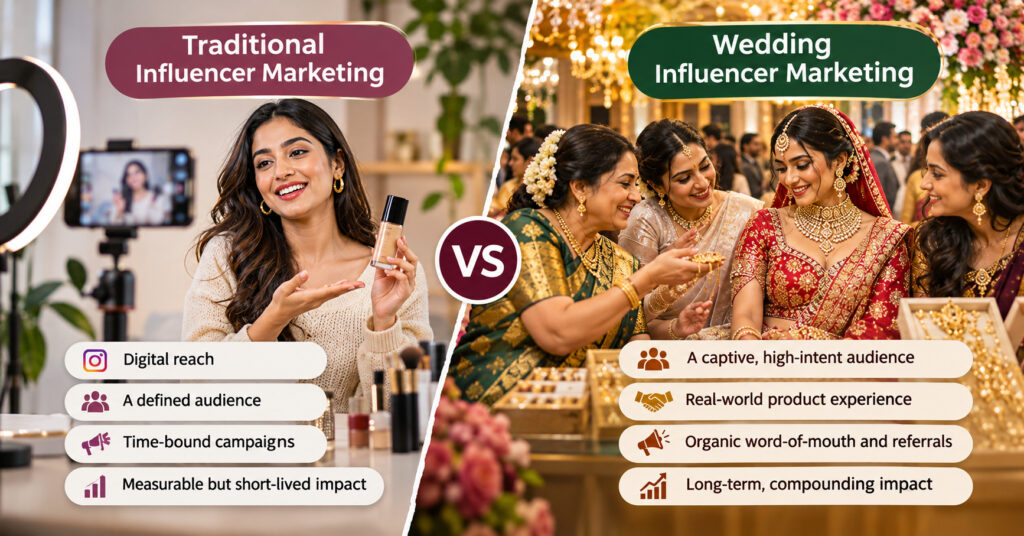
At Mirra Digital, we’ve started factoring the wedding audit environment into every relevant client’s marketing plan. The best marketing budget in India, if you know how to spend it, is 12 lakhs per wedding placement, not 12 lakhs on Meta ads. Which one produces more revenue in the following 18 months isn’t close.
Every Indian wedding is a marketing campaign happening without your permission. The brands that get in front of it grow for years. The brands that don’t stay confused about why their ads aren’t working.