

 Back to Blogs
The Email Sequence Every Small Brand Should Set Up Before Running a Single Ad
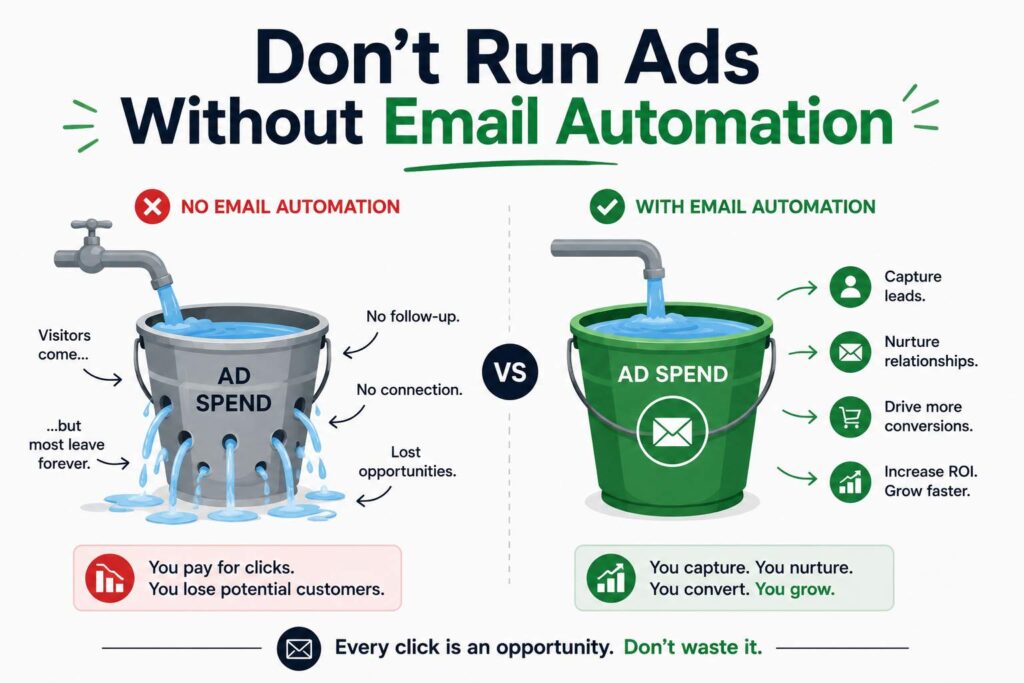
Most small brands launch ads before they’re ready to receive the traffic. The campaign goes live, clicks come in, a few people convert on the spot, and the rest disappear, never to be seen again. The brand burns through its ad budget chasing the same audience over and over, because nothing was set up to catch the ones who didn’t buy on the first visit.
The fix is an email sequence.
A simple, well-structured one, set up before any money is spent on paid traffic. Brands that do this consistently outperform the ones that don’t, because every rupee of ad spend does more work.
⇥ Here’s the sequence every small brand should have running before switching on a single ad campaign.
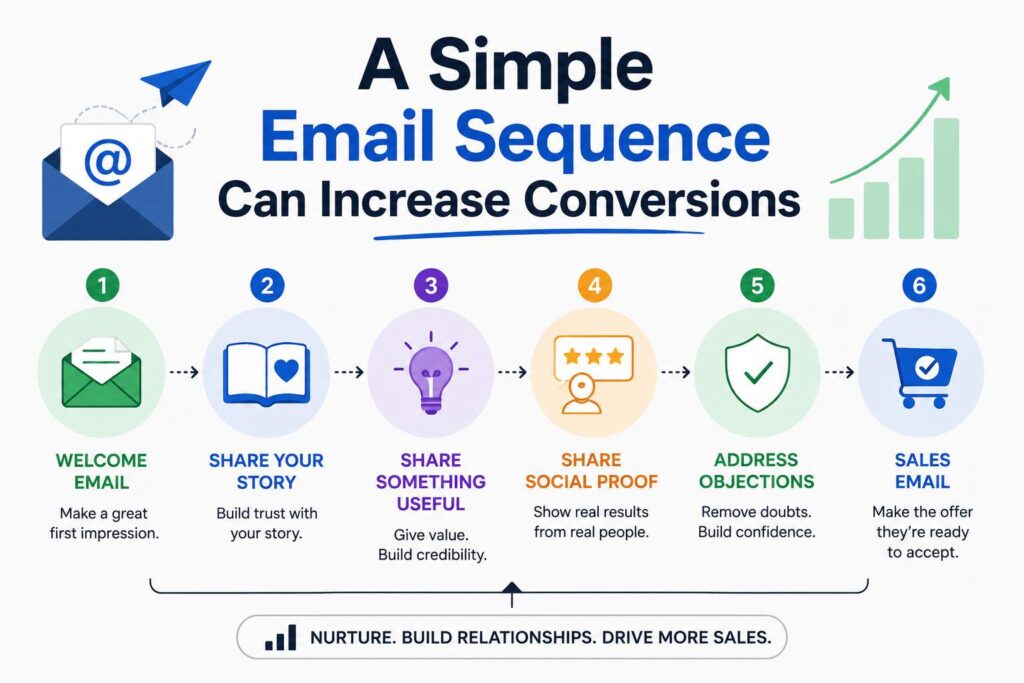
Start with a Welcome Email
This is the first email a subscriber receives after signing up. The welcome email is the highest-open-rate email a brand will ever send, sometimes hitting 60% or higher, because the subscriber is in the moment of peak interest.
Most brands waste it with a generic “thanks for subscribing” message and a 10% discount code.
A good welcome email:
- Confirms what the subscriber signed up for
- Introduces the brand in a real human voice
- Sets expectations for what’s coming next
Send the welcome within minutes of signup. Speed matters here. An email that arrives three days later finds a person who already forgot they signed up.
Next, the Nurture Sequence
This is where most small brands either skip the work or send too much, and both versions hurt conversion.
A good nurture sequence is three to five emails sent across the first two weeks, designed to build familiarity and slowly move the subscriber from interested to ready-to-buy.
Each email should have a purpose.
Email Two: Share the Brand Story
The actual story, told in a few short paragraphs.
- Why the brand exists
- What problem it set out to solve
- Who’s behind it
Real names, real faces.
This builds trust faster than any product feature ever will.
Email Three: Share Something Useful
A guide, a tip, an insight, a how-to that’s genuinely valuable to the subscriber.
The point of this email is to give before asking.
The subscriber learns that opening emails from this brand is worth their time.
Email Four: Share Social Proof
Customer stories, testimonials with real names and photos, before-and-after evidence if relevant.
This is where the subscriber starts seeing other people getting value from the product, which is far more persuasive than any claim the brand makes about itself.
Email Five: Address Common Objections
The questions every potential customer is silently asking.
- Is this worth the price?
- Will it work for me?
- How is this different from the cheaper option?
Answering these directly, in plain language, removes the friction that’s keeping the subscriber from buying.
The Sales Email
Only after this sequence has done its work should the brand send the explicit sales email.
By the time it arrives:
- The subscriber knows the brand
- Trusts it slightly
- Has received something useful
- Has seen evidence that the product works
The conversion rate will be significantly higher than the same email sent to a cold audience.
The Sequence Most Brands Forget: Abandoned Cart Emails
There’s another sequence every brand needs, and most don’t set up.
A customer adds something to their cart, gets distracted, leaves the site.
Without an abandoned cart email, that sale is gone.
With one, around 10 to 15 percent of those customers come back and complete the purchase.
📩 The sequence is usually two or three emails sent over 24 to 72 hours.
This setup, alone, can recover meaningful revenue currently being lost.
⇥ A Few More Things Worth Setting Up Before Any Ad Runs
Post-Purchase Sequence
After a customer buys, send a sequence of two or three emails over the following weeks.
- Confirm the order
- Share tips on how to use the product
- Ask for a review at the right moment
- Cross-sell at a sensible time
The post-purchase window is when customer loyalty is built, and most brands ignore it entirely.
Re-Engagement Sequence
For subscribers who haven’t opened anything in three to six months.
Send one or two emails asking if they’re still interested, with a clear option to unsubscribe.
📬 This keeps the list healthy and improves deliverability for everyone else on it.
Why This Matters
- Paid traffic is expensive and getting more expensive.
- Email is owned, predictable, and far cheaper to run than ads.
A brand that captures email addresses through its ads and runs proper sequences against them will get two or three times the return per rupee of ad spend.
- Running ads without an email sequence is like filling a bucket with holes in it.
- Water leaks out, more gets poured in, and somehow nobody notices that the bucket is the problem.
Set up the sequences first. Then run the ads.
Need Help Setting This Up?
Setting up these sequences sounds simple in a blog post.
Actually building them, writing the copy, segmenting the audience, and getting the timing right is a different exercise altogether.
If this is the part of the work that keeps getting pushed to next week, Mirra Digital builds email sequences for brands across industries.
📩 We’re around whenever it’s worth handing off.