The Return of the Newsletter: Why Inboxes Are Winning Again
For years, the inbox was supposed to be dead. 💀
Open rates were down,
attention had moved to social, and
email was filed away as something only your bank,
your boss, and
your dentist still used.
Then, somewhere between 2023 and now, something shifted.
Brands started sending newsletters again.
Readers started subscribing again.
The inbox turned into one of the more interesting places to build an audience, and nobody quite saw it coming.
The shift isn’t subtle once you start looking.
Substack,
Beehiiv, and
a wave of newer platforms have made it easy to write, send, and monetise a newsletter.
Independent writers are building real audiences and real revenue without going through a single algorithm.
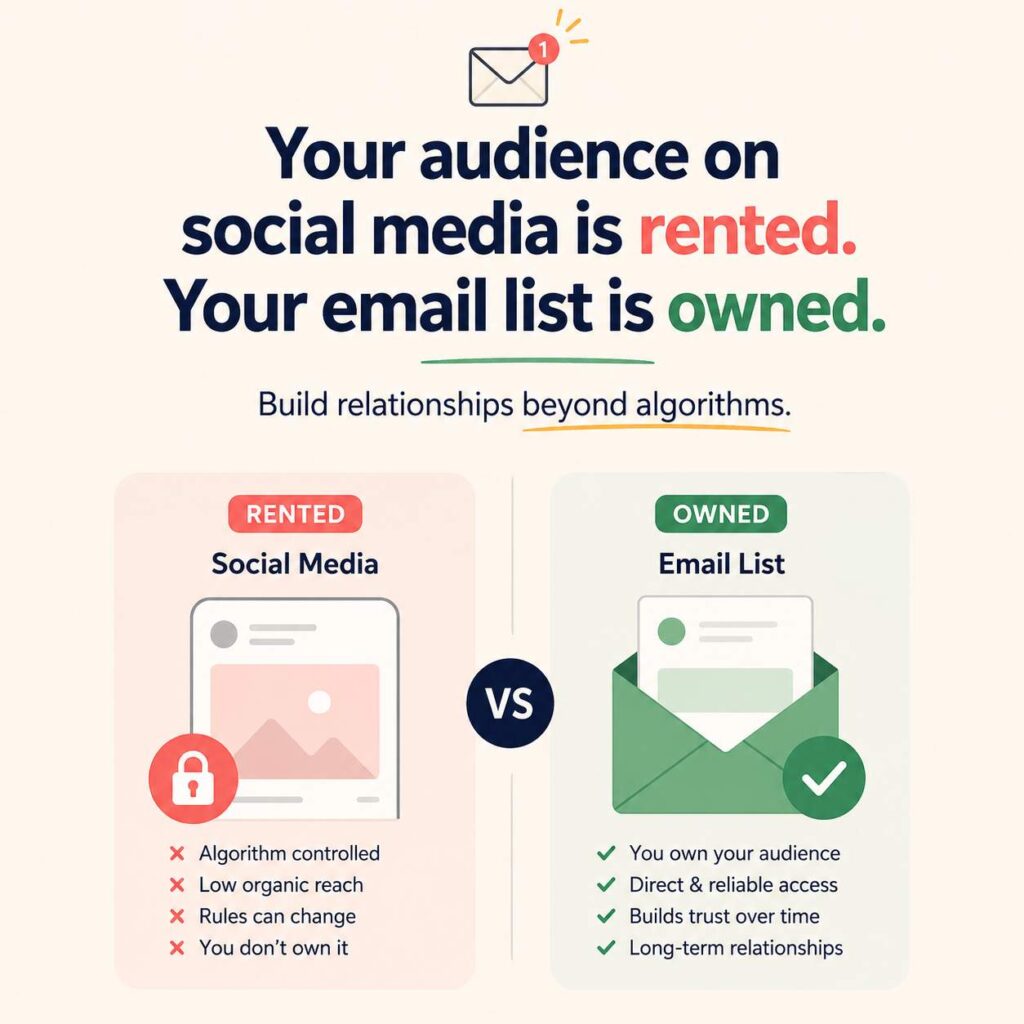
Brands are realising that their inbox list is the only audience they actually own.
Everything else, the followers on Instagram, the subscribers on YouTube, the people in their Facebook group, is rented from a platform that can change the rules tomorrow.
⇥ The catalyst is algorithm fatigue.
Every social platform now decides, on the brand’s behalf, which 5 to 10 percent of its audience gets to see any given post.
The brand can have 50,000 followers and reach a few thousand on a good day. Email doesn’t work that way.
A list of 5,000 subscribers will get the email in roughly 5,000 inboxes. Open rates vary, but the delivery itself is predictable in a way social hasn’t been for years.
That predictability is rare and valuable, and brands are starting to act on it.
There’s also a shift in what audiences want.
After a decade of being shown content at a furious pace,
with reels stacked on reels and
feeds refreshing every few minutes,
the inbox has become a slower,
calmer space.
People genuinely look forward to certain newsletters.
They sit with them over morning coffee. They forward the good ones to friends. Social rarely produces this kind of attention anymore, where the feed is built for speed and the goal is volume.
⇥ Now, here’s the part most brands are getting wrong.
Most brand newsletters are not newsletters.
They’re promotional emails dressed up in a slightly nicer template.
New product launch. 🛍️
Limited-time discount. ⏳
Festival sale. 🎉
Another discount. 💸
Maybe a vague “we’re hiring” mention at the bottom. 📢
None of this is actual content, and audiences treat it accordingly.
The unsubscribe rate is high because the email is asking for a sale and giving the reader nothing worth their time in return.
A newsletter worth reading offers
an insight, 💡
a perspective, 🧠
a useful piece of thinking, or
a story the reader couldn’t get elsewhere. 📖
It has a point of view.
It sounds like a real human wrote it.
It respects the reader’s time.
It shows up at a sensible cadence,
because daily emails from brands burn out the goodwill fast. The brands doing well at this are sending one well-thought-out email a week or every two weeks, with content that earns the click.
⇥ The Indian context is where this gets more interesting.
There’s a persistent notion in “Indian marketing that audiences don’t read email“, that everyone is on WhatsApp and Instagram, and that newsletters are a Western thing that won’t transfer.
That notion is becoming outdated.
Indian audiences are reading.
Newsletter platforms are growing here.
Marketing-related newsletters,
food creator subscriptions,
finance writers,
niche industry analysts,
all of them have growing Indian audiences that show up reliably.
The audience exists. Most brands just haven’t built for it yet.
⇥ So what should a small brand actually do with all of this?
1) Start a newsletter for the right reasons.
The right reason is having something genuinely useful to share with the people who care about the brand’s work.
Insights from running the business.
Honest observations about the category.
Behind-the-scenes thinking that doesn’t fit on a reel.
Content that respects the reader enough to assume they can handle more than 200 characters.
Starting one because every other brand is doing it, or because it’s an easy way to send discount codes, is how most brand newsletters fail in their first three months.
2) Keep the cadence sensible.
One email every week or two is enough.
Skip a week if there’s nothing worth sending.
Subject lines should reflect what’s actually inside.
A small list of people who open and read every email will deliver more value over time than a giant list that’s mostly ignored.
3) And let the newsletter compound.
Most newsletters are boring for the first six months and start finding their voice in month seven.
Patience here pays back disproportionately.
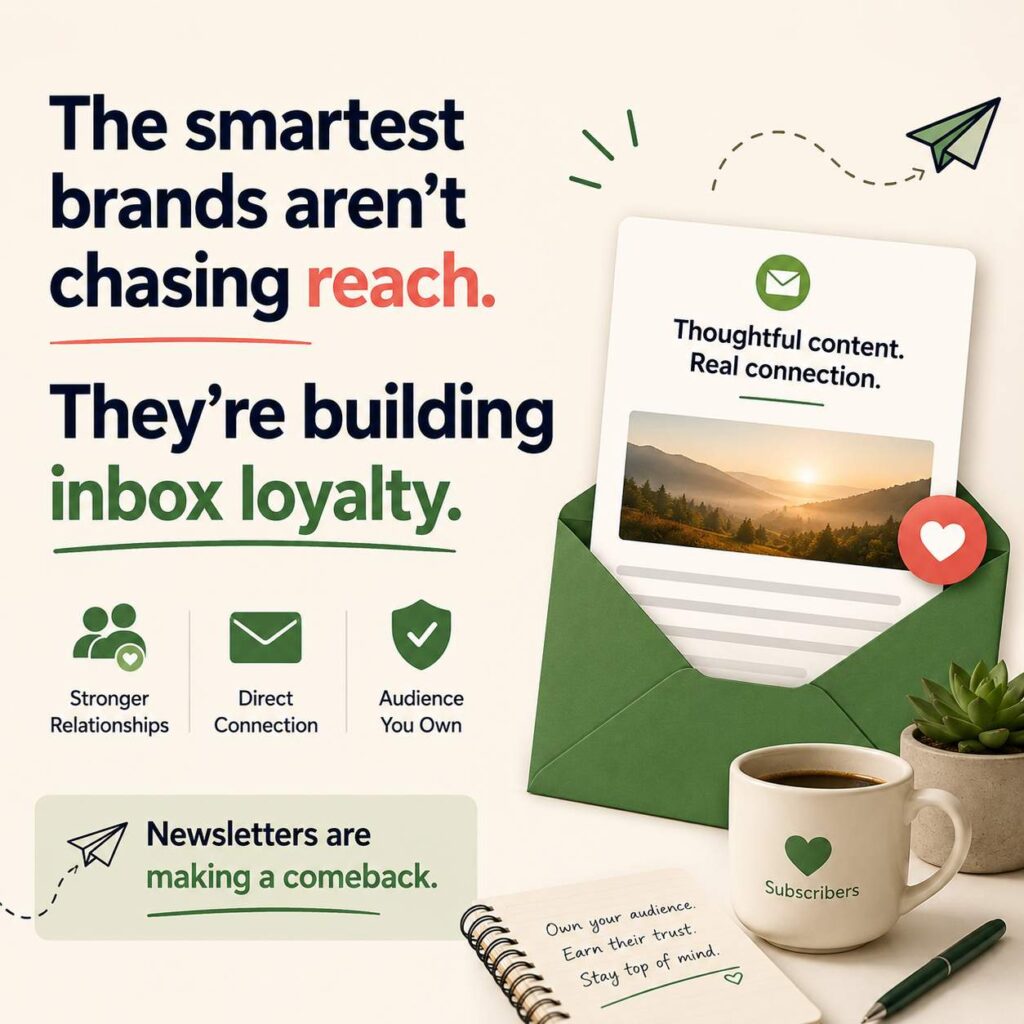
The brands that started newsletters two years ago and stuck with them are seeing real returns now, in audience, in trust, and in the kind of direct relationship with customers that no social platform will ever let them have.





 Back to Blogs