

 Back to Blogs
What ChatGPT Search Means for Your Blog Strategy
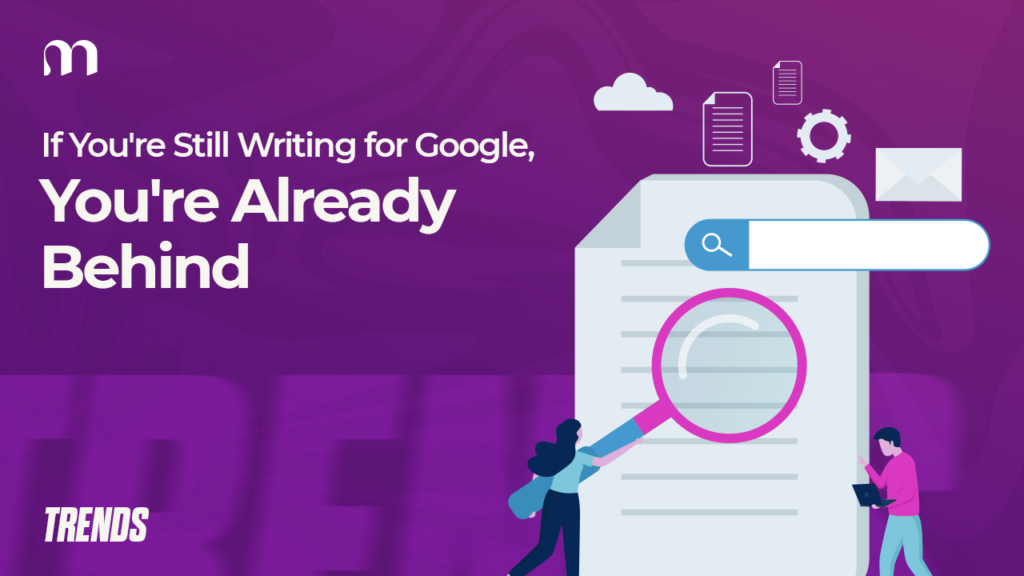
There’s a new gatekeeper sitting between your blog and your reader, and it isn’t Google anymore.
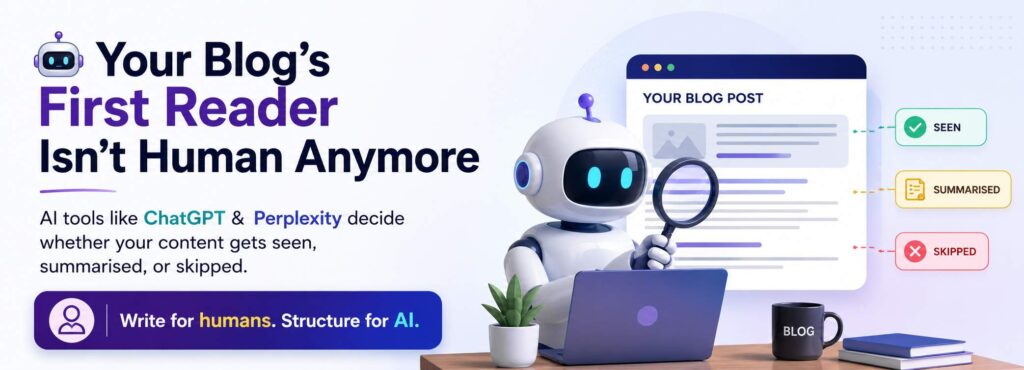
It’s an AI tool. ChatGPT, Perplexity, Google’s AI Overviews. It scans your blog, decides whether to mention it, summarise it, or skip it entirely, and then delivers an answer to the reader in the chat window. The human may never visit your blog at all. The blog still did the job. Nobody clicked.
This is the part most blog strategies haven’t caught up to.
The first reader has changed, and the first reader has very different taste from the human who used to scroll past your headline on Google.
⇥ Here’s what that means in practice, without the consultant-speak.
AI search tools like ChatGPT, Perplexity, etc, pull from blog content the way a busy researcher does.
They scan for
- clear answers,
- structured information,
- real expertise, and
- specific examples.
They reward content that gets to the point and punish content that wastes their time.
- Every extra paragraph of preamble lowers the chances they’ll pick that piece to cite.
- Old SEO playbooks built blog posts the opposite way.
- Long intros to hit minimum word counts.
- Keyword stuffing.
Saving the actual answer for paragraph seven so users would scroll.
All of that now works against you.
⇥ So the question becomes how to write blog content that AI tools want to cite, while still working for the human reader who does land on the page.
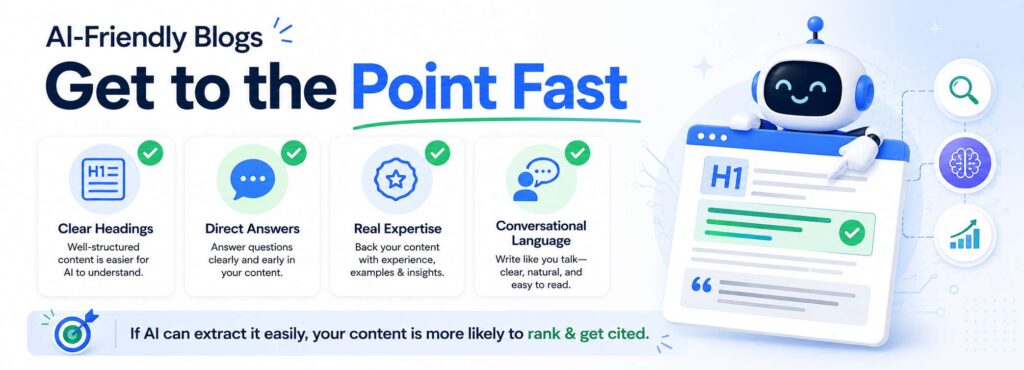
The first shift is structure.
AI tools love structured content because they can extract from it cleanly.
- Clear headings phrased as questions.
- FAQ sections that answer common queries directly.
- Short paragraphs.
- Bullet points where they genuinely help.
Definitions written out plainly in the first line of the section that introduces them.
A blog post built like a well-organised reference document gets cited far more often than one built like a rambling essay, even if the essay is better written.
AI doesn’t care about beautiful prose. It cares about whether it can lift a clear answer out of paragraph two.
The second shift is how questions are phrased and answered.
People type into AI tools in full sentences, the way they actually speak.
- “What’s the best way to brief a designer.”
- “How do I price my services as a freelancer.”
- “Why are my Instagram reels not getting reach.”
These are conversational queries, and the blog content most likely to surface in the answer is content written to match how people speak.
A heading that reads “how to brief a designer without making them hate you” will get pulled into more AI answers than a heading that reads “design brief best practices.”
The third shift is the most painful one for anyone who built a career writing long-form content. Get to the point fast.
- AI tools weight the opening of a piece heavily, because the opening is where the answer usually lives.
- If a blog spends 400 words on a personal anecdote before saying anything useful, the AI may give up before reaching anything worth citing.
- The blog you’re reading right now follows this rule.
The opening line did the setup, the second paragraph delivered the shift, and anyone extracting got something within the first 200 words.
This doesn’t mean writing without personality.
- The blog still needs a voice and a point of view.
- It still needs to feel like a real person wrote it.
What it doesn’t need is a 600-word warm-up before the real content starts.
Some smaller things that matter for AI-ready content.
Write content that demonstrates real expertise. AI tools are getting better at distinguishing generic content from content with actual depth behind it. A blog that names specific examples, cites real data, or offers a perspective grounded in real experience will outperform a generic explainer every time.
Use precise language. “Many businesses” is a phrase that AI tools skip past. “43% of small Indian businesses” is a phrase they extract and credit. Specificity wins.
Update old content.
- AI tools tend to favour recent content over old content for fast-moving topics.
- Blog posts from 2021 that haven’t been refreshed are losing visibility, even if the content is still relevant.
And the harder bit.
- Build authority outside your own blog.
- Mentions in podcasts, interviews, guest posts, industry publications.
- AI tools triangulate trust across sources, and the brand mentioned in five credible places will get cited over the brand with one perfectly optimised page.
The takeaway is simple. Blogs still matter. They might matter more than ever, because they’re feeding both Google and the AI tools reshaping how people search.
The brands that adjust their writing for both will keep showing up. The brands writing the way they wrote in 2021 are going to look invisible in 2027, and they won’t know why.