


 Back to Blogs
The Obsession With Virality Is Destroying Brand Equity.

Every few weeks, a brand goes viral.
- The team celebrates.
- The metrics look incredible.
- The founder reposts the screenshot.
Internal Teams channels fill with clapping emojis. Six months later, predictably, the same brand is back to flat growth, with no clear explanation of why.
Here’s an unpopular opinion. The obsession with virality is one of the most destructive forces in marketing today, and it’s hollowing out brands that should be building real long-term equity.
Three things happen when a brand chases virality, and they all hurt the brand in different ways.
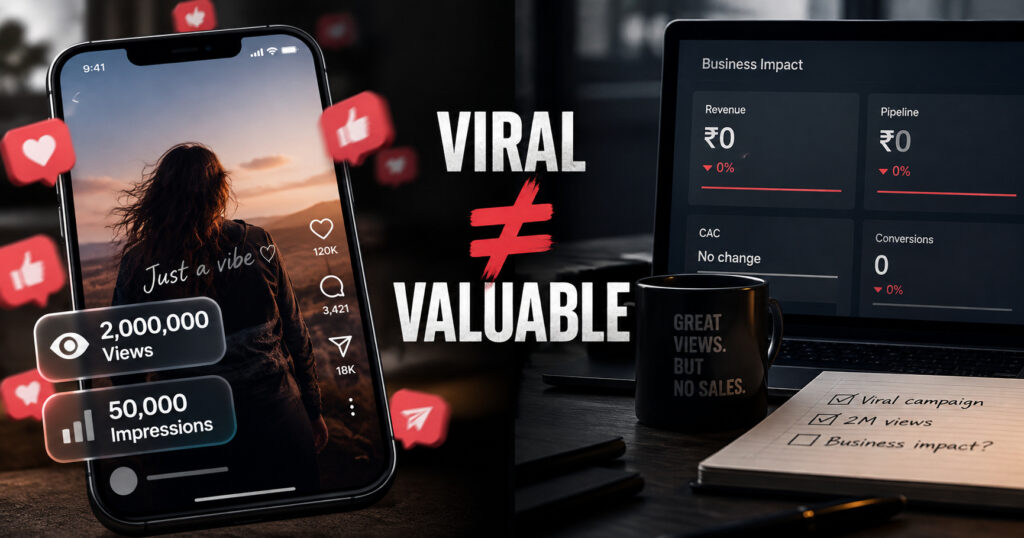
1} First, virality is a vanity metric pretending to be a strategy.
- The view count looks like a business outcome, even though it almost never is.
- A reel with two million views from teenagers in a country the brand doesn’t ship to has produced zero revenue.
- A LinkedIn post with 50,000 impressions from people outside the buyer persona has done nothing for the pipeline.
- The CFO can’t find the campaign on any report that matters.
Six months later, when CAC hasn’t moved, somebody finally asks what the viral campaign achieved.
The answer is …nothing, really.
2} Second, viral content attracts the wrong audience and dilutes whatever brand equity already existed.
A brand built carefully over years to mean something specific to a specific kind of customer goes viral with a piece of content designed to appeal to the broadest possible internet audience.
- The new followers arrive.
- They’re not interested in the actual product.
- They’re interested in the joke that went viral.
- The brand now has 80,000 followers, of whom maybe 800 are real prospects.
- The engagement rate craters.
- The algorithm reads the cratering as a signal to show the content to fewer people.
- The brand has spent its goodwill on attention from people who will never buy anything.
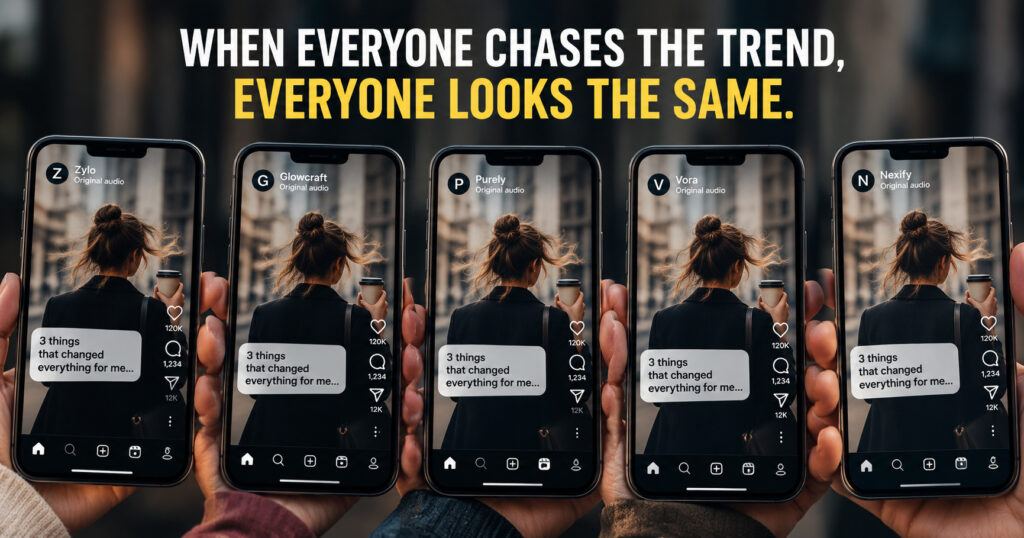
3} Third, and most damaging, the chase for virality forces brands to mimic whatever’s trending, which means the brand stops sounding like itself.
- The reel formats get copied.
- The captions follow the same templates.
- The hooks all start the same way.
A brand voice that took years to develop gets gradually replaced by an interchangeable internet voice optimised for shareability.
The brand becomes indistinguishable from its competitors, because all of them are running the same playbook chasing the same algorithmic rewards.
Differentiation, which was the entire point of branding, evaporates.
Then there’s the social pressure.
Marketing conferences celebrate viral case studies.
LinkedIn posts highlight the brand that broke the internet last week.
Founders sitting in the audience start to wonder if their own marketing is too restrained.
They go back to their teams asking for something bolder.The team produces something that looks like the trending format.The post gets a few thousand likes.The pipeline stays flat.
Here’s one thing most agencies will never say out loud, because we’re partly responsible for selling brands the idea that virality matters.
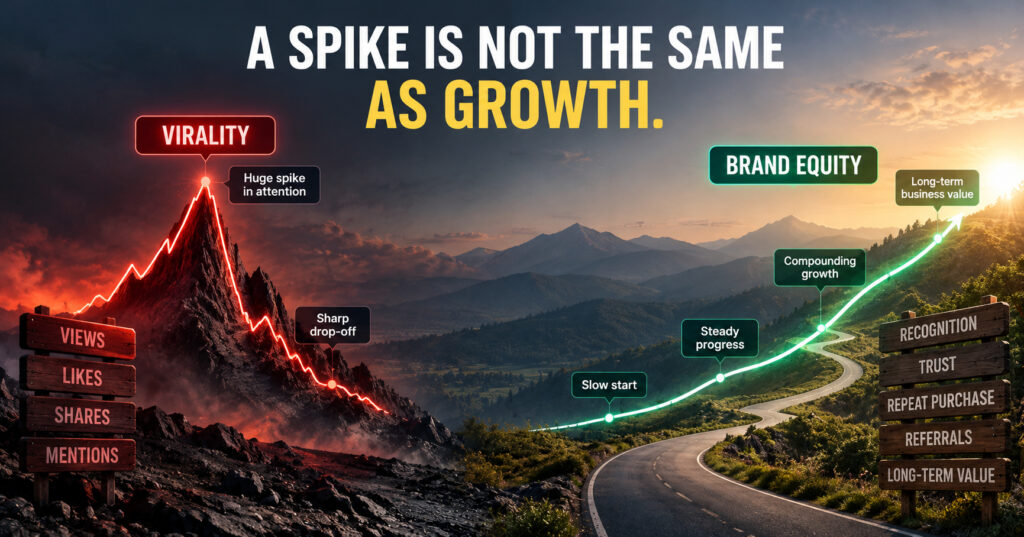
The brands that compound, the ones that still matter in five years, almost never go viral.
They build slowly.
Show up consistently.
They make the same point in a hundred different ways for the same audience.
Their content doesn’t break the internet.
It builds a quiet, durable advantage with the small audience that actually pays them.
Look at the brands that have stood the test of time in, and they share a pattern.
Most have never produced a viral hit.
What they have, instead, is a clear voice their customers recognise immediately.
- A consistent set of opinions about how the category should work.
- A relationship with their audience that runs deeper than any viral moment could create.
What should brands do instead?
1} Stop measuring marketing in views and impressions.
Start measuring in customer recognition, repeat purchase, and word-of-mouth referrals.
These are slower metrics.
They’re also the ones that correlate with actual business value.
2} Make content the audience the brand already has actually wants.
The 5,000 right people reading every piece of content is worth more than 500,000 wrong people skimming one viral post.
Build for depth before reach.
3} Resist the trend-chase.
Every time the team gets pressured to mimic a trending format, ask whether the format actually serves the brand’s positioning.
If the answer is no, skip it.
- The trend will be over in three weeks.
- The brand voice is meant to last.
4} Accept the boring middle.
The brands that build real equity spend years in the unglamorous middle, where content performs decently but nothing breaks through.
- The temptation to gamble on a viral moment is constant.
- The discipline to keep building anyway is rare.
It’s also where the actual compounding happens.
At Mirra Digital, we’ve stopped briefing client work against virality.
We brief against memorability, consistency, and conversion to people who matter.
- The campaigns don’t trend.
- The brands keep growing.
We’ve decided that’s the better trade.
Virality is a sugar high. Brand equity is a meal.
Most brands will choose the sugar high, every time.The few that don’t are the ones still standing in ten years.