

 Back to Blogs
Why People Buy at 11pm
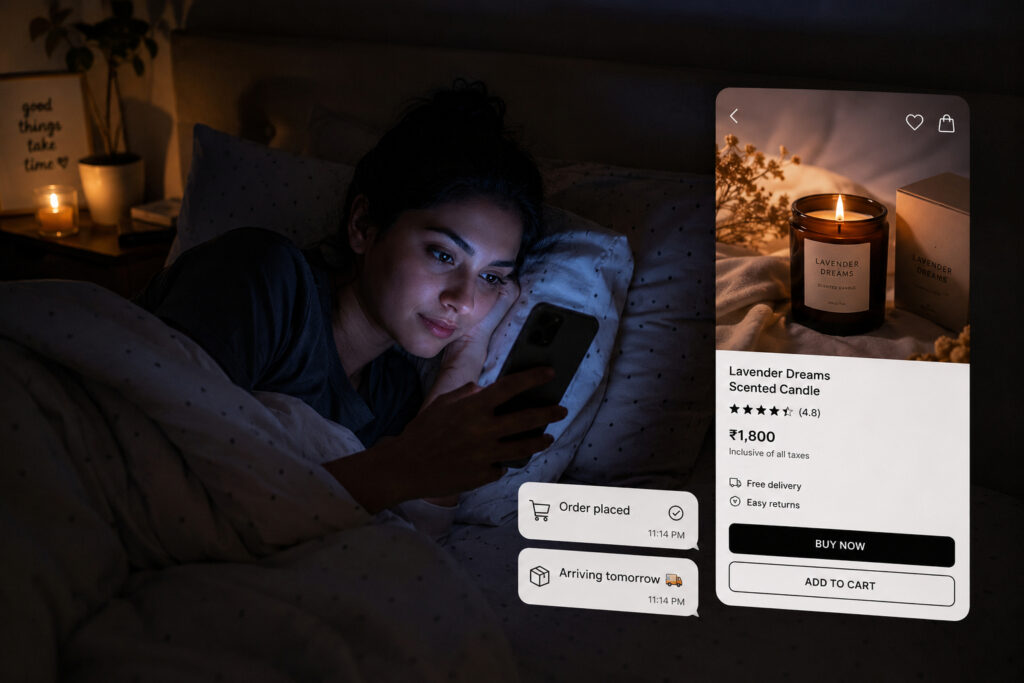
Around 11pm, a particular phenomenon plays out across millions of phones. A person who has spent the day responsibly saying no to things is now in bed, on their second scroll of Instagram, and is about to buy a 1,800-rupee scented candle they have no actual use for. By 11:14pm, the candle has been ordered. By 11:15pm, the same person is half-asleep, wondering why they did that.
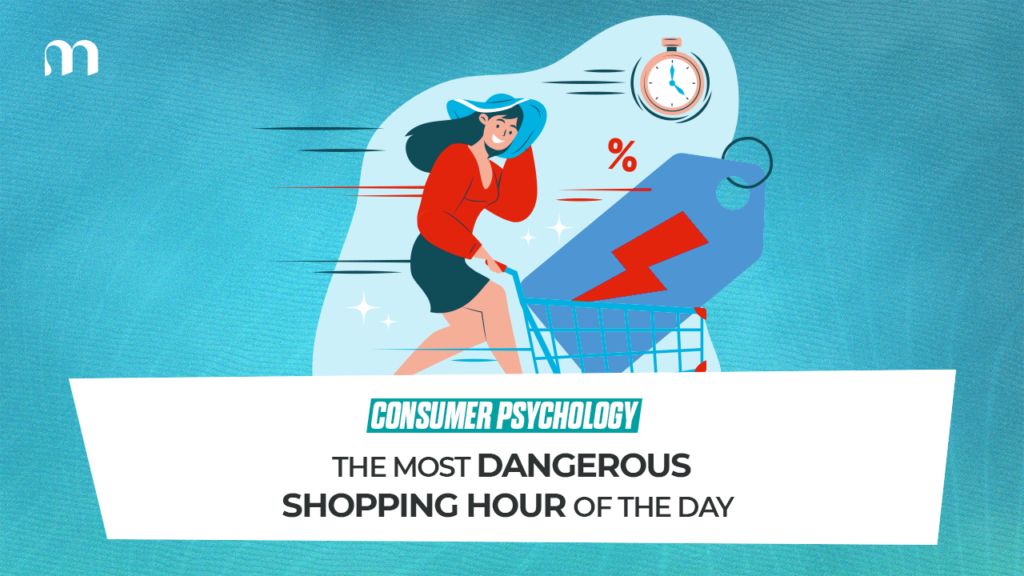
This is the late-night purchase, and it happens to almost everyone. The data suggests it isn’t a small phenomenon. A significant chunk of e-commerce sales happen between 10pm and midnight, with conversion rates that consistently outperform other parts of the day. There’s actual psychology behind why this window is so commercially powerful, and most brands are barely paying attention to it.
Decision Fatigue: The Brain Is Tired
Start with what’s happening to the human at 11pm.
- The day is over.
- Decisions have been made all day long, what to wear, what to eat, who to reply to, which fire to put out at work.
- Each one consumed mental energy.
By night, the brain is running on whatever’s left, which is usually not much. This is decision fatigue at its most pronounced. The ability to weigh, evaluate, and resist is degraded. The brain defaults to the easiest option, and clicking buy is often the easiest option.
The Emotional Environment Changes Everything
- Then there’s the emotional environment.
- The phone in bed is a fundamentally different context from the laptop at the desk.
- Inhibitions are lower.
- The day’s stress has nowhere to go.
- The room is dim, the phone is bright, and the entire experience is more intimate and emotionally heavier than any daytime shopping session.
The candle at 11pm isn’t being purchased for its candle-ness.
It’s being purchased because it promises a better version of tomorrow, and at 11pm that promise is genuinely persuasive.
Less Comparison, Faster Decisions
Add to this the fact that the comparison instinct is weaker at night.
During the day, a shopper might open four tabs, compare prices, read reviews, check delivery times, and abandon the cart twice.
At 11pm, the same shopper sees a product on Instagram, clicks the link, taps buy, and confirms with a thumbprint.
The entire transaction is over before any analytical part of the brain gets a word in.
The Algorithm Knows
There’s also the algorithm.
Social platforms have figured out, with depressing precision, that late-night audiences are emotionally available in a way daytime audiences aren’t.
- The content gets softer,
- More aspirational,
- More visual.
- The ads get more lifestyle-coded.
The whole feed turns into something gentler, more atmospheric, and significantly better at converting.
The system gives late-night users more of what they respond to.
Meet The 11pm Shopper
All of this combines into a very particular kind of shopper.
- Tired.
- Emotionally porous.
- Inhibited only by their data plan.
- Open to almost anything that suggests their life could be slightly better tomorrow.
The late-night purchase has a specific texture to it.
Rarely a necessity. Almost always an aspiration.
The new yoga mat, the unnecessary skincare upgrade, the air fryer that’s going to change everything.
These are 11:32pm purchases, made with one eye open, with the kind of confidence that only shows up after midnight.
Why Brands Should Pay Attention
What’s interesting is how few brands design for this window.
Most ad campaigns run during “business hours,” because that’s when the dashboards look most active.
- Product launches happen at 9am.
- Email sends go out at 10am.
Meanwhile, the most commercially fertile window of the day is happening on phones in dark bedrooms, and the brands paying attention to it are outperforming everyone else without making any noise about it.
There are a few things worth considering for any brand selling online.
1. Look at the conversion data by hour.
Most brands have never actually segmented it.
The 10pm to midnight slot often reveals patterns nobody noticed.
- Specific products perform disproportionately well in that window.
- Specific creative styles work better.
- Specific subject lines convert at twice the rate they do during the day.
2. Match the tone to the time.
Late-night audiences respond to softer, more atmospheric, more lifestyle-driven content.
The high-energy product-demo video that works at 11am falls flat at 11pm.
The dim-lit, slow-paced reel performs the opposite way.
- Same brand,
- same product,
- completely different emotional register.
3. Don’t punish the late-night buyer.
The most common 11pm regret has more to do with the brand making it hard to return things than the purchase itself.
Generous return policies turn impulse buyers into repeat customers.
The opposite kind turns them into one-star reviewers writing furious posts at 9am the next morning.
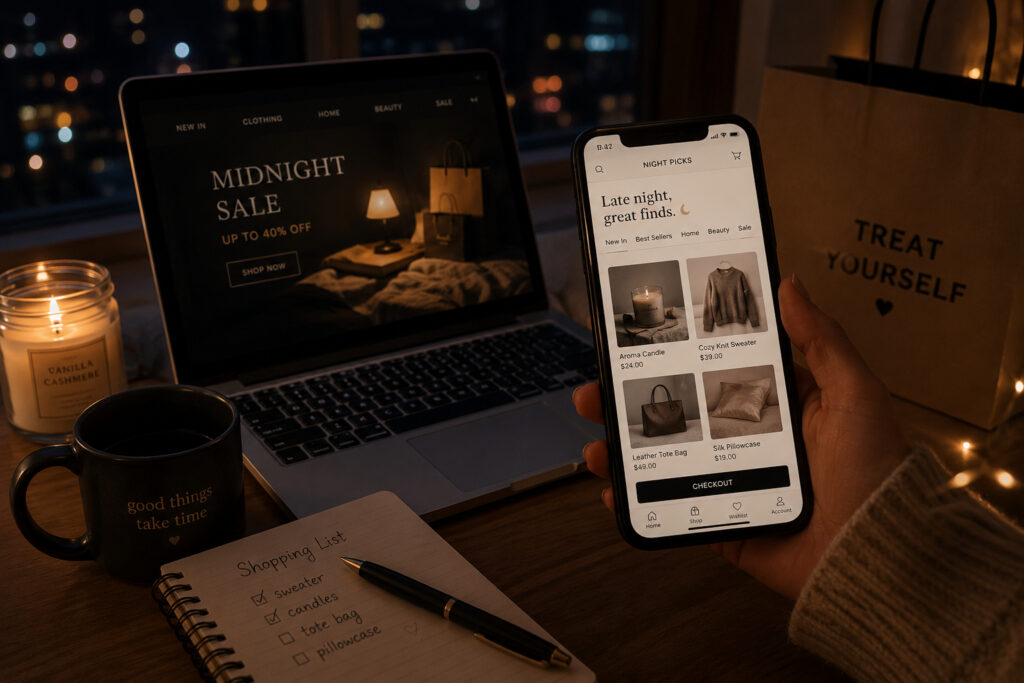
The 11pm shopper is a real category.
- Tired,
- emotional,
- susceptible, and
- oddly loyal to brands that meet them where they are.
The brands that figure this out understand something most marketing strategies miss.
Conversion is partly about logic, timing, and channel.
The other part is being the right brand on the right person’s phone at the exact moment their willpower decides to clock out for the night.