

 Back to Blogs
We Don’t Need More Content. We Need Better Silence.

Here’s a confession from someone who makes her living building content calendars for other brands.
Most content calendars are full of posts that shouldn’t exist.
I’ve been working in social media for around fifteen years now, and I’ve watched the rules of this game shift more than once. When I started, posting three times a day minimum was genuinely the right answer. Reach was generous, feeds were chronological, and frequency did the heavy lifting that strategy does now. If you showed up often, you got seen. It was that simple, and it worked.
That era is long over, and most of the industry hasn’t updated its thinking to match.
Brands still come to agencies asking for seven posts a week, sometimes more, because somewhere along the way “post consistently” got translated into “post constantly.” Those two things are not the same, and the gap between them is where a huge amount of wasted effort lives right now.
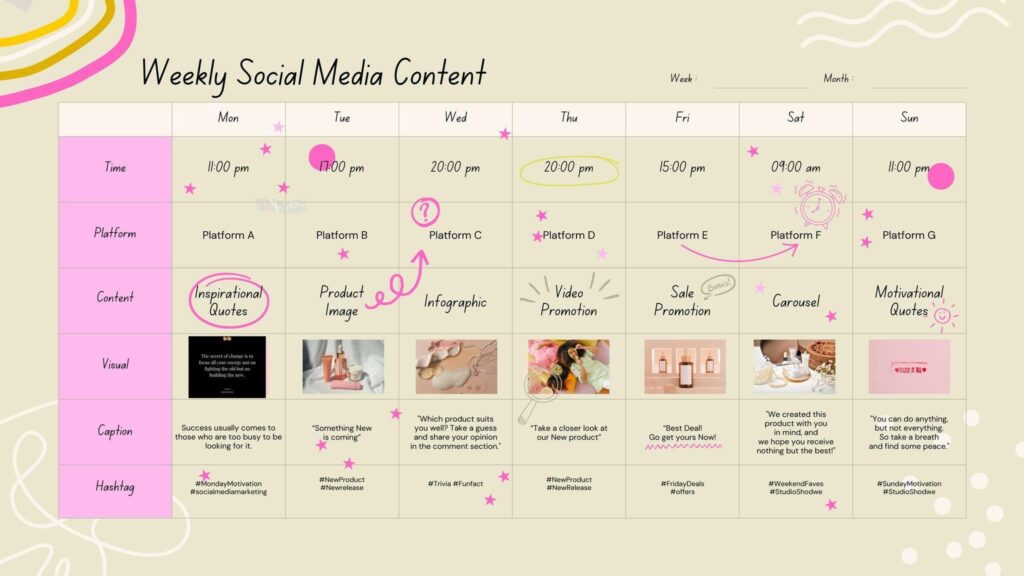
Walk into any content review and you’ll see the evidence.
📌 Motivational quote Mondays that nobody reads.💭
📌 Generic tips on Wednesday that sound like every other brand’s generic tips on Wednesday.
📌 An engagement question on Friday that gets three comments, two of them from the brand’s own team.
This isn’t strategy, it’s scheduling.
And I say this knowing that my own agency builds these calendars, which is exactly why I feel qualified to talk about it.
Now, someone’s going to read this and quite reasonably point out that Mirra Digital posts frequently too. Fair question, and I want to answer it honestly before going further.
We do post often.
📌 Part of that is because our content functions as a portfolio. Every post is a working sample of how we think, write, and show up, and people who hire us are usually people who found us through something we put out.
📌 Part of it is simply that the agency market is crowded, and disappearing isn’t really an option when other agencies are showing up every day. 📱
So yes, we post.
But we also try, genuinely, to make sure each post is saying something, and on the weeks where we don’t have something worth saying, we don’t force it.
We’re not pretending to have this completely figured out, and this piece is partly a note to ourselves as much as anyone else. ✍️
The line we’re trying to draw is between posting with intention and posting out of fear, and most of the industry is still firmly on the wrong side of that line.
Back to the rest of the problem.
The honest truth is that a lot of content being produced right now exists purely to fill a slot. It’s not answering a question anyone asked. It’s not saying anything the brand actually believes. It’s not adding something to the audience’s day. It exists because the calendar said Tuesday needs a post, and so a post was made for Tuesday, and then Tuesday came and went and the post sat there collecting a handful of likes from the same seven people who like everything.
” Content fatigue in digital marketing isn’t happening to audiences. It’s happening because of brands.“

The thing that really gives this away is when someone, usually sometimes an influencer/content creator, says out loud that they’re posting a random reel “so Instagram doesn’t kill our reach.” Think about what’s actually being said there. We are creating content, spending time and money on it, scheduling it, and publishing it, not because we have something worth saying, but because we’re afraid an algorithm will punish us if we stay quiet. That’s a hostage situation, and the hostage is the brand’s voice.
There’s another pattern worth naming. A lot of the pressure for daily posting comes from clients who read one LinkedIn thread three years ago and decided that’s how this works now. Or a cousin who runs a meme page and insists volume is the only metric. Or a previous agency who set a cadance nobody’s ever questioned. The fear of falling behind is real, but it’s rarely tested against actual data, and when you do test it, the results are often the opposite of what everyone expected.
We had a real estate client a while back who was posting every single day because that’s what they’d always done. We cut the frequency down significantly, posted only when there was something genuinely worth putting out, and engagement went up. Not down. Up. Because suddenly the content had weight again. Every post meant something because it wasn’t competing with four other forgettable posts from the same brand that week.
Now, I’m not saying every brand should post less. Some categories genuinely need visibility and competition is fierce enough that you do need to keep showing up. We still recommend three or four posts a week plus regular stories for a lot of our clients, because in crowded markets you do need presence. If you’re going to post four times a week, each of those four posts needs to earn its place. Not fill a slot. Earn it.
Better silence doesn’t mean disappearing. It means refusing to publish anything that doesn’t have a reason to exist.
It means being comfortable with a Tuesday where nothing goes up because nothing was worth posting. It means looking at a “Motivational Monday” slot and asking honestly whether this quote adds anything to anyone’s life, and if the answer is no, leaving it empty. It means measuring content by whether it moved a person, not by whether it moved a dashboard. That’s intentional content strategy. Most calendars don’t have one. They have a schedule and a colour code.
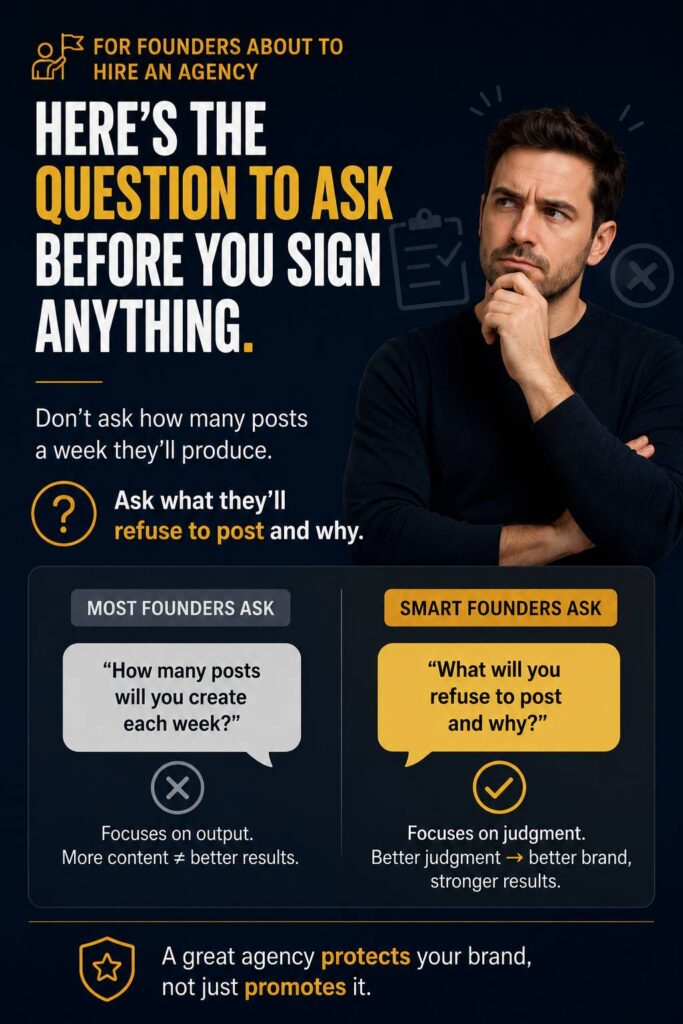
For founders about to hire an agency, here’s the question to ask before you sign anything. Don’t ask how many posts a week they’ll produce. Ask what they’ll refuse to post and why. If they don’t have a good answer to that, you’re hiring a publishing schedule, not a strategy, and the two cost the same but only one of them works.
The quieter version of social media is coming, whether brands are ready for it or not. Audiences have reached a saturation point and the feed is already rewarding depth over frequency in ways that aren’t fully obvious yet. The brands that will win the next few years are the ones willing to say less, mean it more, and stop performing for an algorithm that stopped rewarding performance a while ago.
“Say something when you have something worth saying. Stay quiet when you don’t. That’s the whole strategy. “
Everything else is just filling slots.