

 Back to Blogs
The Decision Fatigue Factor: Why Too Many Choices Kill Your Conversion Rate
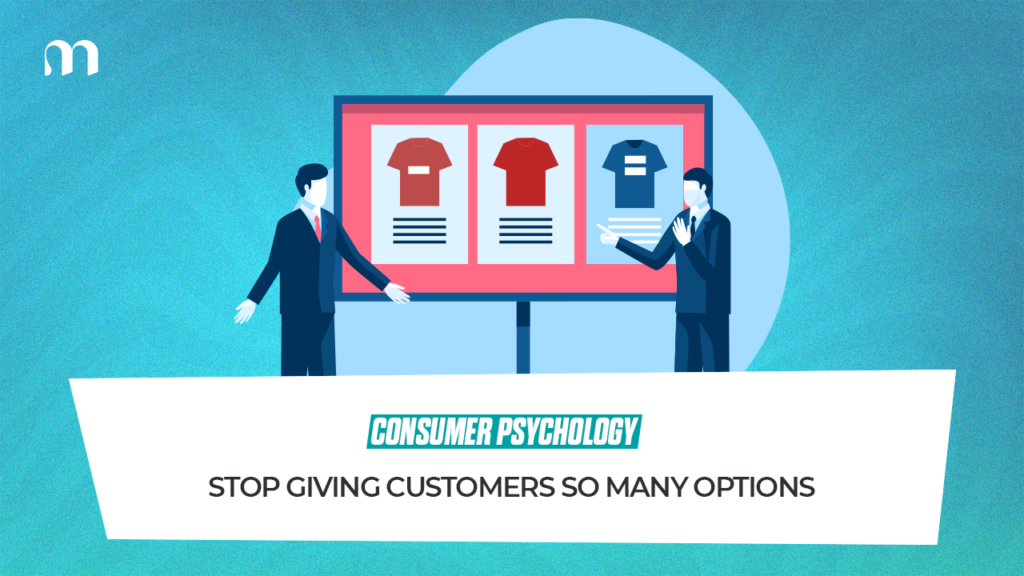
There’s a counter-intuitive truth at the heart of most underperforming e-commerce stores.
The brand believes it’s adding value by offering more options.
The customer experiences those same options as a slow form of suffering.
Choice is supposed to be a good thing.
- More variants,
- more colours,
- more sizes,
- more bundle configurations,
- more shipping options,
- more payment methods.
On paper, every additional option increases the chance that something will be right for the customer.
In practice, every additional option also increases the chance the customer leaves without buying anything at all.
The phenomenon has a name. Decision fatigue.
The science on this is settled and not especially flattering to how most brands design their stores. Human attention is finite.
Decision-making is metabolically expensive.
Each small choice the brain processes uses energy, and after a certain number of decisions, the brain starts defaulting to the easiest possible option.
The easiest possible option, for an overwhelmed shopper, is usually to close the tab.
The classic study on this involved jam.
Researchers set up a tasting booth in a supermarket with either 24 varieties or 6 varieties.
- The booth with 24 attracted more visitors.
- The booth with 6 sold ten times more jam.
Foot traffic and conversion measure different things, and most e-commerce stores are designing for foot traffic while expecting conversion.
Look at how a typical product page actually works.
A customer lands on a moisturiser product page.
- There are four size variants,
- three concentrations,
- two scent options,
- a choice between cream and gel,
- an add-on serum upsell,
- three subscription frequencies,
- two payment plans,
- a referral code field, and
- a popup asking them to sign up for the newsletter.
The brand has built what it considers a comprehensive product page.
The customer has been asked to make eleven decisions before they can buy something they came in already wanting. Most will hesitate, lose momentum, and drift away.
Now look at how the best-converting product pages tend to be designed.
- One product.
- Maybe two size options if absolutely needed.
- A clear price.
- One main call-to-action button.
The decision the customer has to make is reduced to its essential form.
Do they want this product, yes or no. Everything else is removed, deferred, or hidden until after the core decision is made.
This is harder than it sounds, because brands have a deep instinct to add.
Every internal stakeholder wants their feature on the product page.
The packaging team wants size variants visible.
The sustainability team wants the eco-certification badge prominent.
The marketing team wants the
- newsletter signup,
- the discount code field,
- the referral program callout,
- the upsell,
- the cross-sell, and
- the live chat widget.
Each addition feels small. Together they ask the customer to make more decisions than they signed up for.
The same logic applies to
- category pages,
- navigation menus, and
- homepage architecture.
A brand that sells 200 SKUs across 12 categories will outsell one that sells 600 SKUs across 40 categories, assuming the product itself is comparable, because the smaller catalogue is easier to navigate and harder to abandon out of overwhelm.
Indian e-commerce has a particular issue with this, because the cultural instinct to over-give is strong.
Brands want to show every possible variant, demonstrate range and depth, prove that the catalogue is comprehensive.
- The instinct comes from a generous place.
- The actual customer experience tends to be overwhelm, indecision, and a closed tab.
Abundance has been confused with helpfulness, and customers can tell the difference.
Here’s what actually helps.
- Curate.
- Edit.
- Recommend.
Default the obvious choice and let the customer override it if they want. Group products into clear use cases instead of expecting the customer to figure it out from scratch.
Replace the “all products” landing page with a “best for you” entry point that narrows the field before the customer has to think.
A well-curated e-commerce store feels like talking to a knowledgeable shop assistant who knows what to recommend, keeps the relevant options in front of the customer, and handles everything else in the background.
That kind of experience converts dramatically better than a sprawling catalogue, because it reduces options at exactly the moments the customer most needs reduction.
Decision fatigue is invisible until a brand actively looks for it.
Once it’s noticed, it’s hard to unsee.
- Audit a product page.
- Count the decisions a customer has to make before reaching the buy button.
If the number is higher than five, the page is leaking conversions, and no amount of additional UX polish or ad spend will fix what fewer choices would have prevented in the first place.
More options feel like generosity. They are mostly friction wearing a friendlier name.