

 Back to Blogs
The Creator Economy Is Consolidating. Here’s What Comes Next.
For about a decade, the creator economy ran on something that looked a lot like a gold rush. Platforms kept opening up new opportunities, brands threw budgets at anyone with a decent follower count, and creators could build a career on the back of a single viral reel if the timing was right. It was messy, exciting, and wildly unstructured, and a lot of people made a lot of money doing things that wouldn’t stand up to a second look today.
That era is ending, and the shift is picking up pace in 2026.
The creator economy is consolidating, and what’s replacing the gold rush is something more boring and probably healthier. A structured industry with tighter contracts, clearer benchmarks, smaller hype cycles, and a slower but more stable flow of money. The evolution of influencer marketing over the last few years has moved it from an experiment brands were willing to fund to a marketing channel that actually needs to deliver results, and a lot of people in the space haven’t caught up to that shift yet.
⇥ Here’s what consolidation actually looks like when you zoom in.
Platforms are concentrating power in fewer places, with Instagram, YouTube, and to a lesser extent LinkedIn absorbing most of the serious creator activity while newer platforms fight for oxygen. Big creators are starting to operate like media companies, with teams, managers, editors, sponsorship pipelines, and their own product lines. Brands are consolidating their partnerships too, moving away from spraying small budgets across twenty creators a quarter and instead investing more in fewer, longer relationships that actually move the needle.
The rise of creator platforms and monopolies is genuine, but it’s less dramatic than the panicked posts make it sound. What’s really happening is that the industry is growing up, and growing up always looks like consolidation.
⇥ The tricky part is what this does to creators in the middle.
The ones getting squeezed hardest right now are the middle-tier creators with roughly 50,000 to 200,000 followers, who built careers between 2018 and 2022 when the rules were looser and brands were more generous. These creators are in an awkward spot, because brands are either going bigger for reach or going smaller for authenticity and cost, and the middle layer is the one that’s hardest to justify on a spreadsheet. Some of them will adapt by building genuine niche authority, launching products, or becoming proper multi-platform media brands in their own right. Others will quietly shrink or pivot into something else, and that’s not necessarily a tragedy, it’s how most industries shake out when they mature.
⇥ What this means for brands, especially Indian brands, is that the playbook needs an update.
A lot of Indian brands are still over-indexed on mega-influencers, especially the ones with large marketing budgets who default to celebrity-style partnerships because they feel safe and look impressive in a deck. That instinct is getting expensive and returns are getting harder to defend. The next wave of creator-led marketing is going to come from smaller, more specific voices who genuinely know their audience, and the brands that figure this out early are going to get disproportionate value from micro and mid-tier partnerships while their competitors keep pouring money into celebrity reels that nobody remembers in a week.
And now for the part that nobody in this industry wants to say out loud, but most marketers have muttered about at some point.
The entitlement problem in creator culture is real, and it’s getting in the way of the industry’s next phase. A brand partnership is a commercial transaction, not a personal favour, and the sooner some creators internalise that, the better their careers will go. Too many creators are still operating like they’re doing brands a favour by accepting a paid collaboration, pushing back on briefs, flaking on deliverables, demanding product seeding worth more than the campaign fee itself, and treating revisions like personal attacks. It’s a job. It’s a real one, with real pay and real expectations, and pretending otherwise is what gets creators quietly removed from consideration for the next campaign.
The creators who will thrive in the consolidated version of this industry are the ones who treat it like the business it actually is. They deliver on time, they communicate clearly, they take feedback, and they understand that brand partnerships are give and take rather than a one-way transfer of value. This sounds painfully obvious written down, but walk into any brand’s creator partnerships review and you’ll hear the same five complaints over and over again, usually about the same kinds of creators.
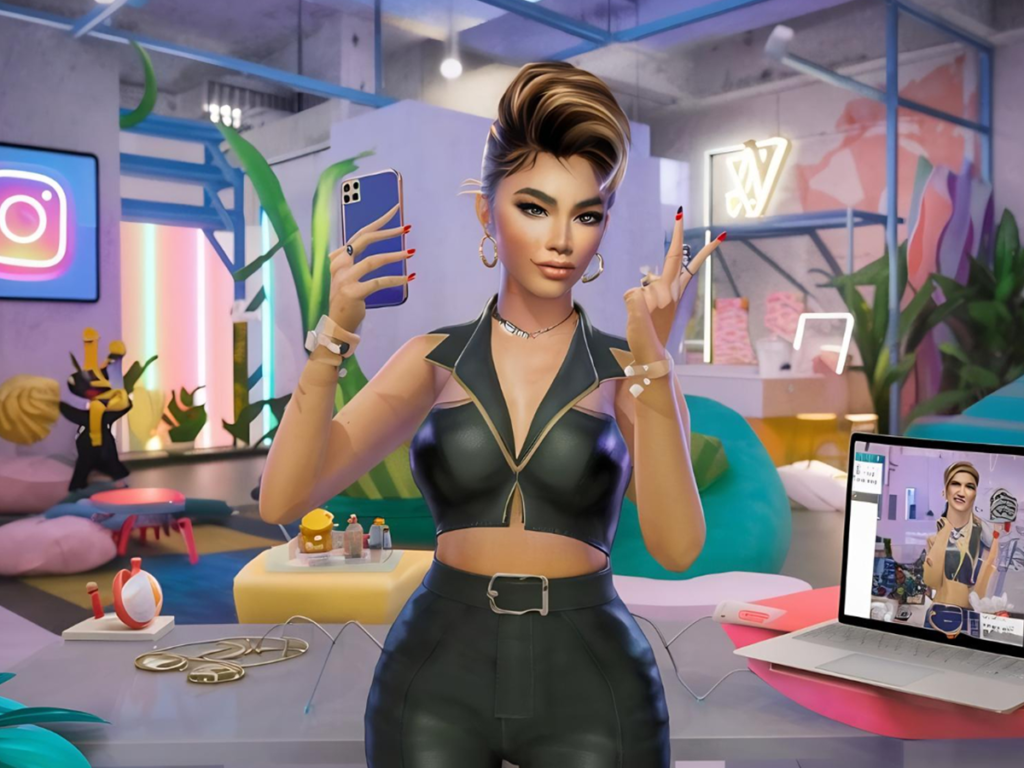
Then there’s the thing looming in the background of every conversation about the future of creator economy business models, which is AI-generated creators.
Virtual creators and AI-generated influencers are already a real and growing part of the landscape, and they are a genuine can of worms that the industry hasn’t figured out how to handle yet. They’re cheaper, endlessly available, never have a bad day, never ghost on a deliverable, and can be customised to fit any brand’s aesthetic. They also feel hollow in a way that audiences haven’t fully articulated but clearly sense, and the long-term impact on trust is still being worked out in real time. Some brands will lean into this heavily, some will stay away from it entirely, and the ones who win will probably be the ones who use AI-generated content for scale while keeping real human creators at the heart of anything that actually needs to build connection.

⇥ So what comes next in the creator economy?
Consolidation continues, and the industry keeps maturing into something that looks more like a serious marketing channel and less like a gold rush.
📌 Big creators keep turning into media brands with real teams and real infrastructure. Middle creators either niche down hard or get left behind.
📌 Micro-creators become the most interesting bet for brands who actually care about conversion and community.
📌 AI-generated creators take a growing share of the low-end, repetitive work while humans keep the trust premium.
📌 Brands get better at measurement, tighter on contracts, and less tolerant of the entitlement that the early years let slide.
None of this is a death of the creator economy. It’s a creator economy that’s finally old enough to be taken seriously, and that’s a good thing for everyone who was treating it seriously in the first place.
The people who built real businesses are going to keep winning. The people who were hoping the gold rush would last forever are going to have a harder year.