


The Creator Economy Is Consolidating. Here’s What Comes Next.
For about a decade, the creator economy ran on something that looked a lot like a gold rush. Platforms kept opening up new opportunities, brands threw budgets at anyone with a decent follower count, and creators could build a career on the back of a single viral reel if the timing was right. It was messy, exciting, and wildly unstructured, and a lot of people made a lot of money doing things that wouldn’t stand up to a second look today. That era is ending, and the shift is picking up pace in 2026. The creator economy is consolidating, and what’s replacing the gold rush is something more boring and probably healthier. A structured industry with tighter contracts, clearer benchmarks, smaller hype cycles, and a slower but more stable flow of money. The evolution of influencer marketing over the last few years has moved it from an experiment brands were willing to fund to a marketing channel that actually needs to deliver results, and a lot of people in the space haven’t caught up to that shift yet. ⇥ Here’s what consolidation actually looks like when you zoom in. Platforms are concentrating power in fewer places, with Instagram, YouTube, and to a lesser extent LinkedIn absorbing most of the serious creator activity while newer platforms fight for oxygen. Big creators are starting to operate like media companies, with teams, managers, editors, sponsorship pipelines, and their own product lines. Brands are consolidating their partnerships too, moving away from spraying small budgets across twenty creators a quarter and instead investing more in fewer, longer relationships that actually move the needle. The rise of creator platforms and monopolies is genuine, but it’s less dramatic than the panicked posts make it sound. What’s really happening is that the industry is growing up, and growing up always looks like consolidation. ⇥ The tricky part is what this does to creators in the middle. The ones getting squeezed hardest right now are the middle-tier creators with roughly 50,000 to 200,000 followers, who built careers between 2018 and 2022 when the rules were looser and brands were more generous. These creators are in an awkward spot, because brands are either going bigger for reach or going smaller for authenticity and cost, and the middle layer is the one that’s hardest to justify on a spreadsheet. Some of them will adapt by building genuine niche authority, launching products, or becoming proper multi-platform media brands in their own right. Others will quietly shrink or pivot into something else, and that’s not necessarily a tragedy, it’s how most industries shake out when they mature. ⇥ What this means for brands, especially Indian brands, is that the playbook needs an update. A lot of Indian brands are still over-indexed on mega-influencers, especially the ones with large marketing budgets who default to celebrity-style partnerships because they feel safe and look impressive in a deck. That instinct is getting expensive and returns are getting harder to defend. The next wave of creator-led marketing is going to come from smaller, more specific voices who genuinely know their audience, and the brands that figure this out early are going to get disproportionate value from micro and mid-tier partnerships while their competitors keep pouring money into celebrity reels that nobody remembers in a week. And now for the part that nobody in this industry wants to say out loud, but most marketers have muttered about at some point. The entitlement problem in creator culture is real, and it’s getting in the way of the industry’s next phase. A brand partnership is a commercial transaction, not a personal favour, and the sooner some creators internalise that, the better their careers will go. Too many creators are still operating like they’re doing brands a favour by accepting a paid collaboration, pushing back on briefs, flaking on deliverables, demanding product seeding worth more than the campaign fee itself, and treating revisions like personal attacks. It’s a job. It’s a real one, with real pay and real expectations, and pretending otherwise is what gets creators quietly removed from consideration for the next campaign. The creators who will thrive in the consolidated version of this industry are the ones who treat it like the business it actually is. They deliver on time, they communicate clearly, they take feedback, and they understand that brand partnerships are give and take rather than a one-way transfer of value. This sounds painfully obvious written down, but walk into any brand’s creator partnerships review and you’ll hear the same five complaints over and over again, usually about the same kinds of creators. Then there’s the thing looming in the background of every conversation about the future of creator economy business models, which is AI-generated creators. Virtual creators and AI-generated influencers are already a real and growing part of the landscape, and they are a genuine can of worms that the industry hasn’t figured out how to handle yet. They’re cheaper, endlessly available, never have a bad day, never ghost on a deliverable, and can be customised to fit any brand’s aesthetic. They also feel hollow in a way that audiences haven’t fully articulated but clearly sense, and the long-term impact on trust is still being worked out in real time. Some brands will lean into this heavily, some will stay away from it entirely, and the ones who win will probably be the ones who use AI-generated content for scale while keeping real human creators at the heart of anything that actually needs to build connection. ⇥ So what comes next in the creator economy? Consolidation continues, and the industry keeps maturing into something that looks more like a serious marketing channel and less like a gold rush. 📌 Big creators keep turning into media brands with real teams and real infrastructure. Middle creators either niche down hard or get left behind. 📌 Micro-creators become the most interesting bet for brands who actually care about conversion and community. 📌 AI-generated creators take a growing share of the low-end, repetitive work while humans keep the trust premium. 📌 Brands get better at measurement, tighter on contracts, and less tolerant of the entitlement that the early years let slide. None of this is a death of the creator economy. It’s a creator economy that’s finally old enough to be taken seriously, and that’s a good thing for everyone who was treating it seriously in the first place. The people who built real businesses are
Which AI Persona Are You? (And What It Says About Your Brand Style)
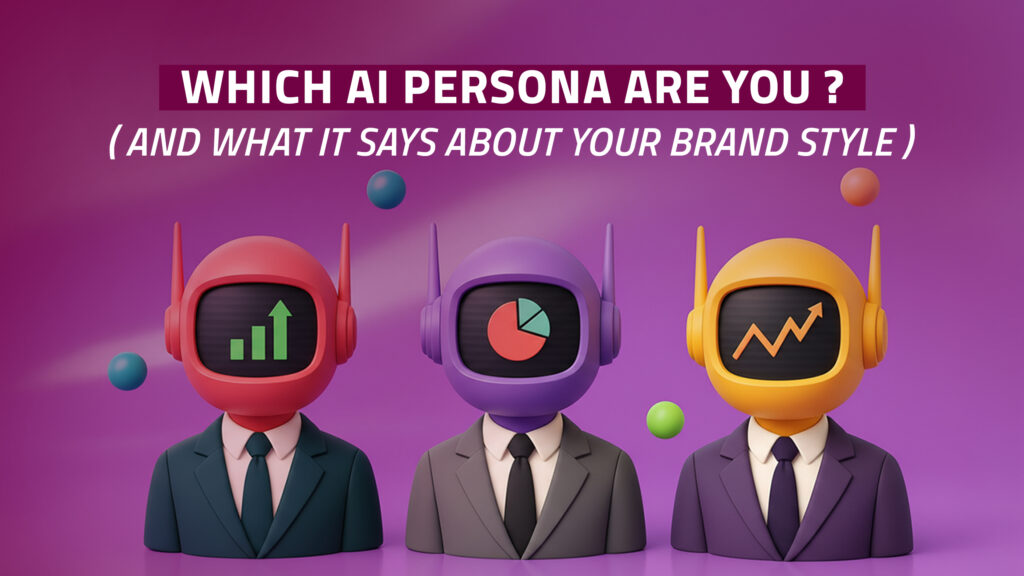
Almost every brand today is using AI in some way. (Be honest!) From writing captions to building ad copies to brainstorming campaign ideas, generative AI in marketing has quietly become everyone’s new teammate. But the funny part is, even when brands use the same AI tools… they don’t sound the same. That’s because your brand doesn’t just use AI. Your brand has an AI personality. So…let’s play a fun game….shall we? Read on and see which AI persona feels… uncomfortably familiar. ⇥ 🧠The Overachiever Strategist You usually open AI with a plan in mind. You ask it to build content strategies, map buyer personas, structure funnels and organise campaigns across platforms. You like clarity. You like frameworks. You like knowing exactly what goes where and why. If someone looks at your brand from the outside, it feels well thought through. Your content marketing doesn’t exist just to fill a calendar. There’s always a purpose behind it. The only small risk? When AI starts doing too much of the polishing, your brand can begin to sound a little… rehearsed. Still credible. Still smart. Just slightly less you. AI is brilliant at structure. Your job is to make sure your personality doesn’t get smoothed out along the way. ⇥ 🎨 The Creative & Slightly Cluttered Brain You use AI more like a creative playground than a planning tool. You throw half-formed thoughts into prompts. You ask for funnier captions. Weirder campaign ideas. Better hooks. You’re constantly chasing that one line that finally feels right. From the outside, your brand feels warm and expressive. You care about how things look, how they feel and how people emotionally connect with your content. Storytelling matters more to you than spreadsheets. But when ideas keep flowing faster than they get shaped, things can also start feeling scattered. Sometimes, the most powerful way to use AI isn’t to generate more ideas, it’s to help you organise the brilliant ones you already have. ⇥ 📊 The Performance Marketer in Disguise Your relationship with AI is refreshingly practical. You use it to write multiple ad variations, sharpen hooks, test headlines and optimise copy for conversions. If it doesn’t move clicks, leads or enquiries, you’re not very interested. Your brand sounds confident and clear. You speak directly to the problem and get to the benefit quickly. That’s exactly why AI works so well for you. The catch is subtle. When every brand in your category is using generative AI for marketing optimisation, it becomes very easy for everyone to start sounding very similar. Your campaigns may convert beautifully, but your brand needs something deeper than performance language to stay memorable. ⇥ 🤖 The Automation Lover You’re less obsessed with what AI writes and more excited about what it connects. You’re building automated email journeys, CRM workflows, chat assistants and lead nurturing systems. You care about removing friction and making the customer journey smoother at every stage. Your brand feels efficient and well-run. Nothing looks messy behind the scenes. But when automation grows faster than tone and storytelling, brands can accidentally start feeling distant even when they’re technically doing everything right. AI can run your workflows. Only you can make sure your communication still feels human. ⇥ ✍️ The Reluctant AI User You’re careful. You still write most things yourself. You use AI mainly to tighten sentences, fix grammar, rephrase awkward lines or shorten long drafts. Your brand often feels personal, founder-led and story-driven. You genuinely care about authenticity and you’re wary of sounding generic or “AI-ish”. And that instinct is a good one. The sweet spot for you isn’t letting AI create your voice. It’s letting it quietly protect your time, while you protect your tone. So… which AI persona are you? The part most brands overlook is that AI doesn’t shape your brand style. Your intent does. Whether you’re using generative AI for content creation, digital marketing, campaign planning or performance advertising, the real outcome depends on how clearly you understand your brand voice before you ever open a prompt. At Mirra Digital, we see this constantly. Two brands can use the same AI tools, the same prompts and the same platforms, and still walk away with completely different brand identities. Because tools don’t build brands. People do. AI simply exposes how well you actually know your own.
12 Marketing Predictions for 2026
(Ranked by how ridiculous they sound… and how fast they’re about to become your problem) Marketing in 2026 will not be run by robots. It will be run by tired humans… supervising very enthusiastic robots. ⇥ Here are twelve things we’re quietly betting on at Mirra Digital. Some of them sound dramatic. All of them are already peeking into our client meetings. 12. Your brand will talk in multiple tones. And nobody will panic about it. One voice for LinkedIn. One for customers. One for sales decks. One for that slightly-too-casual WhatsApp follow-up. AI will help brands switch tone without switching personality. Basically… your brand finally gets social skills. 11. “Prompting” will become the new creative brief. Future marketers won’t say, “Who wrote this copy?” They’ll ask, “Who prompted this?” Same sh*t. Different Google Doc. 10. Posting every single day will start feeling… awkward. Not impressive. Not brave. Just… urgh! In 2026, fewer posts with actual thinking behind them will quietly outperform perfectly scheduled AI content machines. Your calendar is not your strategy. 9. Brands will hire agencies to fix their ‘AI accent’. Not rebrand. Not redesign. Just…“Why do we suddenly sound like a startup from a stock image website?” Brand voice clean-ups will become a real thing. And btw, we’re already doing mini versions of this at Mirra Digital. 8. Your website will stop behaving like a brochure. And start behaving like a slightly helpful salesperson. Not pushy or chatbot-annoying. Just smart enough to guide the right visitor instead of dumping everyone into one sad contact form. 7. Performance marketing teams will finally admit… creative matters. Not just the hook. Not just the headline. The actual idea. When AI can write 50 ad variations in 30 seconds, your competitive advantage becomes… having something worth saying. Uncomfortable. But fair. 6. B2B marketing will stop pretending influencers are the answer. Founders will beat creators. Operators will beat aesthetics. Engineers will beat reels. People trust people who’ve actually done the work. Wild concept. 5. AI content won’t get penalised. It’ll get ghosted. Your post will still be published. It just won’t be read. Which is somehow worse. 4. Short videos will stop trying to be funny. Because everyone is tired. They’ll start trying to be clear. “How this works.” “Why this failed.” “What we learnt.” Boring titles. Great watch time. 3. Your marketing stack will go on a diet. In 2026, the bravest line in a review meeting will be: “Do we actually need this tool?” Fewer dashboards. More decisions. 2. Brand strategy will become cool again. (Against its will.) After years of templates, growth hacks and funnel diagrams, brands will rediscover an ancient concept: Knowing who you are… helps. Positioning will quietly become the thing AI can’t save you from. 1. The real plot twist? AI won’t replace marketers. It’ll expose the ones who never had a point of view. When execution becomes instant, the only visible skill left is thinking. Which is both terrifying and oddly comforting. We’re not writing this because we love predictions. We’re writing this because every week at Mirra Digital, someone asks us: “Do we need another tool…or a different one?” or “Which AI tool should we buy to fix this?” And the real but (slightly awkward) answer is: AI can speed things up. It cannot decide what you actually stand for. That part is still painfully human. And very much your job.
GEO vs. Traditional SEO: What’s Changing in the Search Landscape?
If you’ve been in digital marketing long enough, you know the feeling: you finally crack Google’s algorithm updates, only for the rulebook to change again. For years, traditional SEO practices like keyword research, backlinks and on-page optimisation have been the backbone of visibility. But with the rise of Generative AI in search, we’re now facing a new wave; Generative Engine Optimization (GEO). So what exactly is changing and how should businesses adapt? ⇥ From Keywords to Conversations Traditional SEO has always been about understanding how users phrase queries and aligning content to rank higher. But with the search generative experience (SGE) rolling out, Google and other platforms aren’t just serving links, they’re generating direct answers. Instead of ten blue links, users are now greeted with AI-generated content in search results: summaries, comparisons, even recommendations pulled together in real-time. That means the way we optimise must evolve from just “ranking for keywords” to “being contextually relevant in AI-driven outputs.” ⇥ GEO vs. Traditional SEO: The Core Differences At its heart, GEO vs. traditional SEO comes down to this: Think of it as moving from “convincing a search engine to list you” to “equipping AI to explain you.” ⇥ What GEO Means for Marketers Here are the key changes shaping the new SEO playbook: ⇥ SGE vs. Traditional Search: Why It Matters? The big question is: Will people still click through to websites? Early signals show that while Google SGE answers many queries on-page, users still visit source links when they need depth, reliability, or purchase confidence. That means businesses can’t afford to stick to traditional SEO practices alone. Instead, they need a blended strategy: ⇥ How AI Is Changing SEO for Businesses For brands, this shift is both a challenge and an opportunity: Agencies offering SEO services in Bangalore and beyond are already adapting strategies, balancing the tried-and-tested with AI-powered search optimisation approaches. The differences between GEO and SEO aren’t about abandoning one for the other. Instead, it’s about evolving. Just as mobile reshaped search a decade ago, generative SEO is the next big wave. If you’re still relying solely on traditional playbooks, you risk invisibility in a world where AI decides what users see first. The brands that win will be the ones that blend traditional SEO practices with generative-first strategies, future-proofing their visibility in the age of AI. 💡 At Mirra Digital, we’re already helping brands adapt their strategies for this shift. If you’d like to understand how AI in SEO can impact your visibility, let’s talk.
Dark Social in 2025: How to Track What You Can’t See
Imagine this: you launch a campaign, and suddenly people are talking about it every where… except you can’t find the conversations. No likes, no shares, no comments. But somehow, traffic is up and leads are trickling in. Welcome to the world of dark social. In 2025, it’s no longer a fringe concept, it’s how a huge chunk of online sharing actually happens. ⇥ What Exactly Is Dark Social? “Dark social” isn’t as shady as it sounds. It simply refers to all the content that gets shared in private, untrackable spaces: If you’ve ever sent a funny ad to your friends on WhatsApp instead of hitting “share” on Instagram, congratulations…you’ve participated in dark social. Here’s the kicker: studies estimate that over 80% of content shares happen privately. For India especially, where WhatsApp is practically a second language, this is massive. Think about it: your brand’s content may be buzzing in alumni groups, office chats, or even your mom’s kitty party circle, but you’ll never see those “metrics” in your analytics dashboard. That makes tracking ROI tricky and ignoring it dangerous. Marketers love neat funnels. But dark social smashes those clean lines. Someone might discover your brand through: By the time they hit your website, Google Analytics chalks it up as “direct traffic.” Which is like saying people just magically appeared. ⇥ Can You Track the Untrackable? The short answer: not fully. But you can get smarter about it. Here’s the truth: You’ll never have perfect visibility in a dark social world. And that’s okay. The key is to focus less on obsessively tracking every share and more on creating content people want to share privately. Think memes, snackable videos, inside jokes, or helpful guides, things people are proud to pass along in their inner circles. This isn’t really a problem to solve, it’s a reality to accept. As sharing becomes more private, the real question for marketers in 2025 is: is your content worth whispering about? Because in the age of dark social, your brand’s visibility depends not just on clicks and likes, but on conversations you’ll never see. At Mirra Digital, we help brands create content that starts conversations, visible and invisible. If you want your campaigns to travel beyond dashboards and into real conversations, drop us an email at info@mirra-digital.com.
Ethics in AI: The Line Between Innovation and ‘Oops’
It always starts with a good idea. A chatbot to reduce customer service wait times. A recommendation engine that knows what your users want before they do. A content generator that fills your calendar in minutes. It feels like magic. It feels like progress. Until it doesn’t. Until your AI tool starts reinforcing harmful stereotypes. Or a customer finds out their data was scraped without consent. Or your marketing campaign accidentally targets vulnerable groups in ways you didn’t intend. That’s when innovation quietly crosses into oops. And that’s exactly why AI ethics in marketing isn’t some abstract academic debate. It’s the line between building something brilliant and breaking trust. As marketers, we’re no strangers to disruption. We’ve seen it in the way social media reshaped storytelling, the way algorithms defined virality, the way mobile-first changed everything. But AI is different. It’s not just a tool. It’s a decision-maker. It analyses, personalises, optimises. And if we’re not careful, it can also manipulate, discriminate, and alienate. So here’s the real question: how do we keep our digital innovation strategy forward-thinking without forgetting our moral compass? Let’s get one thing straight. AI doesn’t come into the world neutral. It’s trained on data…our data. That means every bias, assumption and inequality baked into our systems can end up baked into the algorithms we rely on for AI-driven marketing solutions. From facial recognition tools that fail to recognise darker skin tones to language models that perpetuate gender stereotypes, the consequences of unethical AI use are real, especially when they creep silently into marketing campaigns. You might think you’re segmenting for performance. But you could be reinforcing bias. That’s not just a technical glitch. That’s a human one. And the truth is, many businesses don’t even realise it’s happening until it’s too late. It’s easy to assume that ethics belong to the people coding the AI, the ones building the models and setting the parameters. But in reality, anyone using AI in decision-making, especially in marketing, holds a piece of that responsibility. When you use AI-generated insights to plan a campaign, or lean on predictive analytics to define your audience, you’re part of the loop. And if something goes wrong, if your content discriminates, your targeting exploits, or your automation ignores context, it’s on you, too. This is why responsible AI development must become a team sport. It’s not just a job for data scientists. It’s something your strategy team, your brand leads, your content creators, even your legal counsel need to be in on. At Mirra Digital, we’ve seen how crucial this cross-functional awareness is, especially as brands race toward automation without pausing to question the ethics behind the engine. ⇥ Trust Is the Currency. Ethics Is the Wallet. Modern consumers are not naive. They know their data has value. They know AI is being used to nudge them, watch them, sometimes even predict their emotional state. What they want to know is: Are you being responsible with that power? Ethical use of artificial intelligence isn’t about slowing down innovation. It’s about protecting the very thing innovation needs to thrive…trust. And that trust doesn’t come from shiny tech or clever campaigns. It comes from transparency. From knowing where your data comes from. From ensuring your AI doesn’t cross lines it shouldn’t. From building systems that respect boundaries, not just exploit opportunities. ⇥ So, What Does Ethical AI in Marketing Actually Look Like? It looks like questioning your data sources. Asking whether your AI outputs are fair and inclusive. Choosing vendors who prioritise responsible AI development, not just performance. It looks like working with partners who offer ethical tech consulting, people who help you zoom out and see the implications before they hit headlines. At Mirra Digital, our approach to AI integration services isn’t just about speed or sophistication. It’s about ensuring that every solution we deliver meets a standard we can be proud of: a human one. Because the truth is, it’s not a question of whether AI will shape the future of marketing. It already is. The real question is: Will we shape it responsibly? We’re all rushing to automate, optimise and personalise at all costs, maybe the bravest thing we can do as marketers is pause. Reflect. And ask, are we building something smart, or something good? That’s the real innovation. And that’s the line we’re choosing to stay on. AI might be reshaping the landscape, but it’s still up to us; the strategists, the storytellers, the marketers, to draw the lines that matter. At Mirra Digital, we may not build the algorithms, but we ask the right questions before putting them to work. Because in a pool of automation and endless optimisation, a little human judgment still goes a long way. Looking to craft campaigns that are smart, responsible, and deeply in tune with your audience? Let’s talk!
Phygital is the New Normal. But What Does That Even Mean?

You’re in a store. Browsing real products. A screen scans your preferences. You pay with your phone and walk out. No billing desk, no lines, no small talk. ⇥ Was that shopping or scrolling IRL? Welcome to the phygital world, where physical meets digital, and it just works. We know. The word sounds like someone sneezed halfway through saying “digital.” But behind the awkward term is a powerful truth: your customers no longer differentiate between online and offline experiences, so your brand shouldn’t either. And whether you’re a marketer, retailer, founder, or brand strategist, understanding phygital marketing is no longer optional. It’s how modern businesses are staying relevant, building connection, and designing memorable customer journeys. So… What Is Phygital, Really? Phygital = Physical + Digital. But it’s not just about having a website and a store. It’s about blending the two so seamlessly, your audience flows between them without missing a beat. A phygital experience might look like: This isn’t the future. It’s how people expect things to work today. And this shift is transforming everything from retail and advertising to events and branding. Why should you care? Because people don’t buy based on logic. They buy based on experience. And phygital gives you the power to create connected, emotionally resonant moments from a pop-up store to your next Instagram campaign. Let’s break down what that means. 1. Retail That’s Less About Products, More About Experience Forget transactional shopping. Today’s customers want stories, interaction and control. Enter phygital customer experiences: 👉 A great example? IKEA’s Place App. It lets you visualize furniture in your room before you even walk into the store. That’s phygital, done right. Key insight: The future of retail is experiential marketing that gives people a story. 2. Events That Engage Beyond the Venue You don’t need a million-dollar budget to make your events memorable. Phygital events mix tech with human connection: Looking for ideas? Ask your experiential marketing agency (hi 👋) to help create interactive moments that linger well after the last canapé. Why it works: Great events create stories. Phygital experiences turn attendees into participants and participants into promoters. 3. Campaigns That Connect The best campaigns today don’t scream. They invite. A good phygital marketing campaign: 👉 Pepsi once created vending machines that used facial recognition to offer you drinks based on your mood. Sounds sci-fi. Felt personal. Marketers, take note: If you’re only building ads or influencer posts, you’re missing the bigger picture. A strong omnichannel marketing strategy weaves social, store and screen into one unified journey. 4. Customer Journeys That Feel Like Magic (Not Effort) We’ve all been there…seeing a product online, then struggling to find it in-store. Or being told to “call customer care” when an app error occurs. That’s friction. And friction kills conversion. A well-designed phygital customer experience focuses on: This is where customer experience design becomes your brand’s superpower. 👉 Apple nails this. From booking a restaurant online to getting reminders via iMessage, it feels like the brand is walking with you. 5. It’s Emotional Relevance At the heart of all this isn’t AR. It’s emotion. Your audience is human. They want ease, surprise, delight and yes, relevance. Done well, phygital marketing doesn’t feel like marketing at all. It feels like your brand gets them. That’s why we say: Don’t just chase digital transformation services. Chase connection. You don’t need a huge budget. Just intentionality and a willingness to show up wherever your audience is. FAQs ⇥ What does “phygital” mean in marketing? In marketing, phygital refers to the seamless blending of physical and digital experiences to create more engaging, unified brand touchpoints. It helps brands connect with customers both online and offline in meaningful, integrated ways. ⇥ How is phygital experience transforming customer journeys? Phygital experiences eliminate friction between digital and real-world touchpoints, making customer journeys smoother and more engaging. From AR-based product trials to hybrid events, brands can design smarter, more personalized journeys that build loyalty. ⇥ What are some examples of phygital marketing? ⇥ Why is phygital important for modern businesses? Because today’s customer doesn’t separate online from offline. Phygital lets your brand be wherever your audience is, while making each touchpoint feel connected, intuitive, and emotionally engaging. It’s key to staying relevant, trusted, and top-of-mind. Need help building phygital campaigns that actually work? We do more than just show up on social, we help you show up everywhere your customer is. Let’s talk!