

 Back to Blogs
Why Indian Consumers Haggle Online (Even When They Don’t Realise They’re Doing It)
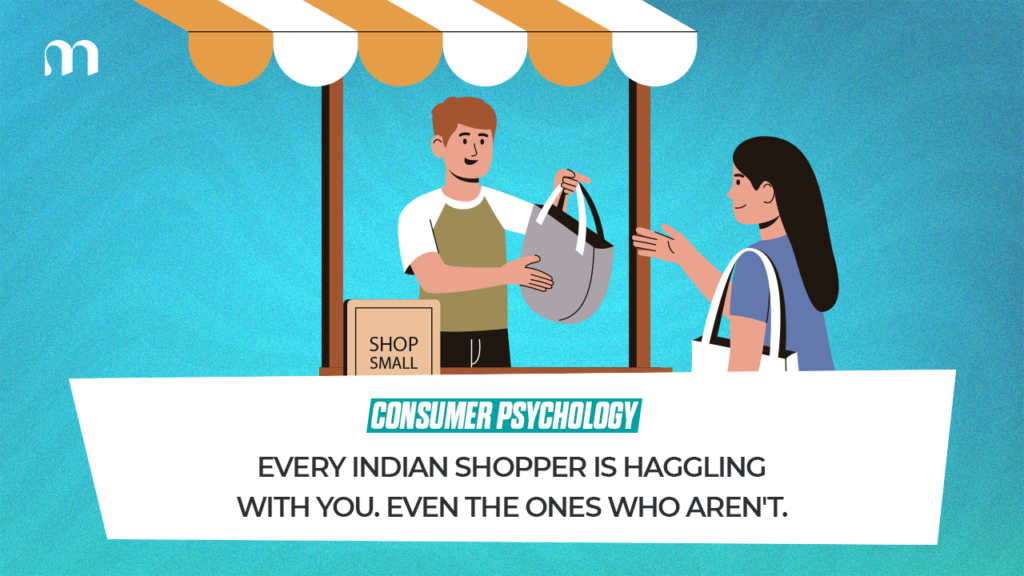
There’s a lazy assumption in Indian ecommerce that the bargaining culture died when fixed prices took over. It didn’t. It moved online, took on new shapes, and is now built into almost every shopping decision an Indian consumer makes, often without the consumer realising they’re doing it. 📱
⇥ The haggle is alive. It just looks different now.
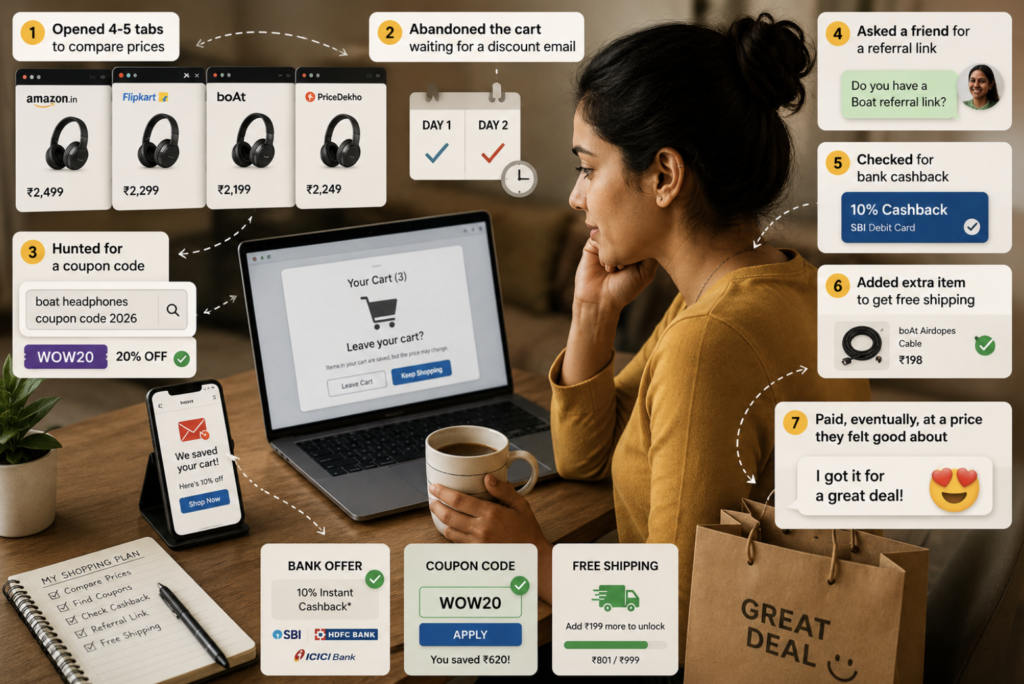
Walk into any household in India and ask someone how they bought their last big purchase. The story will include several steps.
📌 They opened four to five tabs to compare prices across Amazon, Flipkart, the brand’s site, and a comparison engine.
📌 They probably abandoned the cart for two days waiting for a discount email. They hunted for a coupon code.
📌 They asked a friend if they had a referral link.
📌 They checked for bank cashback.
📌 They may have added one extra item to cross the free shipping threshold.
📌 They paid, eventually, at a price they felt good about, and they will tell anyone who asks that they got it for a great deal.
That entire sequence is haggling. It just doesn’t get called that because nobody is in a shop arguing with a shopkeeper about it.
⇥ The cultural roots are obvious once you start looking.
Indian consumers grew up watching their mothers negotiate at:
🧺 Vegetable markets
🧵 Fabric shops
💍 Jewellery stores
🛍️ Roadside stalls
The bargaining wasn’t only about saving money. It was about:
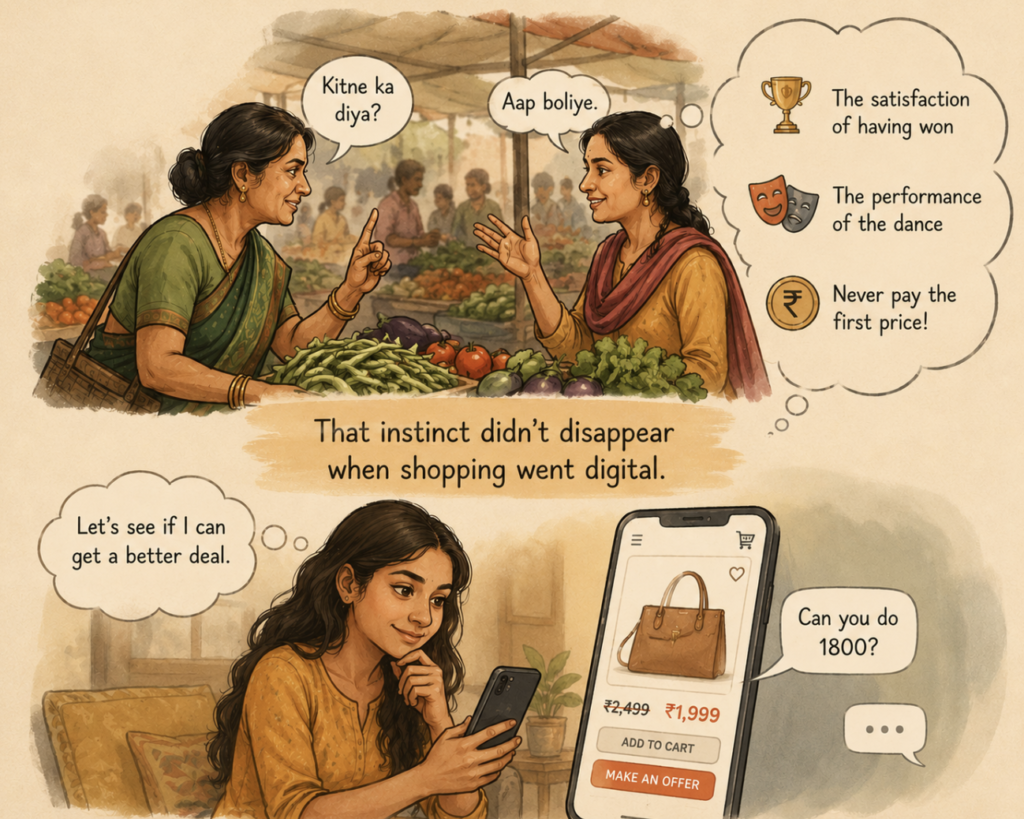
- The satisfaction of having won 🏆
- The performance of the dance 🎭
- The understanding that paying the first price quoted was a small failure, even when the price was fair 😅
That instinct didn’t go anywhere when shopping went digital.
Look at cart abandonment. 🛒
A significant chunk of Indian shoppers abandon carts as a strategy, knowing the brand will send a discount email within 48 hours.
Brands like Zouk and several others have trained their audience that abandoning works, and the audience has learned the lesson well.
The abandonment is a negotiation move.
The shopper is essentially saying “make me a better offer,” without having to type a word.
Look at coupon hunting. 🎟️
The seconds before checkout where a shopper opens a new tab, types the brand name plus “coupon code 2026,” and scrolls through a dodgy aggregator site looking for any working percentage off.
This is the digital equivalent of asking a shopkeeper “final price kya hai?” which essentially means “what’s the final price?” before paying.
A full cart is no signal that the negotiation is over. The shopper is still trying to win.
Look at the WhatsApp DM negotiations on small D2C brands.
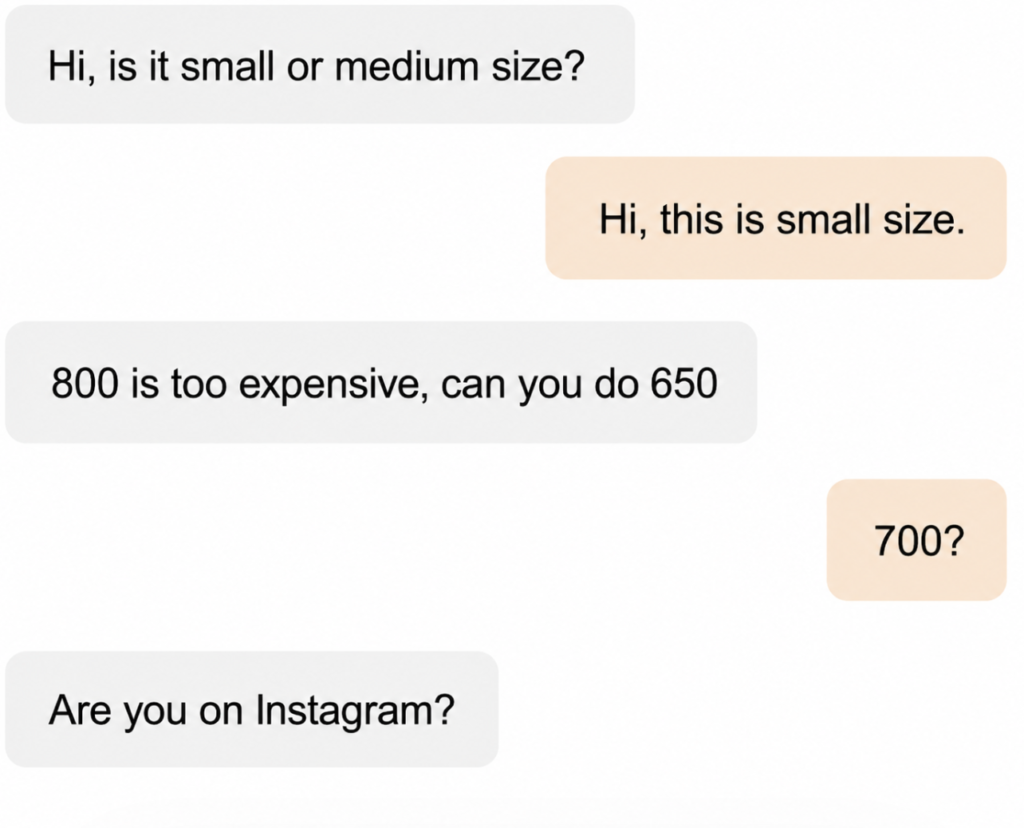
💬”Can you do 1500 instead of 1800?” “Any discount if I order two?” 💬
Founders running their own DMs will tell you this is extremely common, especially in
- jewellery, 💎
- fashion, 👗
- home decor, and 🏠
- gifting categories. 🎁
It’s the offline bargain conversation, ported directly to Instagram.
And look at the in-store version that still happens.
A customer does 5000 rupees of shopping at a store and casually says at the counter, “so much shopping I’ve done, no discount?” 😄
Sometimes it works. Often it does.
The store had no plan to give a discount until that sentence was spoken, and now there’s 500 off for asking.
The shopping bag and the question are doing the bargaining without anyone calling it that.
The uglier side of the haggle 🚫📦
There are uglier versions too.
❌ COD refusal-at-the-door tactics
❌ Buyers negotiating with delivery personnel
❌ Customers refusing packages entirely
Brands lose lakhs every month because of this.
That’s negotiation through pure attrition. Less charming, same cultural root.
⇥ So why does this matter for brands?
Brands that ignore the haggling instinct are leaving conversion and loyalty on the table.
The instinct is not going away. It’s older than ecommerce and stronger than any pricing strategy that tries to bypass it. The brands that win in this market work with the dance instead of trying to shut it down.
This is why coupon codes still convert, even though every brand has them.
- It’s why “first order discount” has become an expectation, not a perk.
- It’s why loyalty programs that reward repeat buying with surprise extras keep working, because they let the customer feel like they earned something.
- It’s why bank cashback and EMI promos keep moving units, because they give the shopper a story to tell about how they got a deal.
The trick is to design the haggle in.
- Give people a coupon to find.
- Let them feel like they hunted for it.
- Reward them for waiting, for asking, for buying more.
A shopper who walks away from a purchase feeling like they won a small game is a shopper who comes back, tells a friend, and writes the brand into their next story about getting a great price online.