

 Back to Blogs
How to Brief a Designer Without Making Them Hate You
There’s a specific look a designer gets when they open a brief that says “make it nice, something fresh, like that thing we saw last week.” If you’ve ever sent that brief, you’ve seen the look, and also…what the heck?. If you haven’t, ask any designer in your life and watch their entire face change.
Briefing is one of those skills nobody teaches and everybody assumes they’re already good at. Most of us aren’t. I’ve been on both sides of this, designer and brief-sender, and I can say with full confidence that bad briefs are why most design relationships go sideways long before the actual design work does.
So here’s a useful, slightly frustrated take on how to brief a designer in a way that doesn’t make them dread your name in their inbox.

⇥ First, decide what kind of brief you’re actually writing.
There are roughly two versions, and getting this wrong is where most things go wrong.
Version one is when you have
- the idea, 💡
- the direction, 🧭
- the references, 📌
- the whole vision in your head, 🎯and you need a designer to execute it well.
Version two is when you have
- a problem, ❓
- a context, 🌍
- an audience,👥 and you want the designer to think through the solution with you.
Both are valid. They are not the same brief, and they should not be written the same way. If you give a thinking designer a checklist, you’re wasting their brain. If you give an execution-focused designer no direction, you’re wasting their time. Know which one you’re sending before you send it.
⇥ Second, stop treating designers like pixel-pushers.
They’re not a Canva with feelings.
They’re people with
creative judgement,
taste, and usually more visual experience than the person briefing them.
Use that. Give them context, not just specs. Tell them what the piece
- needs to do,
- who it’s for,
- what the brand sounds like,
- what’s been tried before, and what worked.
Then let them think. Designers who get treated like thinkers produce better work than designers who get treated like executors, every single time.
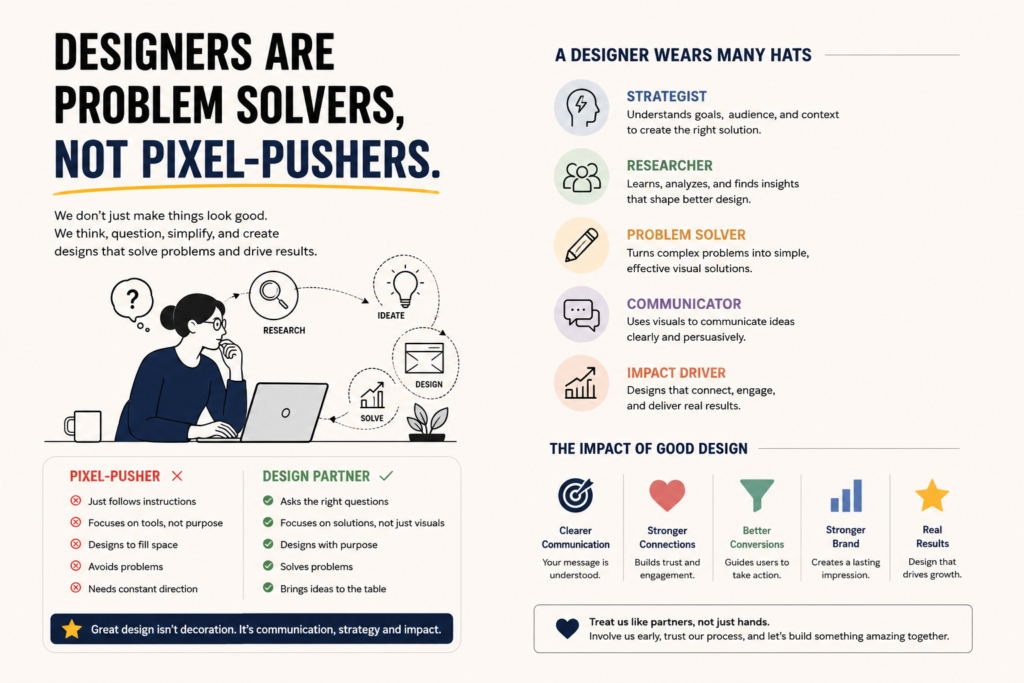
That said, designers also need to do their part. A brief shouldn’t have to spoon-feed every visual decision because the designer can’t be bothered to grasp a concept and run with it. If you’ve given them context, references, and a clear objective, the expectation is that they bring some original thinking back. The relationship works when both sides show up. Marketers and founders shouldn’t have to art-direct every layout, and designers shouldn’t expect to just be handed a wireframe and a colour code.
⇥ Third, the Quick Turnaround Request.
The QTR. The most dangerous three words in this industry.
“Just a quick turnaround” almost always means one of three things.
📌 The person asking has no idea how long this actually takes. 🤡
📌 The person asking knows but is hoping you’ll say yes anyway. Or 😅
📌 The person asking left it to the last minute and is now externalising the panic.🔥
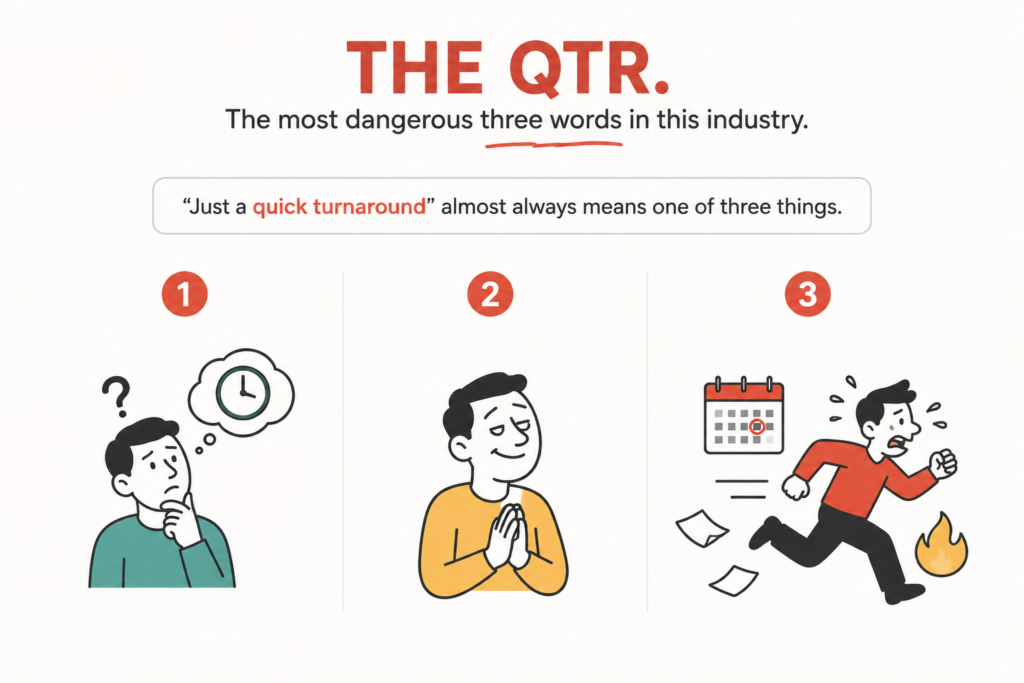
Sometimes all three at once. If something is genuinely urgent, say so honestly, give the actual reason, and ask what tradeoffs are possible. “Can we do a faster version with fewer revisions” is a real conversation. “Quick turnaround please 🙂” is not.
⇥ Fourth, feedback.
This is where a lot of well-briefed projects fall apart. The brief was clear, the work came back well, and then someone in the approval chain says “I don’t know, something feels off.”
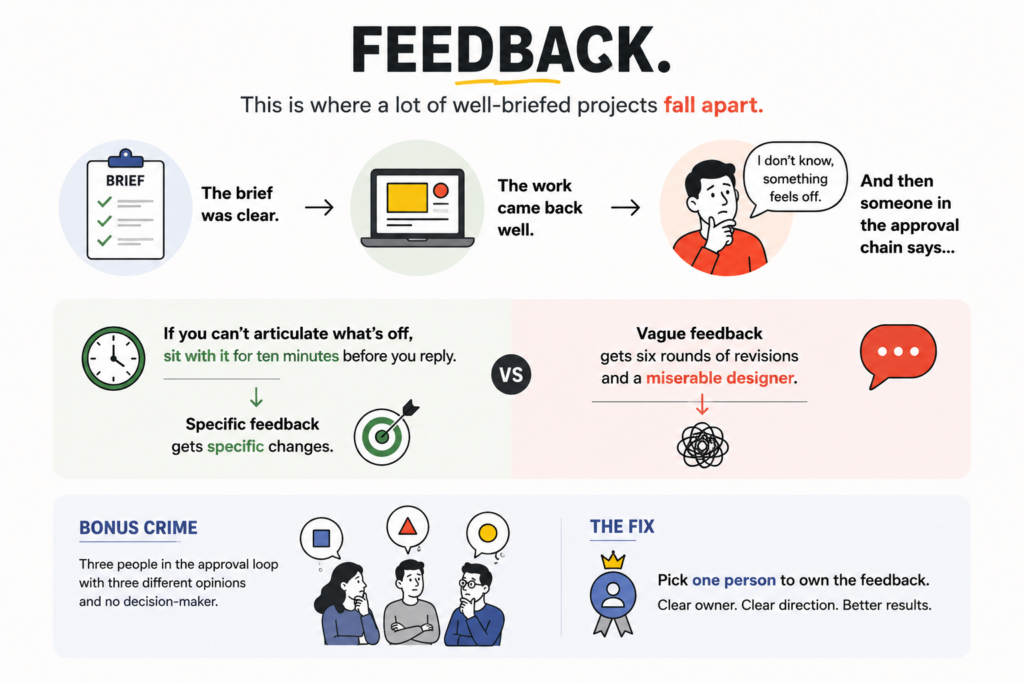
If you can’t articulate what’s off, sit with it for ten minutes before you reply. Specific feedback gets specific changes. Vague feedback gets six rounds of revisions and a miserable designer. Bonus crime, three people in the approval loop with three different opinions and no decision-maker. Pick one person to own the feedback.
⇥ Fifth, write things down.
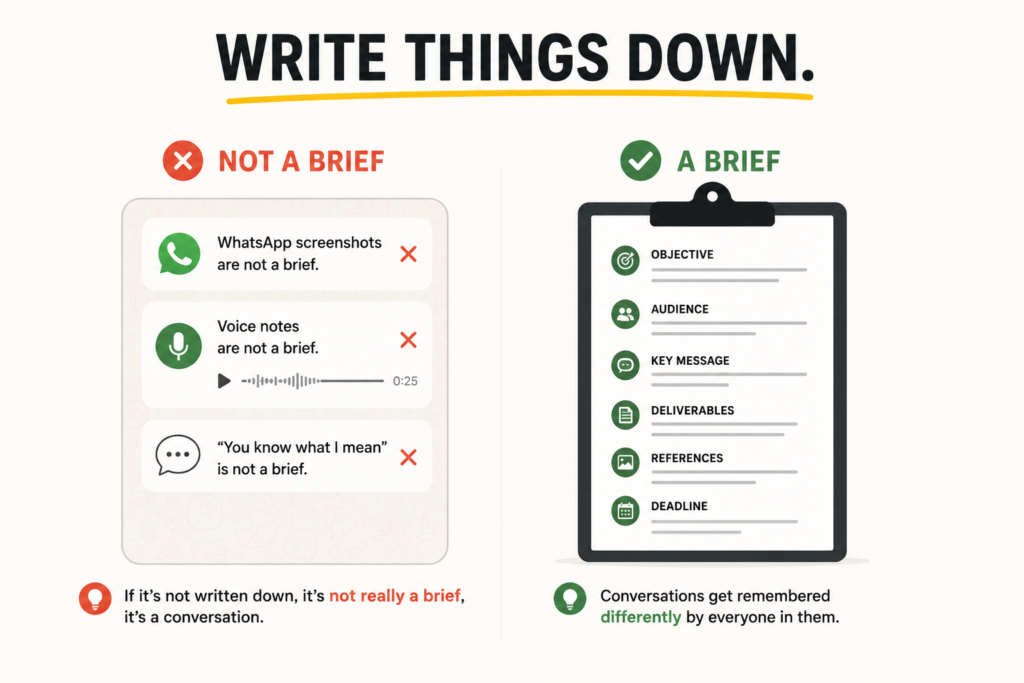
WhatsApp screenshots are not a brief. Voice notes are not a brief. “You know what I mean” is not a brief. If it’s not written down, it’s not really a brief, it’s a conversation, and conversations get remembered differently by everyone in them.
Here’s the thing nobody likes hearing:
Most designer-client relationships don’t go bad because the designer is bad. They go bad because the briefing process was bad and nobody wanted to fix it. 👀
The fix is genuinely simple:
- Write a real brief,
- send it on time,
- decide what kind of brief it is,
- give context,
- trust the designer to think,
- give clear feedback, and
- don’t say “quick turnaround” unless you mean it and you’re willing to pay for it.
Do this and your designer will not hate you. They might even like you. Wild concept.