





The Illusion of ‘Always-On’ Marketing: When Less Actually Converts More
If you’re in marketing, you’ve probably felt it…that quiet panic when you haven’t posted in a few days. The voice in your head goes, “We need to stay active! The algorithm will forget us!” And so, we post. Again. And again. And again. Until we’re not really marketing anymore, we’re just filling space. Welcome to the illusion of ‘always-on’ marketing, where the goal quietly shifts from “build meaningful connections” to “don’t look inactive.” Somewhere along the way, “being consistent” got confused with “being constant.” But those two are not the same. Consistency builds trust. Constancy builds fatigue. You’ve probably seen brands that post every other day but say absolutely nothing new. Their content feels mechanical, their captions sound identical, and their engagement barely moves. That’s what happens when you’re more focused on staying visible than staying valuable. ⇥ Here’s something that’ll save you some late-night panic: Algorithms don’t punish you for taking a breather. They punish you for posting things people don’t engage with. You can post ten times a week and still fade into the background, or post twice with substance and stay top of mind. Because quality content gets saved, shared, and remembered. Posting more doesn’t mean showing up better. Sometimes, it means showing up tired. Marketers are exhausted. Yes, we are! The constant pressure to churn out new ideas, new visuals, new reels, new campaigns… it’s not sustainable. The result? Teams burn out. Creativity dies. And ironically, performance drops. The more you chase “always-on,” the less you actually connect. ⇥ When you give your content breathing room, a few things happen: Great marketing isn’t about being everywhere. It’s about being memorable where it matters. Real results don’t come from volume. They come from momentum. Every strong brand you admire has learned to pace itself. They plan smarter. They repurpose thoughtfully. And they focus on substance over frequency. When your strategy is well thought out, even a single campaign can carry your brand for weeks because it’s designed to connect, not just occupy space on a feed. You don’t need to be “always-on.” You just need to be strategically present. Post less if you must, but post with intention. Every piece of content should serve a purpose: educate, inspire, entertain, or convert. Everything else? Just noise. We believe consistency is about showing up smart, not showing up endlessly. We just want your marketing to feel clear, intentional, and worth someone’s time…not another post that gets scrolled past. Because when you pause to think before you post, that’s when your marketing really starts to move. If you ever feel like you’re posting just to keep up, you’re not alone. We’d rather help you show up right than show up non-stop. Whenever you want to rethink your content pace, we’re here to chat. Email us at info@mirra-digital.com.
The Personal Brand Industrial Complex: Is Every Founder Supposed to Be an Influencer Now?
Explore whether founders truly need to be influencers, why personal visibility matters, and how authentic branding can boost connection without chasing trends. Read more!
If You Think Marketing Is Expensive, Try Obscurity
Discover why the cost of marketing is worth it and how obscurity can cost your business more. Learn why visibility and strategic marketing matter. Read now!
Stop ‘Humanising’ Brands. Start Being Human.
Somewhere along the way, “humanising your brand” turned into a checklist..(or a prompt you use on ChatGPT!) Write like a friend. Use emojis. Talk like you do in WhatsApp when you’re in a hurry. Add a behind-the-scenes reel. Share a team lunch photo. Ta-da! You’re human now. Except… you’re not. You’re just doing the things brands are told to do to look real, without actually sounding or acting real at all. “Authenticity” has become its own aesthetic. And ironically, the more brands try to be authentic, the less authentic they feel. When you try too hard to be human, you end up sounding like someone pretending to be human. And audiences can sense that from miles away. ⇥ Here’s what that typically looks like: It’s performance.Not personality. Most audiences don’t need your brand to act like their best friend. They don’t need you to talk like a teenager. They don’t need you to pretend you’re casual if you’re not. ⇥ They just want: Being human isn’t about being chatty or funny or emotional. It’s about sounding like an actual person wrote the message, not a panel of content writers who all added their favourite adjectives or…used a thesaurus on every word. (IYKYK) The most “authentic” brands today aren’t doing anything dramatic. They just communicate like real people. They say things plainly. They apologise properly when they mess up. They explain decisions instead of hiding behind PR lines. They get to the point. Authenticity isn’t a tone of voice you buy. It’s a tone of voice you live. ⇥ If you’re trying to simplify all of this for your brand or your team, start here: 1. Use normal language : If you wouldn’t say it out loud in real life, don’t post it. 2. Don’t pretend to be something you’re not : A serious brand can still sound human without cracking jokes. A fun brand doesn’t need to act corporate to sound credible. 3. Stop over-explaining : People appreciate simplicity more than poetry. 4. Talk to people…not at them Say “you.” Address real concerns. Sound like you understand what they’re dealing with. 5. Don’t post “relatable” things just for reach: If it doesn’t come from your brand’s actual personality, it will feel fake. Your audience shouldn’t finish reading your content and think, “Wow, this brand sounds authentic.” They should read it and think, “Cool, I get what they’re saying.” That’s it. Straightforward. Uncomplicated. Real. Don’t think about producing emotional content. Produce honest content. Don’t humanise your brand. Humanise your communication. Say what you mean. Mean what you say.
AI Didn’t Steal Your Job. It Just Exposed Lazy Marketing
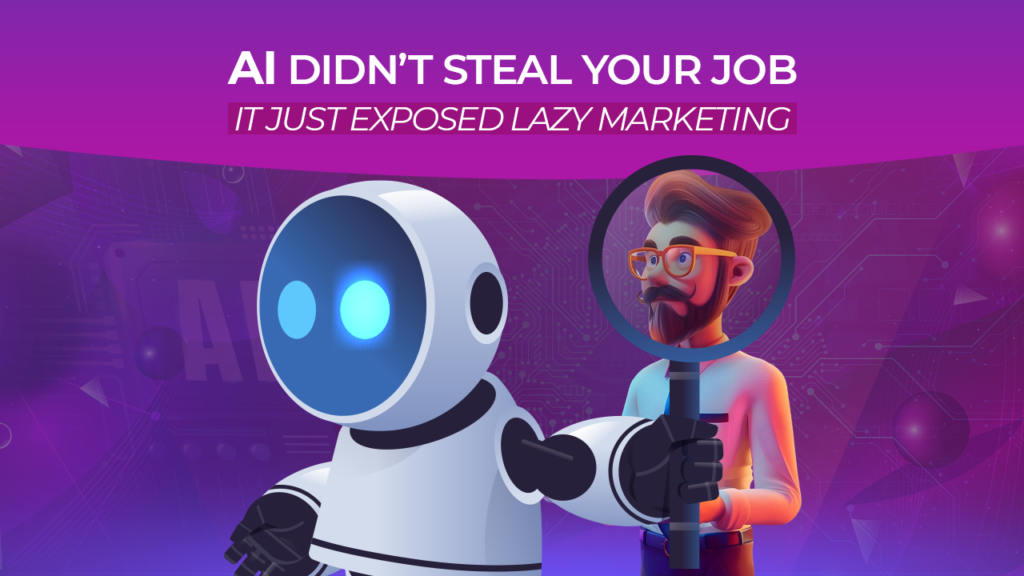
Let’s get this out of the way first: AI didn’t show up to take anyone’s job. It showed up, looked around, and simply highlighted who was… you know… doing the bare minimum. ⇥ If your entire workflow was: …then yes, AI feels scary. Because AI can do average work in seconds. It’s the bare-minimum marketer’s worst nightmare. But for people who think, create, and actually understand their audience? AI is basically a superpower. AI didn’t lower the bar. It exposed how low the bar already was. ⇥ For years, a lot of marketing online was: AI didn’t break the industry, it just showed clients that half the work they were paying for could be automated. Ouch. But also… fair. ⇥ Creativity was never the problem. Laziness was. Good marketing was never at risk. You can’t automate taste. You can’t prompt personality. You can’t replicate lived experience or cultural nuance. You can’t mass-produce insight. A tool can help you write. A tool cannot help you think. And that’s the difference. ⇥ AI is brilliant at: ⇥ But it sucks at: Basically, all the things that make great marketing great. If AI can replace you, the role needed a glow-up anyway. This sounds harsh, but it’s true. If your job was 90% repetitive tasks, AI didn’t take it. Automation was always going to. ⇥ But if your job involves: strategy, originality, judgment, taste, humour, empathy, creativity… AI can’t touch that. It can only support it. Think of AI as the assistant you always wanted, the one who never complains, never takes leave, and does the boring stuff so you don’t have to. ⇥ So what does this mean for marketers today? 1. Bring original thinking to the table Anyone can generate content. Not everyone can generate ideas. 2. Stop relying on quantity AI can write 30 posts a day. Your audience doesn’t want 30 posts a day. 3. Use AI to enhance, not replace Let it do the heavy lifting so you can focus on the interesting part…the thinking. 4. Build a voice people actually recognise No tool can mimic your lived experience or your personality. Use that. 5. Get good at the things AI can’t do Strategy, taste, humour, intuition, timing. This is your moat now. AI isn’t here to replace marketers. It’s here to replace lazy marketing. The surface-level stuff. The half-hearted stuff. The “let’s just post something” stuff. The “copy what everyone else is doing” stuff. Great marketing (the thoughtful, human, creative kind) is more valuable than ever. And AI, instead of being a threat, actually clears the field so the good work stands out. Use the tool. Keep the brain. And don’t worry, your job is safe. Unless, of course, you were planning to outsource the thinking part. In that case… yeah, AI beat you to it.
When “Data-Driven” Becomes “Decision-Drowned”: Why Marketers Still Need Gut Instinct
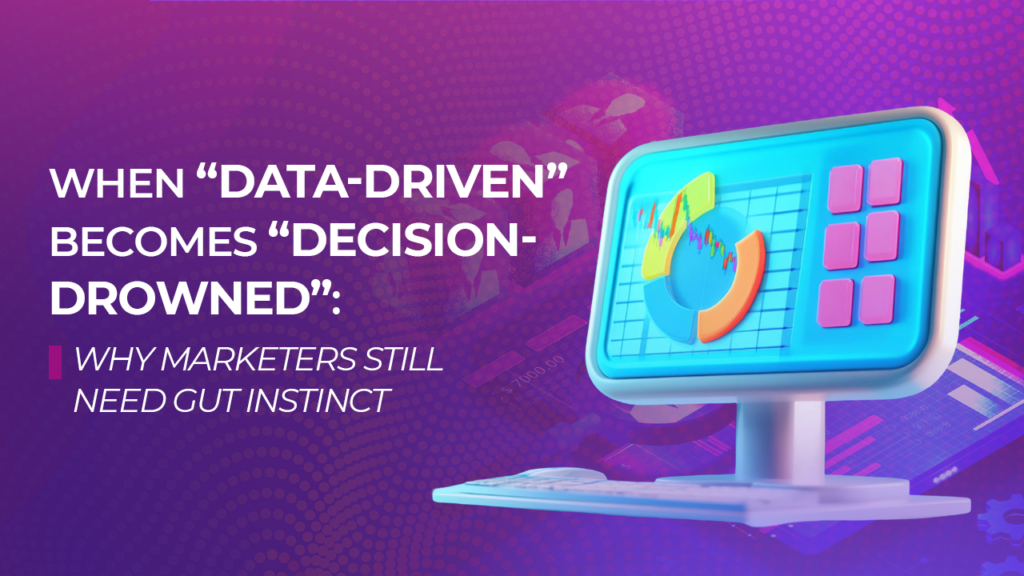
You’ve heard it a thousand times -“Let the data decide.” But somewhere between dashboards, KPIs, and campaign reports, many marketers stopped deciding anything at all. We’re so busy chasing the numbers that we’ve forgotten how to trust our gut. The result? Endless analysis. Zero movement. Marketing paralysis. The problem isn’t data, its dependence. Data is powerful. It tells you what worked, what didn’t, and where to double down. But when every choice needs a spreadsheet to back it up, creativity takes a backseat. You’ve probably seen this in action, that meeting where everyone’s afraid to take a bold idea forward until there’s “enough data” to prove it’ll work. But here’s the thing: data only tells you what has already happened. It can’t tell you what’s next. Trends shift. People surprise you. And sometimes, the best campaigns come from a hunch that “just feels right.” Why gut instinct still matters? Your instinct isn’t random. It’s built on experience, pattern-recognition, and intuition, all the things no dashboard can replicate. ⇥ Gut calls are what help you: · Spot cultural shifts before the numbers show them. · Understand tone and timing when an idea will resonate or flop. · Break the mold when everyone’s chasing the same “data-proven” trend. Think of it like driving. Data is your GPS; useful, accurate, and reliable. But your gut is the driver that knows when to take a shortcut, slow down for traffic, or stop for a coffee. Data tells you what. Gut tells you why. A campaign might show strong click-through rates…great. But why did it resonate? Was it the copy? The timing? The humour? Your human understanding fills the gap between what happened and why it mattered. The smartest marketers use data as validation, not permission. They look at the numbers to refine, not define, their next move. ⇥ How to balance data and instinct You don’t have to choose one over the other. Here’s how you can bring both to the table: 1. Start with a question, not a report. Ask “what are we trying to learn?” before pulling numbers. 2. Use data to inform, not dictate. Let insights spark creativity, not limit it. 3. Validate ideas fast. Run small experiments instead of endless forecasting. 4. Keep listening to your audience. Comments, DMs, even gut-feel feedback from your sales team. That’s data too. 5. Trust your experience. If something feels off despite perfect metrics, it probably is. Being data-driven isn’t the problem. Being data-dependent is. Numbers can guide you, but they’ll never replace intuition, empathy, or timing…the things that make marketing actually connect. So go ahead, read the reports. But don’t forget to read the room. At Mirra Digital, we don’t let data drown decisions, we let it amplify creativity.Want to see what that looks like for your brand? Drop us an email at info@mirra-digital.com.
The Digital Detox Dilemma: Can Marketers Ever Really Switch Off?
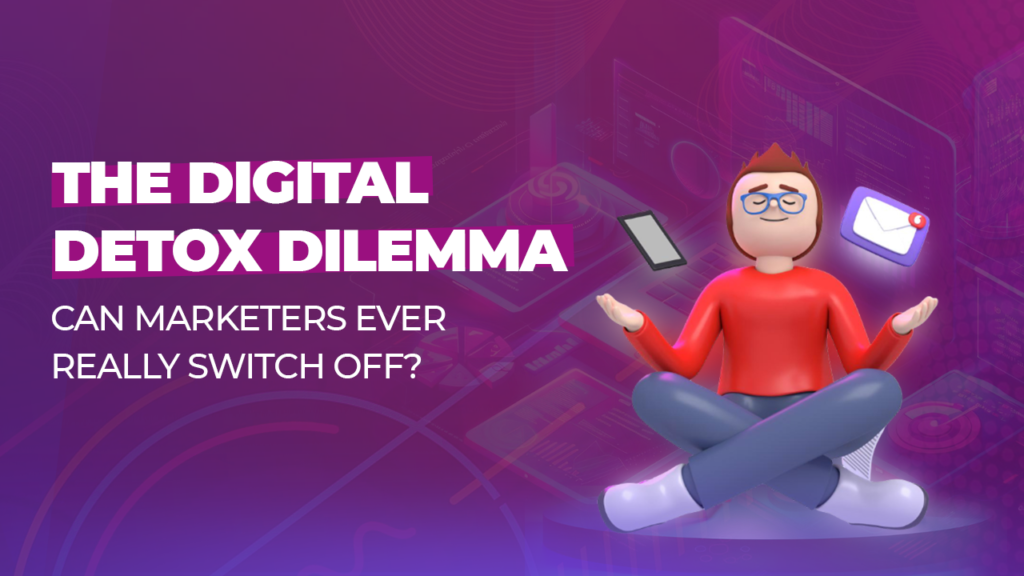
“Take a digital detox,” they said. “It’ll be good for you,” they said. Cut to you on vacation in Goa, staring at the beach… and also at your phone because your campaign CTR just dipped, two reels are waiting for approvals, and a client just emailed at 10:47 PM asking if “that copy can be rephrased slightly.” If you’re a marketer: switching off is a myth. We live in this strange loop where every break feels like “research.” Watching Netflix? Market study. Scrolling memes? Trend analysis. Attending a wedding? Competitor stalking because the decor vendor has a killer Instagram strategy. It’s not that we don’t want a break. It’s that our brains have been rewired to see campaigns in everything. A roadside hoarding is no longer a hoarding, it’s “outdoor advertising insights.” A funny waiter at a café is “content inspiration.” And that uncle who keeps forwarding WhatsApp jokes? He’s basically the head of dark social. Now, don’t get us wrong. Detoxing is important. But when your job is literally being plugged into the digital universe, it’s like asking a chef to “detox from food” or a stand-up comic to “detox from people saying weird things.” So what’s the solution?… we’re still figuring it out. Some swear by deleting apps on weekends. Others schedule “no-screen Sundays” (until they break it by 11 AM). A few brave souls go full detox: yoga retreats, no WiFi, no screens. They come back “renewed,” until the next campaign launch. The rest of us? We just pretend airplane mode is meditation. Here’s the real dilemma though: maybe marketers aren’t meant to fully switch off. Maybe the trick isn’t escaping digital, but choosing how we engage with it. Less doomscrolling, more intentional scrolling. Less “panic-checking email at midnight,” more “saving memes for Monday’s brainstorm.” Because let’s face it, our work is digital, our humour is digital, our clients are digital and our sanity… well, that’s up for debate. So the next time someone tells you to “just switch off,” smile politely and nod. Then open Instagram, because you just thought of a great caption for that client reel. ✨ PS: At Mirra Digital, we don’t promise digital detox. But we do promise to make your digital presence so smooth, you might actually sleep through a weekend. Which, honestly, feels like enlightenment.
Building Trust in a Skeptical Market: The Role of Transparent Thought Leadership

Trust is not what it used to be. People today don’t automatically believe a brand just because it looks polished or runs clever ads. Consumers are skeptical, attention spans are short and nearly everyone has been burned by a company that promised more than it delivered. In an age where brands are shouting over each other for a click, one question rises above the clutter: Who do you trust? At Mirra Digital, we’ve worked with enough brands to know that the answer isn’t found in more content, louder campaigns, or smarter algorithms. It lies in something far simpler, and harder to fake: authenticity. And one of the most powerful ways to deliver that authenticity is through transparent thought leadership. So, what is transparent thought leadership? It’s not just sharing a few opinions online or posting a quote on LinkedIn. Transparent thought leadership means speaking from a place of experience, sharing both your expertise and your process, your wins and your missteps…not in a rehearsed, curated PR voice, but in a way that feels real, generous and grounded. It means showing people how you think, not just what you sell. It’s the CEO talking openly about a failed campaign and what they learned from it. It’s a brand strategist breaking down why a popular tactic doesn’t work anymore, even if it hurts their pitch. It’s a content marketing agency not pretending to have all the answers, but inviting others into the conversation anyway. This is where trust begins to take root. Why does this matter today? Because consumers can tell when you’re hiding something. And in a skeptical market, even the smallest sign of inauthenticity can be the difference between loyalty and bounce. When brands take a human approach to communication, when they stop broadcasting and start relating, they begin to build a very different kind of connection. It’s no longer about selling. It’s about serving. And that’s when people start to lean in. Transparent marketing isn’t about baring it all or airing your internal mess. It’s about giving people enough clarity to feel like they’re not being manipulated. It’s about showing the “why” behind the “what.” That kind of openness builds consumer trust faster than any sales deck ever will. How does thought leadership actually build trust? Because it helps people see you before they see your brand. And to be honest: people trust people more than logos. When leaders consistently share thoughtful, experience-driven content, when they answer tough questions, challenge the status quo, or shine light on hidden industry truths, they signal confidence. Not just in their product or service, but in their values. This is where personal branding for leaders becomes critical. If your audience sees consistency, vulnerability and clarity in your message, you begin to embody the very thing they’re looking for: reliability. In fact, strong thought leadership often works better than traditional ads because it doesn’t feel like marketing. It feels like value. And value creates trust. So what does this look like in action? Some of the most trusted brands today aren’t the ones with the biggest budgets, they’re the ones telling the most honest stories. Tata Group, for instance, has consistently earned public trust not just through legacy, but through leadership that communicates clearly and consistently, whether it’s stepping up during national crises or championing ethical business practices across sectors. Their transparency is woven into their reputation. boAt, a lifestyle electronics brand, took on big-budget competitors by building a brand voice that was less about pushing product and more about creating culture. Their founders are open about their growth story, mistakes and what it means to build a company in India without sugarcoating the hustle. Even globally loved brands like Amul have used consistent, clever and contextually honest communication for decades. Their topical ads are less about selling and more about earning a smile (and trust) through relatability. These brands understand something simple: people trust what feels real. They don’t just speak at their audience… they speak with them. Where does content marketing fit in? Thought leadership doesn’t just live on a LinkedIn post or an op-ed. It needs structure. That’s where content marketing agencies like ours come in. We help leaders and brands create clear, consistent messaging across platforms, not just content for content’s sake, but stories that actually reflect your values and build long-term connection. Whether it’s crafting a corporate communications strategy that resonates with your stakeholders, or developing a brand strategy service that aligns your voice across touch points, the goal is the same: build consumer trust through content that feels real. In an age of filters, scripts and AI-generated everything, being human is still your biggest advantage. If you want your audience to trust you, give them a reason to. Speak with clarity. Lead with vulnerability. Share with purpose. Transparent thought leadership is a commitment to integrity, to consistency and to the people you serve. The brands that win in the long run won’t be the loudest. They’ll be the ones we believe. Need help building your brand’s voice in a way that actually earns trust? Let’s talk…from brand strategy services to content that makes people care, Mirra Digital is here to help you show up with clarity, consistency and just the right amount of courage.
Are We Automating Too Much, Too Soon?
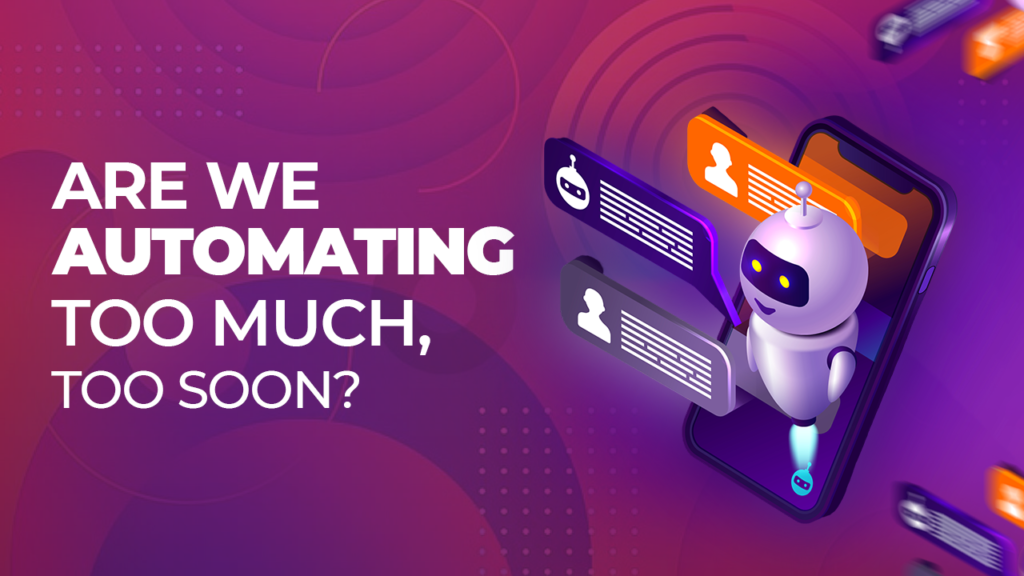
You know that feeling when a brand reaches out and it just feels… off? Like the email knew your name, but not your needs. The chatbot answered, but didn’t really help. The system worked, technically but the experience left you cold. That’s what over-automation looks like. In the rush to scale, save time, and “work smarter,” many businesses are automating themselves out of the very thing customers care about: connection. Let’s talk about what happens when automation runs ahead of intention and why a thoughtful, human-first approach still matters. Automation Isn’t the Enemy. But Blind Automation Might Be. We’re not here to knock automation. It has its place. But as a digital strategy agency that’s worked with growing brands across industries, we’ve seen how things can go sideways when businesses jump into automation without a clear why. You don’t need more tools…you need a better strategy. We’ve had clients come to us after setting up clunky systems that ended up costing more time, money, and customer good will than they ever expected. Because when you automate without understanding the human behind the action, you’re just… automating noise. Here’s where it often goes wrong: 1. We’re Automating Before Understanding Before you automate, ask: What’s the actual problem I’m solving? Many businesses jump into automation without mapping the real customer journey. Instead of clarity, they end up with a maze of automated emails, sequences, and tools that talk to each other but not to the customer. 👉 Lesson: Automation is not a substitute for understanding. It’s a tool that follows insight, not replaces it. 2. We’re Forgetting the Emotional Pulse Marketing isn’t just data and funnels. It’s emotion. It’s trust. And that doesn’t always scale well. You can’t automate empathy. You can’t automate connection. You can support it, but if your customer journey has zero human touch points, you’re not scaling. You’re ghosting. Think of your last “we value your feedback” email that didn’t even read your message. Now imagine 100 of your customers feeling the same way. 3. We’re Measuring Efficiency, Not Effectiveness Yes, automation can make things faster. But faster doesn’t always mean better. You can have the slickest email drip campaign, but if it sounds like a bot, people will delete it before they finish the first line. This is one of the biggest digital transformation concerns we’ve seen. In the race to save time, brands forget that time isn’t what customers remember. It’s experience. 👉 Tip: A slower, realer experience will outperform a fast, soulless one…every time. 4. We’re Losing Control of Our Own Systems Ever opened a CRM and thought, “Wait, who built this?” Automation can create complex systems that even your team doesn’t understand anymore. This leads to: It’s like letting 12 interns cook without a recipe. You’ll get something. But is it edible? This is where digital strategy consulting saves the day. A clear strategy isn’t just about tech, it’s about knowing when to say no to tech, too. 5. We’re Replacing Instead of Supporting Let’s be honest: some of us are automating to avoid people. But good automation doesn’t replace teams, it supports them. It takes care of the boring, repetitive stuff so humans can do what they do best: relate, solve, connect. The brands that win are the ones who know where to stay human. ⇥ What are the risks of over-automation in marketing? Loss of personalisation, poor user experience, reduced trust and tech fatigue. You might also spend more time fixing systems than growing your business. ⇥ How do you balance automation with personalisation? Map your user journey. Add human touch points where it matters, like onboarding, support, and high-value conversions. Automate the rest only when it actually adds value. ⇥ When should businesses scale back automation? If your open rates are dropping, customers are disengaged, or your team spends more time managing tools than people, it’s time to rethink. ⇥ What are signs that your business is too automated? So… Are We Automating Too Much? Maybe. Automation is powerful, but only when done right. What we need isn’t more tools. It’s more thought. It’s remembering that behind every email, every funnel, every click… is a human being. Let your tech serve the experience. Not become it. And if you’re not sure where to draw the line? That’s what we’re here for. At Mirra Digital, we help brands cut through the noise with digital strategies that don’t forget the human. From mapping real customer journeys to crafting campaigns that feel personal, we focus on meaningful growth, not just mechanical scale. Let’s not automate the heart out of marketing. Let’s do it better.
Why Automation Won’t Take the Place of Creativity in Brand Marketing
Let’s get one thing out of the way: automation is amazing. It saves time, streamlines workflows and helps us do more with less. We’re no strangers to automation; whether it’s scheduling content, analysing campaign performance, or streamlining lead generation. But here’s where we draw the line: automation can’t replace creativity. Especially not in brand marketing. And in 2025, that truth feels more important than ever. ⇥ Automation can assist, but not imagine AI can now generate headlines, captions, even logos with a click. But great branding isn’t about speed. It’s about soul. What makes someone stop mid-scroll isn’t the perfectly optimised caption…it’s the quirky, clever, or emotional idea behind it. Something that feels human. That surprises you, makes you smile, or makes you think, “Damn, they get me.” No matter how advanced automation gets, it lacks one thing that’s crucial to branding: intuition. It can remix what’s already out there. But it can’t create from lived experience, gut feeling, or cultural insight. It can’t riff off a conversation with a client or read between the lines of a brief. Creativity requires context. And context is human. ⇥ Brands are built on feelings, not just data Automated tools are incredible for testing, optimising and scaling. But they’re still working off what’s already happened. Creativity looks ahead. It asks: What haven’t we said yet? What story still needs to be told? Branding is emotional. It’s about perception. Voice. Personality. The feeling your customer gets when they interact with your business. You can’t algorithm your way to authenticity. Sure, AI can help us get more done. But it can’t tell you that using a meme from 2013 in 2025 feels off. It can’t craft a brand tone that evolves with your audience. And it definitely can’t capture the joy, sarcasm, humour, or weird brilliance that makes your brand yours. ⇥ The danger of “same-same” When everyone starts using the same AI tools, a lot of brand content starts to look… the same. That’s where creativity steps in. To zig when others zag. To break the grid. To throw a pun into a product campaign or turn a customer insight into a social post that hits just right. These things don’t come from prompts. They come from people. Automation keeps things running. Creativity keeps things interesting. So what’s the real win? The sweet spot isn’t choosing between automation and creativity. It’s making them work together. At Mirra Digital, we use automation where it helps; scheduling, analysing, reporting, segmenting audiences. All the back-end stuff that frees up our time to do what we do best: Think. Create. Experiment. Mess up. Try again. Make something that actually connects. That’s the kind of work that builds a brand; not just a campaign. TL;DR? Automation is powerful. But creativity is irreplaceable. You can’t automate originality. And honestly, would you want to?